
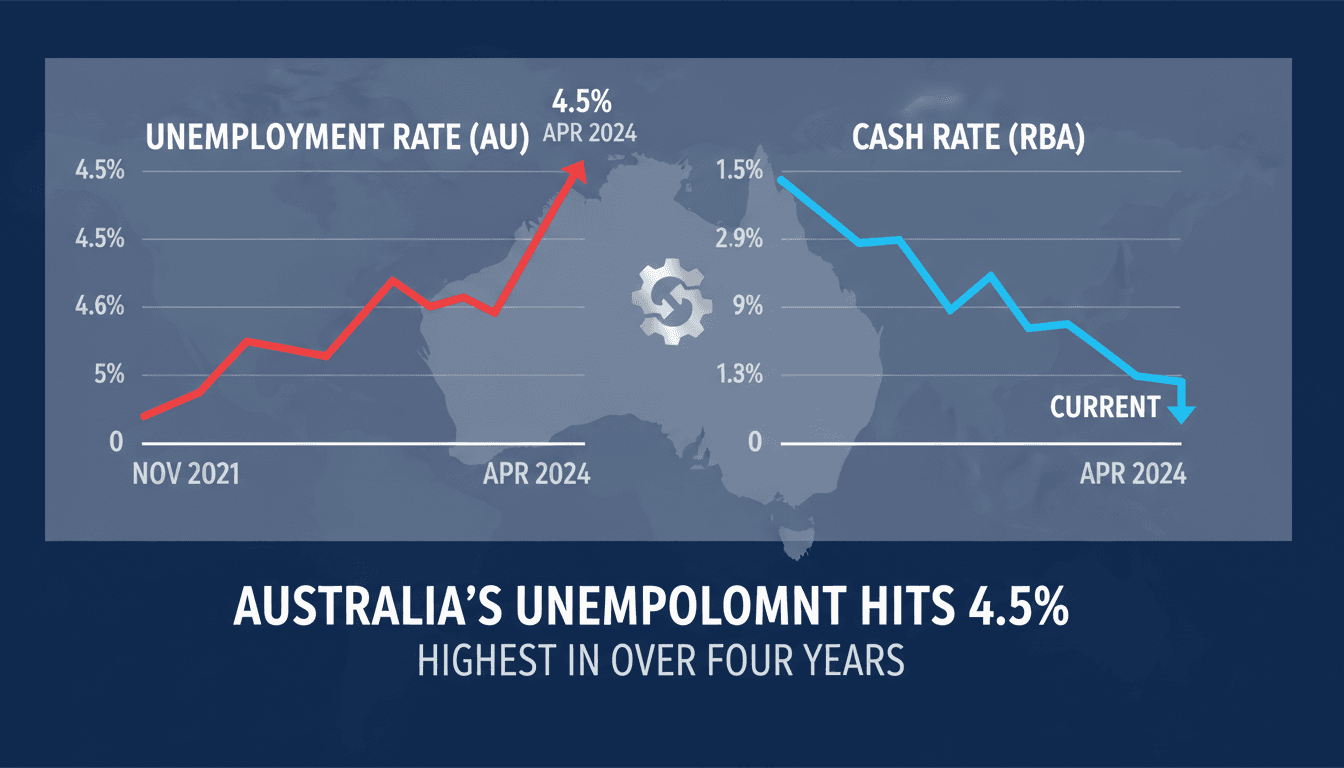
Australia's unemployment rate rises to 4.5%, highest in over four years
Here's what it means for you.
This shift in Australia's unemployment rate may signal changes in economic policy that could affect job security and interest rates.
What happened
Australia's unemployment rate rose to 4.5% in April, the highest since November 2021.
The Context
- The jobless rate increased from 4.3% as 18,600 jobs were lost in April.
- The rise in unemployment is attributed to concerns over rising interest rates and global economic pressures.
- Traders are adjusting their expectations for future interest rate hikes by the Reserve Bank of Australia.
Takeaway
The rise in unemployment may lead to a more cautious approach from the Reserve Bank regarding interest rate increases.
International coverage from The Guardian's global desks.
"The Guardian is known for its progressive editorial stance and in-depth analysis."
— A47 Editor
Australia’s unemployment rate jumps to 4.5% in ‘tentative signs labour market is buckling’
Australia's unemployment rate has unexpectedly risen to 4.5% in April, marking the highest level in over four years, as the number of employed individuals fell by 18,600, raising concerns about the impact of rising interest rates and global economic ...
Key macro releases (CPI, jobs, PMIs), surprise indexes, and market implications.
"Great for data-print awareness and instant read-through to rates and risk assets."
— A47 Editor
Australia’s unemployment hits 4-1/2 year high, lessens risk of rate rise
Australia's unemployment rate has surged to 4.5%, the highest level in 4.5 years, indicating a significant cooling in the labor market. This increase has led to diminished expectations for further interest rate hikes by the Reserve Bank of Australia ...
Key macro releases (CPI, jobs, PMIs), surprise indexes, and market implications.
"Great for data-print awareness and instant read-through to rates and risk assets."
— A47 Editor
Australia unemployment hits 4-1/2 year high in April as female jobs slump
Australia's unemployment rate has surged to 4.5% in April 2026, marking the highest level in 4.5 years, with a notable decline in female employment contributing to this increase. This trend indicates a significant cooling in the labor market, raising...
Global markets, investing, and macroeconomics from a premier financial newsroom.
"Bloomberg is respected for in-depth financial reporting and data-driven analysis."
— A47 Editor
Australia Jobless Rate Jumps to 4-1/2 Year High as RBA Bets Fade
Australia's unemployment rate has surged to 4.5%, marking the highest level since November 2021, indicating a rapid cooling of the labor market and leading traders to reduce expectations for further interest rate hikes by the Reserve Bank of Australi...