
Iran and Oman consider maritime service fees in the Strait of Hormuz amid US tensions
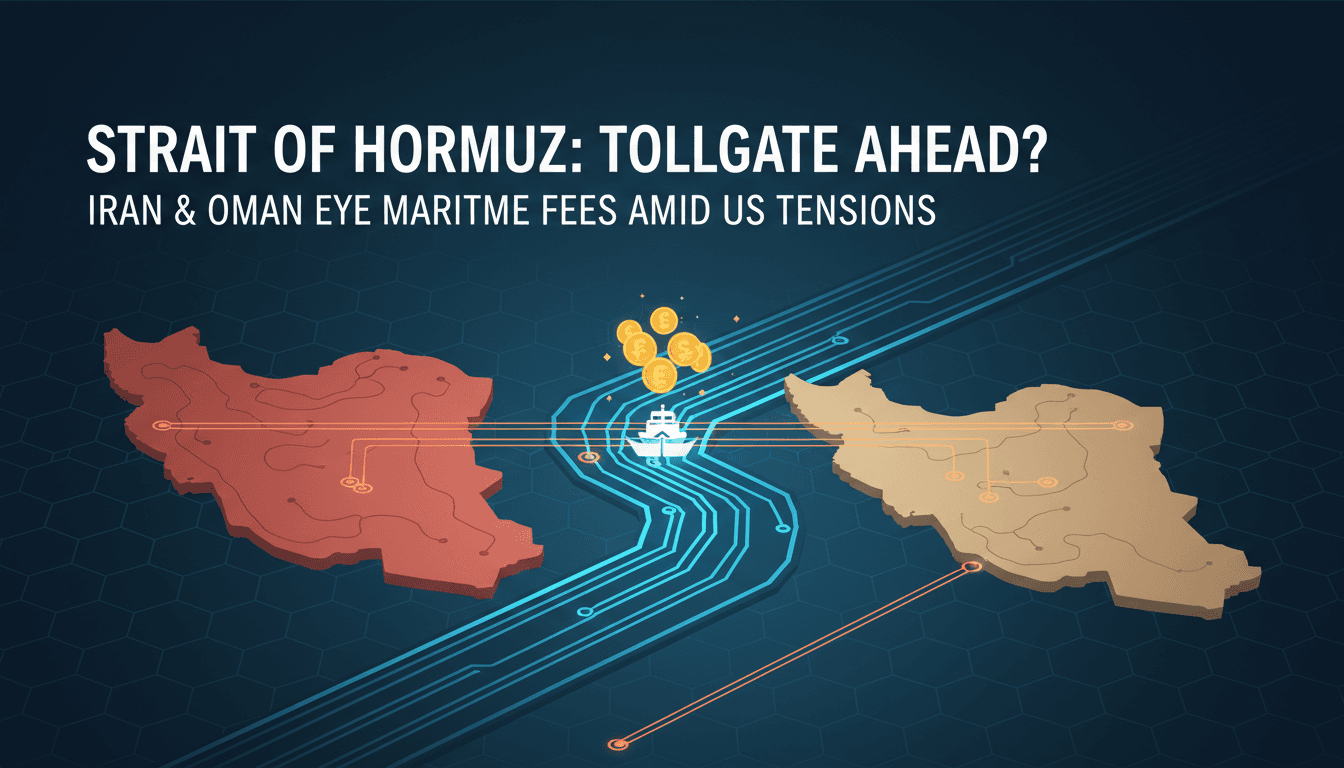
Here's what it means for you.
The exploration of maritime service fees by Iran and Oman in the Strait of Hormuz signals a significant shift in regional maritime operations. This initiative comes at a time when Gulf states are prioritizing navigation management amid rising tensions and recent maritime conflicts. The implications for global energy supply chains could be profound, as the Strait accounts for approximately one-fifth of the world's oil and liquefied natural gas supplies. As these discussions unfold, stakeholders in the energy sector and international maritime operations should closely monitor developments. The establishment of a hotline between Iran and the US may also play a crucial role in mitigating misunderstandings that could escalate tensions in this vital waterway.
What happened
Iran and Oman are currently considering the implementation of maritime service fees in the strategically important Strait of Hormuz. This initiative is part of broader discussions aimed at enhancing navigation management in the region. Concurrently, Iran has agreed to establish a communication hotline with the US to prevent potential misunderstandings regarding maritime activities.
These developments come in the wake of recent maritime conflicts that have disrupted commercial shipping in the area. Oman has also announced temporary shipping routes to ensure the safe passage of vessels through the Strait. The formation of a joint working group between Iran and Oman will focus on the specifics of these maritime service fees.
The Context
The Strait of Hormuz is a critical route for global oil and gas supplies, making it a focal point for international maritime operations. Recent conflicts have raised safety concerns, prompting Oman to introduce temporary shipping routes to safeguard vessels navigating the area. The involvement of Gulf states in these negotiations underscores a collective interest in maintaining safe and open maritime routes essential for global energy security.
The timing of these discussions is particularly significant, as they coincide with ongoing tensions between Iran and the US. The establishment of a hotline aims to facilitate better communication and reduce the risk of escalation in the region. This collaborative approach may help stabilize maritime operations in a waterway that is vital for international trade.
Takeaway
As negotiations between Iran and Oman progress, the dynamics in the Strait of Hormuz could experience a notable shift. The potential implementation of maritime service fees may reshape regional maritime operations and influence overall stability in the Gulf. Observers should pay attention to the outcomes of the Iran-Gulf talks regarding these fees and the impact of the newly established US-Iran hotline on naval operations.
The cooperation between Iran, Oman, and other Gulf states may pave the way for more stable maritime operations in the future. The ongoing discussions reflect a broader commitment to ensuring the safety and security of one of the world's most crucial maritime corridors.
English-language reporting on Saudi politics, policy, and society.
"Saudi Gazette reflects mainstream Saudi institutional perspectives."
— A47 Editor
Qatar PM in Oman to pave way for Iran-Gulf talks on Strait of Hormuz
Qatari Prime Minister Sheikh Mohammed bin Abdulrahman al-Thani visited Oman to discuss initiating negotiations involving Iran, Iraq, and Gulf Arab states regarding the Strait of Hormuz. This meeting aims to address ongoing tensions and maritime manag...
European coverage of Middle East politics and security issues.
"France 24 offers international reporting with a European editorial perspective."
— A47 Editor
Iran, Oman mull charging Strait of Hormuz 'maritime service fees'
Iran and Oman are considering the implementation of maritime service fees in the Strait of Hormuz, forming a joint working group to explore this initiative despite opposition from the United States. This development follows ongoing discussions about ...
24/7 international news from a French perspective in multiple languages.
"France 24 is viewed as a globally focused outlet with balanced coverage and a European perspective."
— A47 Editor
Iran, Oman mull charging Strait of Hormuz 'maritime service fees'
Iran and Oman are considering the implementation of maritime service fees in the Strait of Hormuz, forming a joint working group to explore this initiative despite opposition from the United States. This development follows ongoing discussions about ...
RT is a Russian state-funded network covering global events from a Russian perspective.
"RT is widely criticized for promoting pro-Kremlin narratives and is considered by many to be a state propaganda outlet."
— A47 Editor
Iran to set up Hormuz hotline with US
Iran has agreed to establish a hotline with the United States to facilitate communication and prevent misunderstandings regarding maritime activities in the Strait of Hormuz. This decision comes amid ongoing tensions and recent military actions in th...