
Record-breaking heatwave hits western Europe with unprecedented temperatures
Here's what it means for you.
The recent heatwave in western Europe serves as a critical reminder of the escalating climate crisis, with significant implications for public health and policy. As temperatures soar, the urgency for governments to implement effective climate strategies becomes increasingly apparent. This event highlights the need for immediate action to mitigate the risks associated with extreme weather, particularly as fossil fuel consumption continues to drive climate change. The health risks associated with such heat extremes are profound, necessitating a reevaluation of public health policies. Stakeholders across various sectors must prepare for the potential impacts of more frequent heat events in the future.
What happened
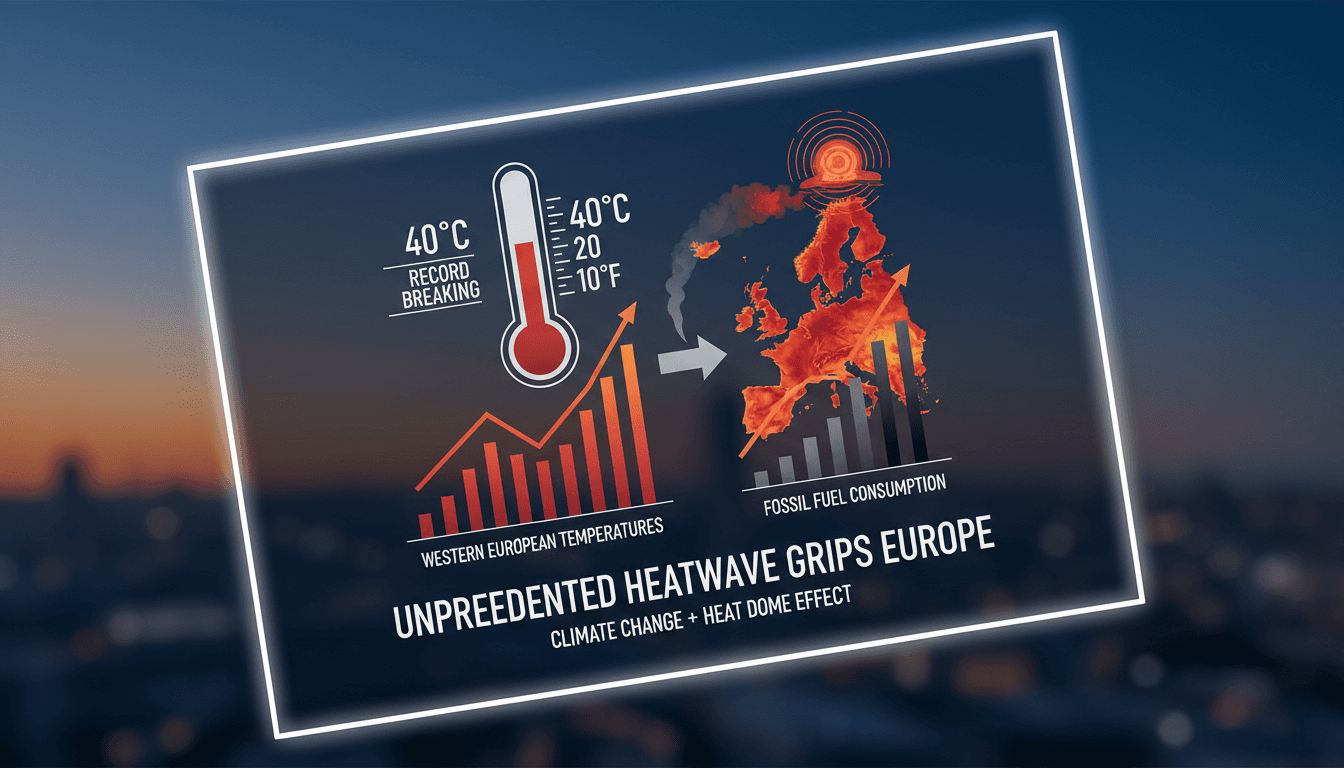
Western Europe is currently experiencing an unprecedented early heatwave, breaking temperature records in both the UK and France. The phenomenon, described as a 'heat dome,' has resulted in temperatures exceeding 30 degrees Celsius across much of northern Europe. This extreme weather event marks the hottest May days ever recorded in these regions, raising alarms among climate experts.
On May 26, 2026, the heat dome settled over Western Europe, leading to these record-breaking temperatures. The following day, the UK and France reported their hottest May days on consecutive dates, underscoring the severity of the situation. This event has been characterized as having "the fingerprints of climate change all over it," emphasizing the connection between fossil fuel consumption and extreme weather.
The Context
The current heatwave is attributed to a 'heat dome' that traps warm air over the region, creating conditions that are both unusual and alarming. UN climate chief Simon Stiell has pointed out that fossil fuel burning is the primary driver of climate change, which is increasingly manifesting in extreme weather events. Experts warn that heat extremes are becoming a new reality, with significant health risks that cannot be ignored.
As climate change continues to escalate, the frequency of such extreme weather events is likely to increase, necessitating urgent action from policymakers. The implications of this heatwave extend beyond immediate discomfort, as it poses serious challenges to public health and safety. Stakeholders must recognize the importance of addressing these issues to protect vulnerable populations.
Takeaway
The ongoing heatwave underscores the pressing challenges posed by climate change, prompting calls for immediate and effective climate action. As the region grapples with this extreme weather, it is crucial to monitor future climate reports for ongoing developments related to the heatwave. Additionally, potential policy responses from governments will be critical in addressing the underlying causes of climate change.
The health risks associated with heat extremes are significant, and experts are increasingly concerned about the potential for more frequent heat events in the future. This situation serves as a wake-up call for both policymakers and the public to prioritize climate action and public health initiatives.
24/7 international news from a French perspective in multiple languages.
"France 24 is viewed as a globally focused outlet with balanced coverage and a European perspective."
— A47 Editor
Europe heatwave 'brutal reminder' of climate change
A record-breaking heatwave has engulfed western Europe, with the UN climate chief Simon Stiell labeling it a 'brutal reminder' of the escalating climate crisis. Countries like Britain and France have reported their hottest May days ever, with tempera...
Top international stories selected by The Guardian editors.
"The Guardian is known for its progressive editorial stance and in-depth analysis."
— A47 Editor
Extreme heat in Europe ‘a brutal reminder’ of climate crisis, UN chief says
An extreme heatwave has swept across western Europe, with France and the UK breaking temperature records for May on consecutive days, prompting the UN climate chief Simon Stiell to label the event as a stark reminder of the escalating climate crisis....
International coverage from The Guardian's global desks.
"The Guardian is known for its progressive editorial stance and in-depth analysis."
— A47 Editor
‘Mind-bogglingly crazy’: climate experts alarmed by deadly spring heatwaves searing Europe
An unprecedented spring heatwave is currently affecting Europe, with record-breaking temperatures being reported, particularly in the UK and France. Scientists warn that these heat extremes are becoming a 'new reality,' claiming three times more live...
Science and technology stories including AI.
"Longstanding science magazine with thoughtful AI coverage."
— A47 Editor
Why a ‘heat dome’ over Europe is shattering temperature records right now
A significant heat dome has formed over Western Europe, leading to unprecedented temperature records, a phenomenon described by a scientist as having the unmistakable signs of climate change. This situation has created extreme weather conditions, lik...
Scientific research, technology, environment, and society.
"Scientific American is one of the oldest and most authoritative science magazines, known for deep dives into science, technology, and society."
— A47 Editor
Why a ‘heat dome’ over Europe is shattering temperature records right now
A significant heat dome has formed over Western Europe, leading to unprecedented temperature records, a phenomenon described by a scientist as having the unmistakable signs of climate change. This situation has created extreme weather conditions, lik...
International coverage of politics, culture, and current affairs.
"BBC News is widely regarded as a reputable international news organization, known for its impartial tone and public service mandate."
— A47 Editor
Paris 'punishingly hot' as Western Europe hit by heatwave
A heat dome has settled over Western Europe, causing Paris to experience 'punishingly hot' temperatures, significantly above the average for May. Reports indicate that temperatures have exceeded 30°C, marking a notable early heatwave for the region.