
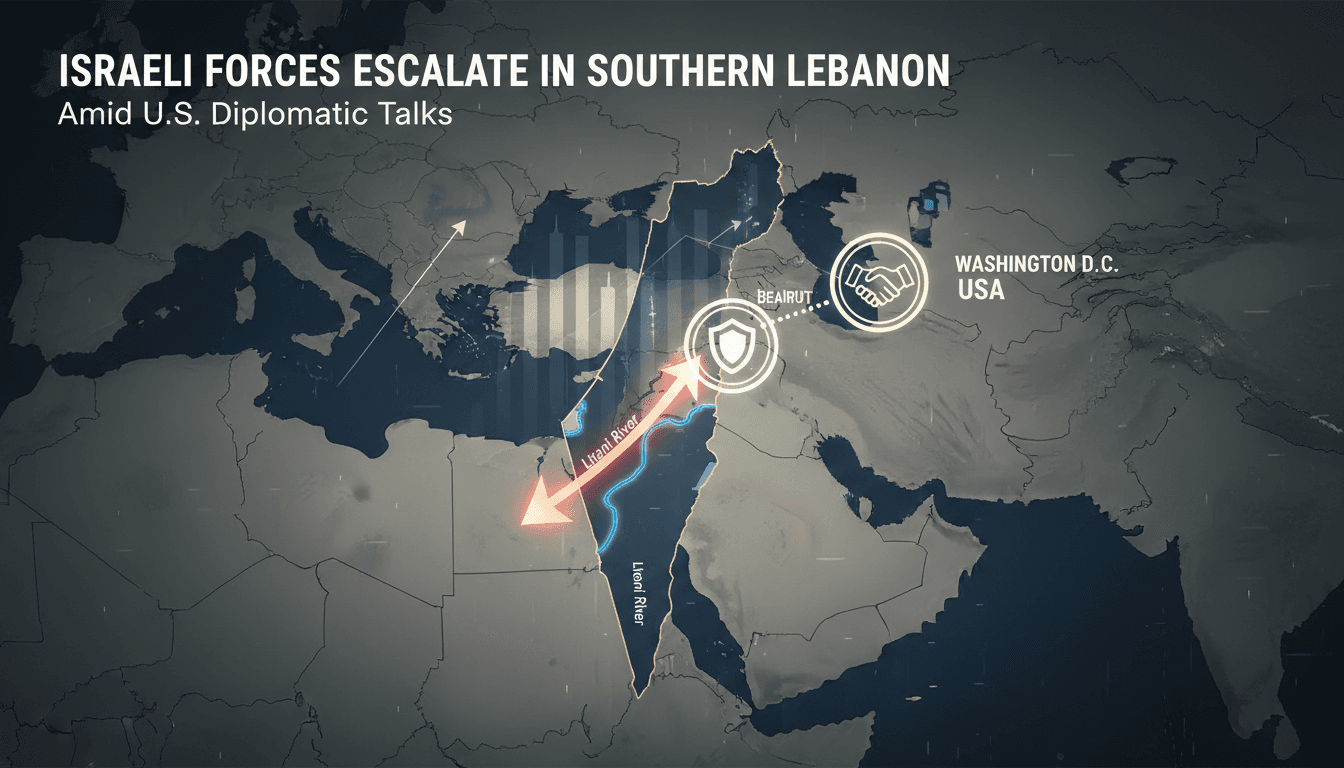
Israeli forces escalate military operations in southern Lebanon amid U.S. diplomatic talks
Here's what it means for you.
The recent escalation of Israeli military operations in southern Lebanon signals a critical juncture in regional stability. As diplomatic discussions unfold in Washington, the potential for a ceasefire could reshape the landscape of military engagement and international relations in the area. Stakeholders, including the U.S. and Lebanese government, are closely monitoring developments that may influence future policy decisions. The outcome of these talks will not only affect Israel and Lebanon but could also have broader implications for U.S. foreign policy in the Middle East. The interplay between military actions and diplomatic negotiations underscores the complexity of the situation.
What happened
Israeli troops have advanced deeper into Lebanon, crossing the Litani River, as confirmed by Prime Minister Netanyahu. This military escalation coincides with ongoing security discussions in Washington, where Lebanese President Aoun has called for a ceasefire to facilitate negotiations. The Israeli 36th Division's crossing marks a significant intensification of military operations in the region.
Heavy bombardments are reported in southern Lebanon, further complicating the already tense situation. As military delegations from both Israel and Lebanon engage in talks in the U.S., the urgency for a resolution becomes increasingly apparent.
The Context
The conflict between Israel and Lebanon has escalated, with military actions occurring alongside diplomatic efforts. Lebanese President Aoun is advocating for a ceasefire as a prerequisite for any meaningful negotiations, emphasizing the need for stability in the region. The timing of these developments is crucial, as the effectiveness of U.S. talks could determine the future trajectory of military and diplomatic actions.
The situation remains precarious, with both nations facing pressure from international actors regarding the ceasefire proposal. The complex interplay between military operations and diplomatic negotiations highlights the challenges in achieving lasting peace.
Takeaway
The outcome of the U.S. security talks will be pivotal in shaping the next steps for both Israel and Lebanon. Observers should watch for potential developments regarding the ceasefire and responses from international actors. The effectiveness of these discussions could either mitigate tensions or exacerbate the ongoing conflict.
As military actions continue, the prospects for a diplomatic resolution remain uncertain. The coming days will be critical in determining the future of the region's stability.
Regional coverage and analysis focused on politics, diplomacy, and business across the Middle East.
"Al-Monitor is known for analytical reporting on Middle East politics and policy developments."
— A47 Editor
Israeli forces push further into Lebanon as delegations meet in US
Israeli Prime Minister Benjamin Netanyahu announced that Israeli forces have advanced deeper into Lebanon, intensifying military operations while delegations from both nations engage in security talks in Washington. The ongoing bombardment of souther...
Regional and international reporting focused on Middle Eastern politics, diplomacy, and economics.
"Asharq Al-Awsat is a Saudi-owned international newspaper reflecting mainstream Gulf political perspectives."
— A47 Editor
Aoun Tells Rubio That Israel Truce Crucial to Talks Progress as Netanyahu Says Troops Crossed Litani
Lebanese Army Commander Joseph Aoun emphasized to U.S. Senator Marco Rubio the necessity of a truce with Israel to facilitate progress in ongoing negotiations. This statement comes amid heightened military tensions, particularly following Israeli Pri...
Arabic-language coverage of political affairs and current events.
"Okaz political coverage typically follows mainstream Saudi framing on national and regional affairs."
— A47 Editor
نتنياهو: قواتنا عبرت نهر الليطاني.. عون: وقف إطلاق النار المدخل للحل
Lebanese President Joseph Aoun and U.S. Secretary of State Marco Rubio discussed the current situation in Lebanon and the region during a phone call, emphasizing the need for a ceasefire as a crucial step towards resolving ongoing issues. The Lebanes...