
Spain reports over 1,000 excess deaths due to June heatwave
Here's what it means for you.
The recent heatwave in Spain has resulted in over 1,000 excess deaths, highlighting a critical public health crisis. This alarming trend underscores the urgent need for effective climate adaptation strategies and public health measures. As extreme weather events become more frequent, stakeholders must prioritize health risk assessments and emergency preparedness. The implications extend beyond immediate health concerns, affecting policy decisions and market dynamics related to climate resilience. This event serves as a wake-up call for governments and organizations to address the growing threat of climate change on public health.
What happened
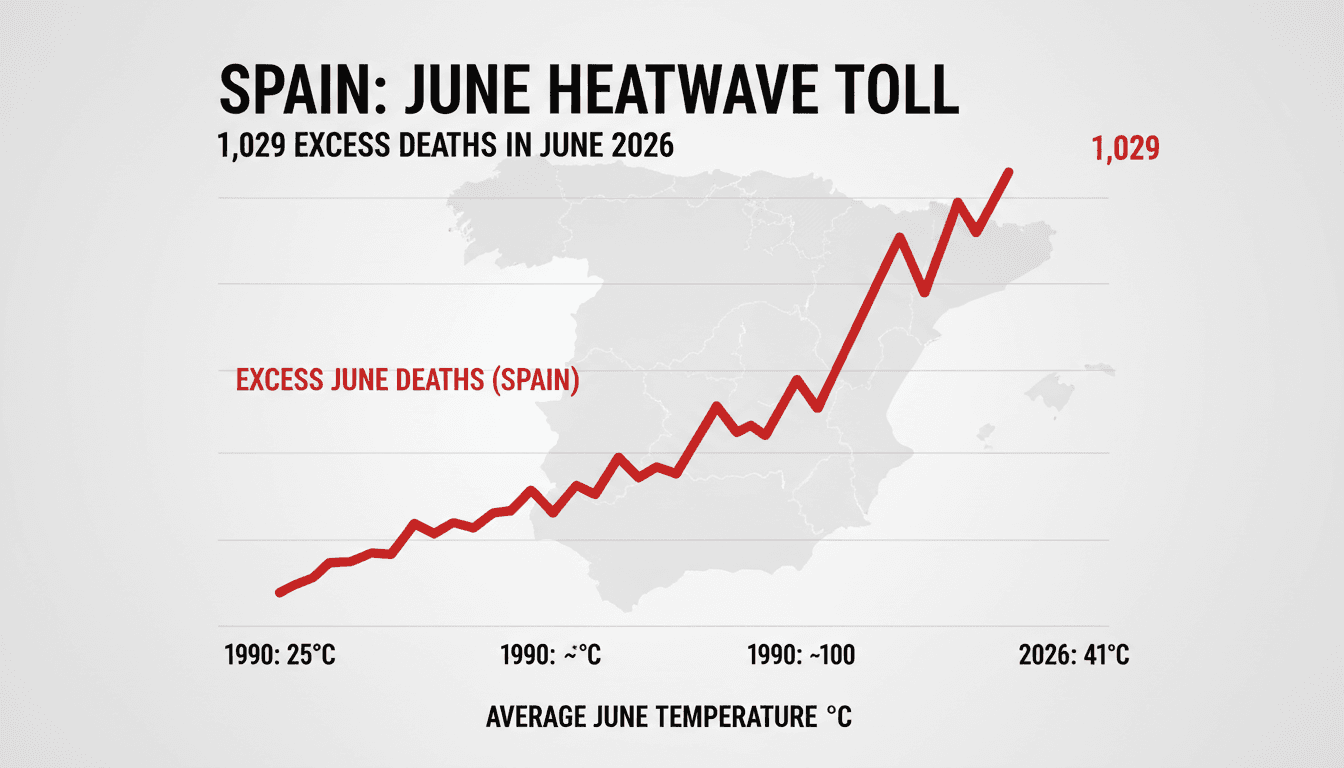
In June 2026, Spain recorded 1,029 excess deaths attributed to a severe heatwave, marking a significant increase compared to previous years. The heatwave saw temperatures soar above 40 degrees Celsius, making June the second-hottest month on record for the country. This extreme weather event lasted five days and impacted approximately 35.7 million people.
The average temperature during this period was 3.2 degrees higher than normal, placing 73% of the population at risk of heat-related health issues. The number of excess deaths is the highest recorded since 2015, emphasizing the severe impact of this heatwave on public health.
The Context
The heatwave in June 2026 is part of a troubling trend, with half of the 12 heatwaves recorded in Spain since 1975 occurring in the past decade. This alarming statistic reflects the increasing frequency and intensity of extreme heat events, which are closely linked to climate change. The event serves as a stark reminder of the health impacts associated with rising temperatures.
With 165 maximum temperature records broken during the month, the situation has raised concerns among health officials and policymakers. The growing threat of extreme heat events necessitates a reevaluation of public health strategies and climate adaptation measures to protect vulnerable populations.
Takeaway
Looking ahead, the increasing frequency and intensity of heatwaves in Spain may lead to more severe health impacts in the future. Stakeholders should monitor future weather patterns and heatwave predictions closely, as these will inform necessary public health responses. Government actions to mitigate heat-related health risks will be crucial in addressing this ongoing crisis.
As climate change continues to influence weather patterns, Spain must prioritize urgent public health measures and climate adaptation strategies to safeguard its population against future heatwaves.
European current affairs, EU politics, and regional developments.
"France 24 is viewed as a globally focused outlet with balanced coverage and a European perspective."
— A47 Editor
Spain records more than 1,000 excess deaths due to June heatwave
Spain has reported 1,028 excess deaths attributed to a severe heatwave that struck in June, marking a significant increase compared to the previous year. This alarming statistic highlights the growing impact of extreme weather conditions on public he...
International news coverage curated for readers in the UAE and Gulf region.
"Emirates 24|7 world coverage presents global developments through a UAE-facing and Gulf-relevant editorial lens."
— A47 Editor
Spain attributes over 1,000 excess deaths to heat in second-hottest June ever
Spain reported 1,029 excess deaths in June 2026 due to a severe heatwave, marking it as the second-hottest June on record, with average temperatures 3.2 degrees Celsius above normal. This heatwave, which peaked on June 23, exposed approximately 73% o...
Regional and international reporting focused on Middle Eastern politics, diplomacy, and economics.
"Asharq Al-Awsat is a Saudi-owned international newspaper reflecting mainstream Gulf political perspectives."
— A47 Editor
Spain Records More Than 1,000 Heat-Related June Deaths
Spain has reported over 1,000 heat-related deaths in June 2026, marking it as the second-hottest June on record with average temperatures 3.2 degrees Celsius above normal. The heatwave peaked on June 23, significantly impacting public health and safe...