
IEA Predicts Oil Supply Surplus by 2027 Amid Middle East Peace Prospects
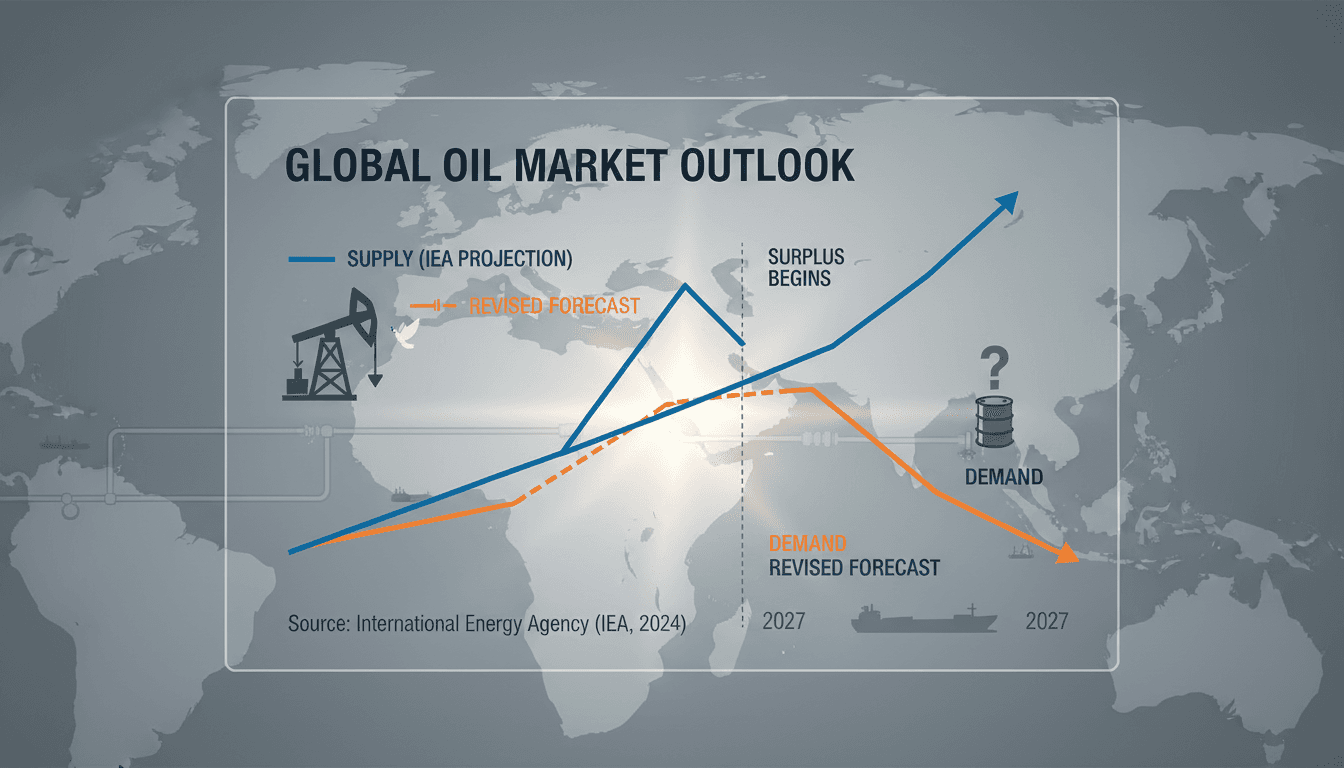
Here's what it means for you.
The International Energy Agency's (IEA) downward revision of oil demand forecasts signals potential shifts in the oil market landscape. If a peace deal in the Middle East holds, the anticipated surplus could reshape pricing and investment strategies. Stakeholders must remain vigilant as these developments unfold, impacting both market dynamics and policy considerations.
What happened
The IEA has revised its oil demand forecast downward, indicating a significant potential surplus in oil supply by 2027. This adjustment is largely attributed to a supply shock and the possibility of a peace deal in the Middle East, which could stabilize oil flows. As oil consumption is expected to decline sharply in the near term, the agency predicts a gradual recovery in oil supply through the Strait of Hormuz.
Investor sentiment remains mixed as they assess the implications of these forecasts and the ongoing geopolitical situation. The IEA's projections suggest that if current trends continue, supply could significantly outpace demand growth in the coming years.
The Context
The backdrop of this forecast is a complex geopolitical landscape in the Middle East, where tensions have historically influenced oil supply and pricing. The IEA's predictions come at a time when oil consumption is projected to fall sharply, raising concerns about oversupply. The anticipated peace deal could play a crucial role in stabilizing oil flows, making this a pivotal moment for the industry.
As stakeholders monitor these developments, the timing of the peace negotiations and their outcomes will be critical. The IEA's insights highlight the interconnectedness of geopolitical events and market dynamics, emphasizing the need for strategic foresight in energy planning.
Takeaway
Looking ahead, it will be essential to monitor developments regarding the Middle East peace deal and its implications for oil consumption trends. The IEA's forecasts suggest that if the peace deal holds, the oil market may face a substantial oversupply situation in the coming years. Investors and policymakers alike should stay alert to updates from the IEA and other relevant sources as the situation evolves.
The outlook for the oil market remains uncertain, heavily influenced by geopolitical developments and the pace of recovery in oil consumption. Stakeholders must remain proactive in their assessments as these factors could significantly impact future market conditions.
Oil, metals, and agriculture: supply/demand headlines, OPEC chatter, inventories, and price action.
"Solid tape for energy and metals traders tracking macro and micro catalysts."
— A47 Editor
Oil prices steady as investors weigh peace deal, IEA glut forecasts
Oil prices have remained steady as investors assess the implications of a potential peace deal between the United States and Iran, alongside forecasts from the International Energy Agency (IEA) regarding oil supply gluts. This stability in oil prices...
U.S. business news, corporate developments, and economy.
"The Wall Street Journal is respected for deep financial and economic reporting with a center-right editorial perspective."
— A47 Editor
Oil Supply Could Far Outstrip Demand Growth if Middle East Peace Deal Holds, IEA Says
The International Energy Agency (IEA) has indicated that oil supply could significantly exceed demand growth if a peace deal in the Middle East holds, as oil consumption is expected to decline sharply before normalizing flows through the Strait of Ho...
Oil, metals, and agriculture: supply/demand headlines, OPEC chatter, inventories, and price action.
"Solid tape for energy and metals traders tracking macro and micro catalysts."
— A47 Editor
IEA slashes oil demand forecast on supply shock, expects gradual recovery in 2027
The International Energy Agency (IEA) has significantly reduced its oil demand forecast, anticipating a contraction of 80,000 barrels per day this year due to ongoing geopolitical tensions, particularly the conflict in Iran. This marks a stark revers...
Regional and international reporting focused on Middle Eastern politics, diplomacy, and economics.
"Asharq Al-Awsat is a Saudi-owned international newspaper reflecting mainstream Gulf political perspectives."
— A47 Editor
IEA Sees Gradual Hormuz Recovery Tipping Into Significant 2027 Surplus
The International Energy Agency (IEA) has projected a gradual recovery in oil supplies through the Strait of Hormuz, anticipating a significant surplus by 2027. This outlook comes amid ongoing geopolitical tensions that have historically disrupted oi...