
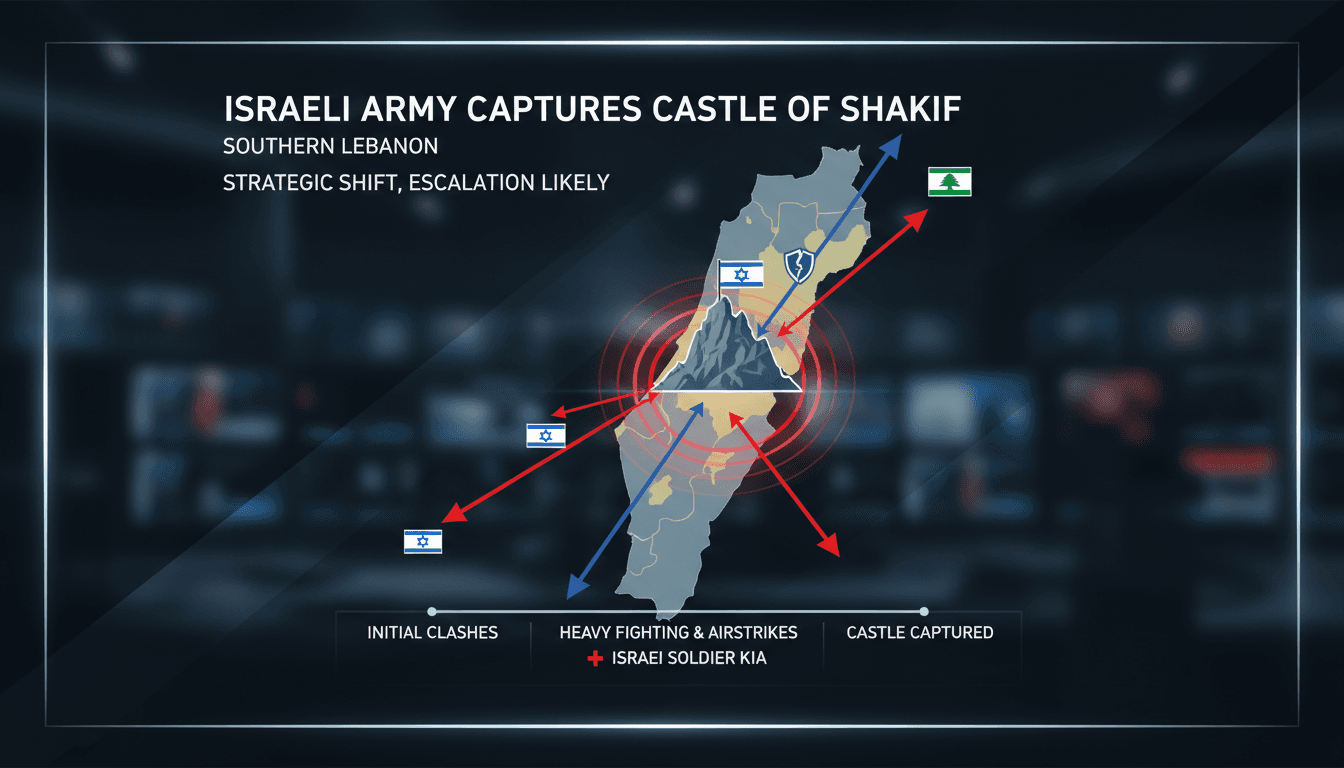
Israeli army captures Castle of Shakif in southern Lebanon
Here's what it means for you.
The Israeli army's capture of Castle of Shakif signifies a pivotal moment in the ongoing conflict with Hezbollah, potentially altering military dynamics in the region. This development may prompt both sides to reassess their strategies, leading to increased tensions and further military engagements. Stakeholders in the region, including international observers, will need to monitor the evolving situation closely as it could impact broader geopolitical stability.
What happened
The Israeli army has announced its control over the strategic Castle of Shakif in southern Lebanon following heavy fighting. This operation involved intense clashes and airstrikes in nearby villages, resulting in casualties on both sides, including the death of an Israeli soldier. The capture marks a significant military advance for Israel, representing the deepest incursion into Lebanon in over 25 years.
Israeli officials have characterized this achievement as tactical, though they do not view it as a strategic turning point in the conflict. Meanwhile, Hezbollah has confirmed its ongoing resistance efforts against Israeli forces in the area, indicating that the situation remains volatile.
The Context
The Castle of Shakif is considered a crucial military position in southern Lebanon, making its capture a notable event in the ongoing conflict. The timing of this operation comes amid heightened tensions and military engagements between Israel and Hezbollah, with both sides preparing for potential escalations. Israeli officials are likely to reassess their military strategies in light of this development, while Hezbollah's response will be critical in shaping the next phase of the conflict.
The long-standing rivalry between Israel and Hezbollah has been marked by cycles of violence, and this latest development could further complicate the already tense situation. As both sides navigate their next moves, the implications for regional stability remain significant.
Takeaway
The situation in southern Lebanon is expected to remain tense, with the potential for further military engagements as both Israel and Hezbollah reassess their strategies. Observers should closely monitor Hezbollah's response to the loss of Castle of Shakif, as it may influence their military tactics moving forward. Additionally, the likelihood of Israeli airstrikes in response to ongoing resistance efforts could escalate the conflict further.
As the situation evolves, the international community will be watching for signs of a broader escalation or a shift in the conflict dynamics. The implications of this military advance will resonate beyond the immediate region, affecting geopolitical relations and security considerations.
Arabic-language coverage of international news and geopolitics.
"RT Arabic is a Russian state-funded outlet often criticized for promoting Kremlin-aligned narratives."
— A47 Editor
حزب الله يكشف تفاصيل "هامة" عن سيطرة الجيش الإسرائيلي على قلعة الشقيف الاستراتيجية في جنوب لبنان
The Islamic Resistance Operations Room of Hezbollah has released a statement detailing the ongoing confrontations surrounding the historic Qalaat al-Shuqif in southern Lebanon, highlighting the strategic significance of the site amid tensions with th...
Pan-Arab news coverage spanning politics, business, sports, and regional affairs.
"Asharq Al-Awsat reflects a broad Arab editorial perspective with strong attention to regional geopolitics."
— A47 Editor
«استخفاف» إسرائيلي باحتلال قلعة الشقيف... وأوامر بقصف بيروت
Israeli security and military experts have characterized the occupation of the Chaqif Castle as a significant but temporary tactical achievement, indicating that it does not suffice to bring about a strategic shift in the ongoing conflict or to decis...
Jordanian news and regional updates.
"Roya News is a Jordanian outlet focused on breaking news and local affairs."
— A47 Editor
حزب الله: المقاومة تخوض معركة استنزاف ضد قوات الاحتلال في منطقة قلعة الشقيف
Hezbollah has confirmed that the historical site of Qalaat al-Shuqif was completely empty of any presence during the ongoing conflict, indicating a strategic focus on the area. The resistance is engaged in a war of attrition against occupying forces ...
Pan-Arab political news and analysis.
"Al-Quds Al-Arabi is a London-based Arabic newspaper known for political coverage."
— A47 Editor
الجيش الإسرائيلي يعلن السيطرة على قلعة الشقيف في جنوب لبنان.. ومقتل أحد جنوده في اشتباك
The Israeli army announced on Sunday that its forces have taken control of the strategic Shuqif Castle in southern Lebanon, marking the deepest incursion into the country in over a quarter of a century. This development follows days of intense fighti...