
Türkiye Central Bank Holds Interest Rate Steady at 37%
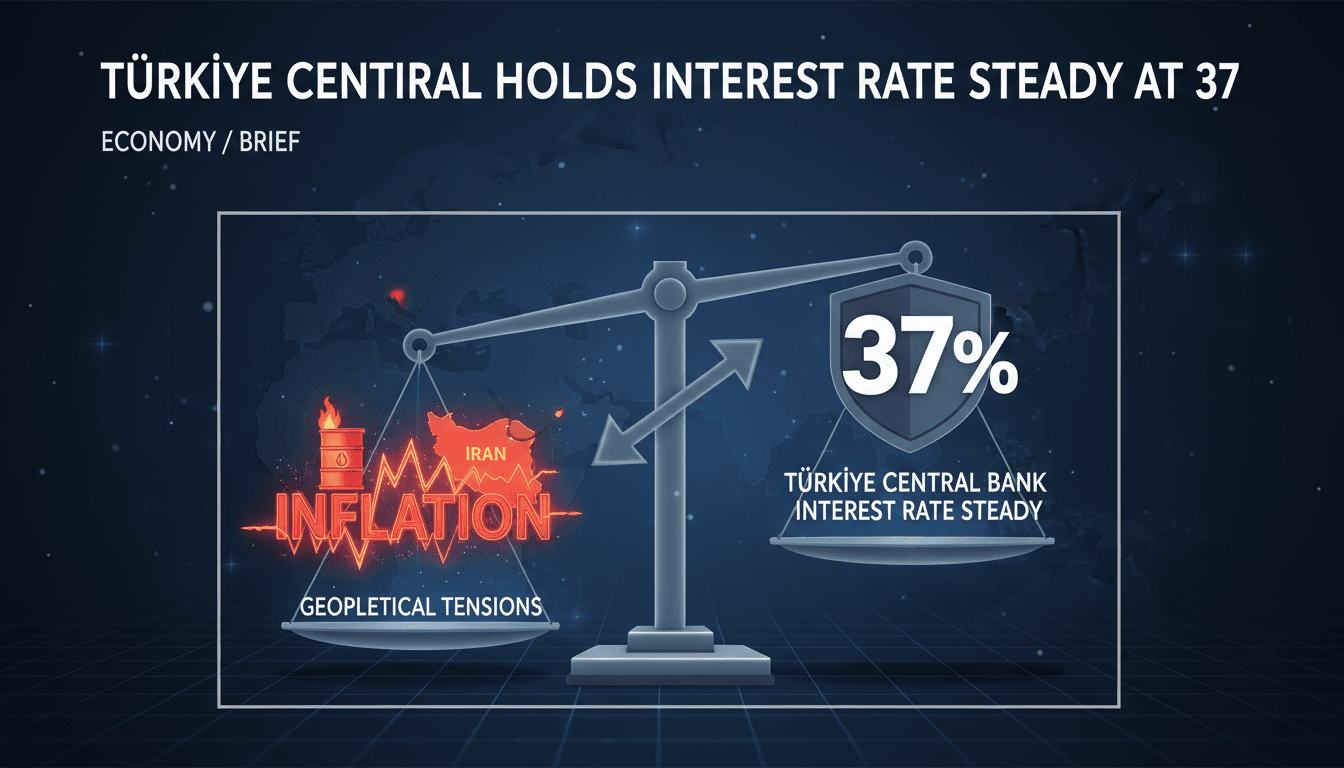
Here's what it means for you.
The Türkiye Central Bank's decision to maintain the key interest rate at 37% signals a cautious approach amid ongoing inflation and energy price volatility. This stability is crucial for businesses and consumers alike, as it reflects the bank's commitment to managing economic challenges while striving for disinflation. Stakeholders should remain vigilant as future rate adjustments will likely hinge on geopolitical developments, particularly in relation to the conflict in Iran.
What happened
The Türkiye Central Bank has decided to hold its key interest rate steady at 37% for the third consecutive time. This decision comes in response to persistent inflation pressures and fluctuating energy prices linked to geopolitical tensions. By maintaining this rate, the central bank aims to stabilize the economy while navigating external economic challenges.
This marks a significant moment for Turkey's monetary policy, as the central bank continues to prioritize a disinflation path. The decision reflects the complexities of the current economic landscape, where inflation remains a pressing concern.
The Context
The decision to keep the interest rate unchanged is set against a backdrop of significant inflationary pressures in Turkey. The central bank is grappling with the impact of fluctuating energy prices, which are exacerbated by the ongoing conflict in Iran. This geopolitical tension has implications not only for energy costs but also for the overall economic stability of Turkey.
Maintaining the interest rate at 37% for three consecutive meetings indicates a strategic approach by the central bank to manage these external pressures. The bank's commitment to a disinflation path is crucial for restoring confidence among investors and consumers alike.
Takeaway
Looking ahead, it will be essential to monitor inflation trends in Turkey, as these will influence future interest rate decisions. Additionally, developments in the Iran conflict could significantly affect energy prices, further impacting the Turkish economy. The central bank's cautious stance suggests that any adjustments to the interest rate will be carefully considered in light of these evolving geopolitical dynamics.
As the situation unfolds, stakeholders should remain alert to how these factors may shape Turkey's economic landscape in the coming months.
Regional and international reporting focused on Middle Eastern politics, diplomacy, and economics.
"Asharq Al-Awsat is a Saudi-owned international newspaper reflecting mainstream Gulf political perspectives."
— A47 Editor
Türkiye Central Bank Commits to Continued Disinflation Path
Pan-Arab news coverage spanning politics, business, sports, and regional affairs.
"Asharq Al-Awsat reflects a broad Arab editorial perspective with strong attention to regional geopolitics."
— A47 Editor
ضغوط التضخم تكبّل «المركزي التركي» وتدفعه لتثبيت الفائدة للمرة الثالثة
The Turkish Central Bank has maintained its key interest rate at 37 percent for the third consecutive time, influenced by inflation pressures and fluctuations in energy prices due to the ongoing conflict in Iran.
Pan-Arab news coverage spanning politics, business, sports, and regional affairs.
"Asharq Al-Awsat reflects a broad Arab editorial perspective with strong attention to regional geopolitics."
— A47 Editor
«المركزي التركي» يثبت الفائدة عند 37 % وسط ترقب تداعيات الحرب
The Central Bank of Turkey has maintained its key interest rate at 37% during its meeting on Thursday, marking the third consecutive meeting where the rate remains unchanged. This decision comes amid ongoing concerns regarding the implications of the...
Macro commentary, policy analysis, growth/inflation themes, and global outlooks.
"Contextual macro coverage that complements day-to-day market headlines."
— A47 Editor
Turkey central bank holds key rate at 37%
The Central Bank of Turkey has decided to maintain its key interest rate at 37%, reflecting a cautious approach amid a cooling economy and inflationary pressures. This decision comes as the bank navigates external challenges, including geopolitical t...