
Iran Suspends Negotiations, Impacting U.S. Financial Markets
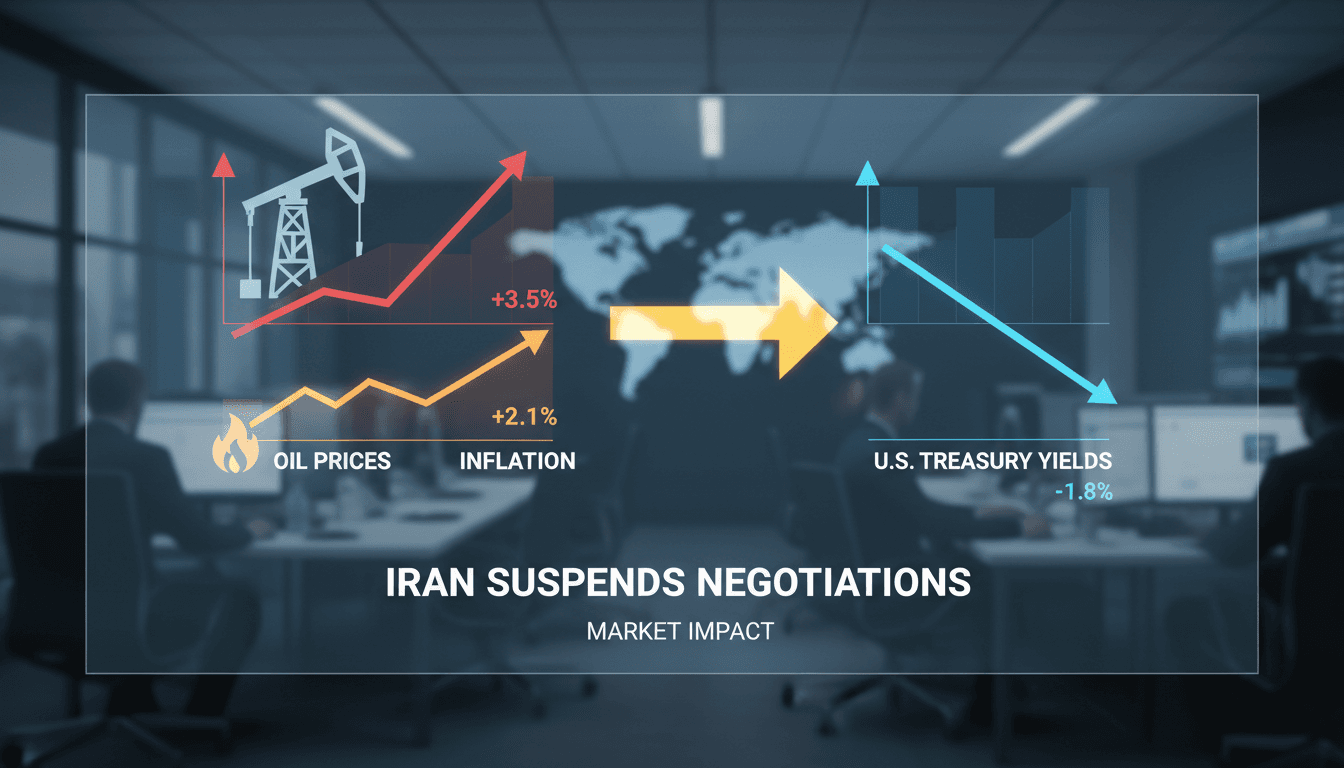
Here's what it means for you.
The suspension of negotiations between Iran and the U.S. has immediate implications for financial markets, particularly in the context of rising inflation concerns. As the dollar strengthens and U.S. Treasury yields decline, investors may need to reassess their strategies in light of potential shifts in monetary policy. The Federal Reserve's response to these developments could significantly influence interest rates and overall economic stability. Market participants should remain vigilant as the situation unfolds, as further volatility may arise from ongoing tensions in U.S.-Iran relations. The interplay between oil prices and inflation will be crucial in determining the Federal Reserve's next moves.
What happened
Iran has reportedly exited negotiations with the U.S., a development that has begun to impact U.S. financial markets. Following this news, the dollar has strengthened while U.S. Treasury yields have fallen. The uncertainty surrounding these negotiations has raised concerns about rising oil prices, which could lead to inflationary pressures.
This shift in market dynamics is significant, as it reflects broader economic implications tied to energy costs and monetary policy. The situation is evolving, and its effects on the economy are being closely monitored by analysts and investors alike.
The Context
The backdrop of this event includes ongoing tensions between the U.S. and Iran, which have historically influenced global oil markets. The strengthening of the dollar and the decline in Treasury yields are direct responses to the uncertainty surrounding these negotiations. As oil prices rise, fears of inflation are becoming more pronounced, prompting discussions about potential adjustments to Federal Reserve interest rate policies.
The timing of this development is critical, as it coincides with a period of heightened scrutiny over inflation and economic growth. Stakeholders, including policymakers and investors, are now faced with the challenge of navigating these complexities in a rapidly changing environment.
Takeaway
As the situation develops, market participants should closely monitor U.S.-Iran negotiations for potential impacts on financial markets. The Federal Reserve's forthcoming announcements regarding interest rates will be particularly important, as they may respond to inflation driven by rising oil prices.
The ongoing uncertainty in U.S.-Iran relations could lead to further volatility, making it essential for investors to stay informed about economic indicators and geopolitical developments.
Markets desk coverage, trading insights, and investor updates.
"WSJ’s markets reporting provides in-depth analysis and context for investors."
— A47 Editor
Treasury Yields, Dollar Rise on Reports Tehran Is Exiting Talks
The U.S. dollar has strengthened following reports that Iran is suspending negotiations, leading to a rise in Treasury yields. This development reflects growing uncertainty in the market regarding diplomatic relations and economic stability in the re...
Global markets, investing, and macroeconomics from a premier financial newsroom.
"Bloomberg is respected for in-depth financial reporting and data-driven analysis."
— A47 Editor
US Bonds Drop as Doubt Over US-Iran Talks Lifts Oil Prices
US Treasury bonds experienced a decline as negotiations between the US and Iran reached an impasse, raising concerns that escalating oil prices could lead to increased inflation and prompt the Federal Reserve to consider raising interest rates.
Currency market headlines, FX rates, central-bank chatter, and macro drivers moving major pairs.
"Investing.com’s forex stream is useful for fast updates across USD, EUR, JPY, GBP and emerging-market FX."
— A47 Editor
U.S. dollar treads water amid Iran ceasefire uncertainty
The U.S. dollar is currently experiencing fluctuations amid ongoing uncertainty regarding a ceasefire in Iran, which has left investors cautious. Recent military actions and diplomatic negotiations between the U.S. and Iran have contributed to this v...