
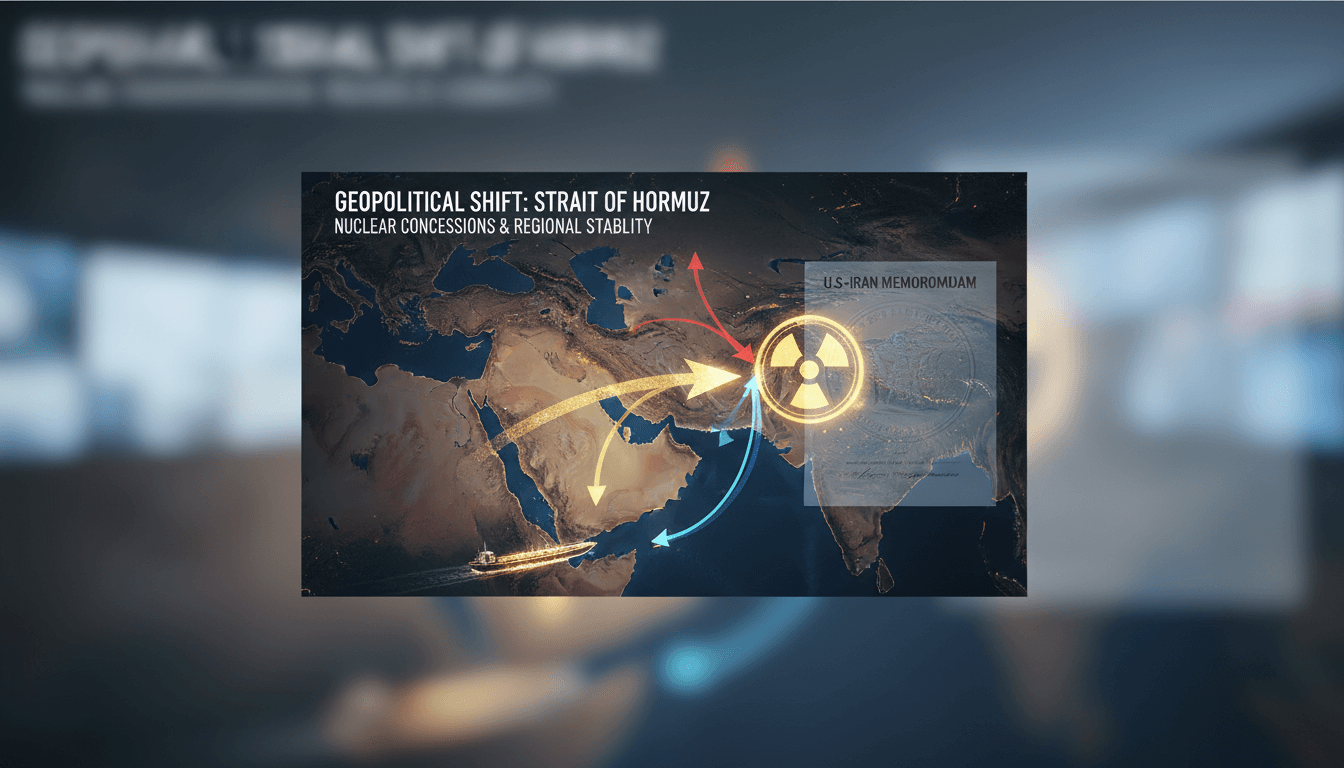
U.S.-Iran memorandum raises concerns over nuclear concessions and regional stability
Here's what it means for you.
The recent U.S.-Iran memorandum has significant implications for international relations, particularly in the Middle East. As the U.S. navigates its diplomatic stance, energy markets may experience volatility due to concerns over Iran's influence in the Strait of Hormuz. Policymakers and analysts will need to closely monitor the reactions from global leaders and the potential shifts in security alliances. The memorandum's concessions to Iran could reshape the balance of power in the region, prompting a reevaluation of U.S. and Israeli strategies. Stakeholders in energy security must remain vigilant as the situation develops.
What happened
The U.S. and Iran have finalized a memorandum that has sparked widespread criticism, particularly regarding concessions made to Iran concerning its nuclear program. This agreement, made public on June 18, 2026, has been labeled by critics as a significant setback for U.S. and Israeli interests. President Trump has defended the memorandum, asserting it as a diplomatic achievement amidst accusations of weakness.
The deal is perceived as a shift in the balance of power in the strategically vital Strait of Hormuz, a crucial waterway for global oil transportation. Critics argue that the concessions could embolden Iran's influence in the region, raising concerns about energy security.
The Context
The U.S.-Iran memorandum comes at a time of heightened tensions in the Middle East, with various stakeholders closely watching its implications. Critics, including Israeli media, have labeled the agreement a "catastrophic capitulation," arguing that it undermines U.S. and Israeli security interests. The timing of the memorandum's release coincides with ongoing debates about the effectiveness of U.S. foreign policy in the region.
As President Trump defends the deal, the administration faces scrutiny over its approach to diplomacy with Iran. The memorandum's impact on the geopolitical landscape will likely influence future interactions between the U.S., Iran, and their respective allies.
Takeaway
The implications of the U.S.-Iran deal will likely influence future geopolitical dynamics in the Middle East. Observers should watch for reactions from European leaders regarding the deal's impact on global security. Additionally, potential responses from Iran and its allies following the memorandum's release will be critical in shaping the next steps in this evolving situation.
As the geopolitical landscape continues to shift, the U.S.-Iran deal will remain a focal point of international relations, with potential ramifications for energy markets and security alliances.
Latest Bahasa Malaysia headlines across national affairs, politics, business, and public developments.
"Astro Awani offers a broad latest-news feed useful for detecting fast-moving Malaysian institutional stories."
— A47 Editor
Trump pertahan MoU AS-Iran, bidas pengkritik
Former President Donald Trump defended the U.S.-Iran Memorandum of Understanding (MoU) amidst criticism, asserting that concerns regarding his administration's firmness are unfounded. He emphasized the importance of the MoU in addressing Iran's nucle...
Breaking news, politics, business, and entertainment from the U.S. and around the world.
"The New York Post is a tabloid-format newspaper known for its sensationalist headlines and conservative-leaning editorial tone."
— A47 Editor
Iran deal details spark criticism, New York celebrates the Knicks’ with championship parade
The recently released U.S.-Iran memorandum of understanding has sparked criticism, as it reportedly grants significant concessions to Tehran regarding its nuclear program and control over the Strait of Hormuz. This agreement, which aims to ease tensi...
UAE-based English-language newspaper covering regional politics, economics, and global affairs.
"The National reflects Emirati policy perspectives while maintaining international editorial standards."
— A47 Editor
From world war diplomacy to US-Iran deal: why Versailles matters
A significant peace deal between the United States and Iran is nearing finalization, with a signing ceremony expected soon. This agreement, which includes a 14-point memorandum, aims to address longstanding tensions between the two nations, particula...
European coverage of Middle East politics and security issues.
"France 24 offers international reporting with a European editorial perspective."
— A47 Editor
'Catastrophic capitulation': Why US and Israel are the biggest losers in Iran deal
The United States and Iran are on the verge of finalizing a peace deal that aims to reopen the strategically significant Strait of Hormuz and initiate nuclear negotiations, following a period of heightened tensions. This agreement has been met with c...
24/7 international news from a French perspective in multiple languages.
"France 24 is viewed as a globally focused outlet with balanced coverage and a European perspective."
— A47 Editor
'Catastrophic capitulation': Why US and Israel are the biggest losers in Iran deal
The United States and Iran are on the verge of finalizing a peace deal that aims to reopen the strategically significant Strait of Hormuz and initiate nuclear negotiations, following a period of heightened tensions. This agreement has been met with c...