
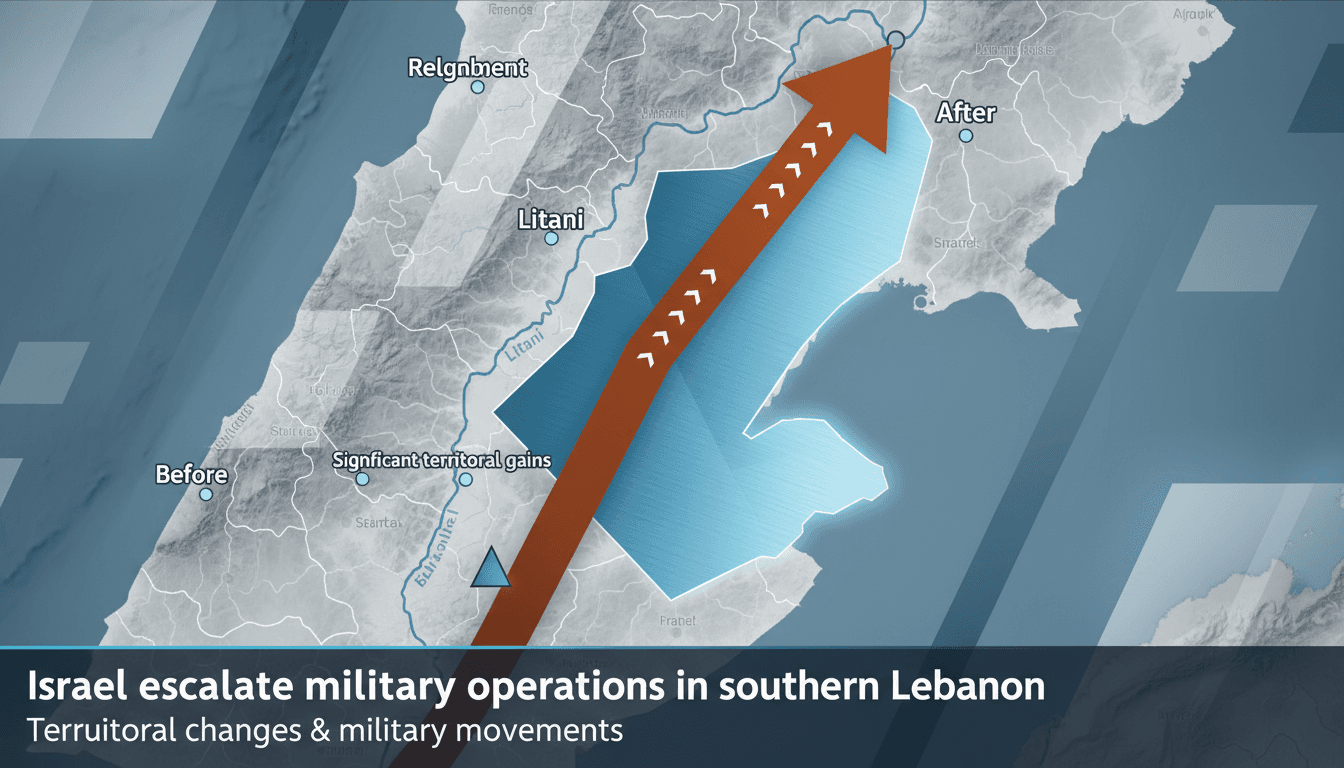
Israel escalates military operations in southern Lebanon with significant territorial gains
Here's what it means for you.
The recent escalation of Israeli military operations in southern Lebanon signals a critical shift in regional dynamics, with potential implications for international diplomacy and security. Stakeholders, including governments and organizations, will need to assess the evolving situation and its impact on peace efforts in the Middle East. The situation may lead to increased tensions and necessitate urgent diplomatic interventions to prevent further violence.
What happened
Israeli troops have advanced into southern Lebanon, marking a significant military operation that has not occurred since 2006. The forces have captured key territories, including the historic Beaufort castle, and crossed the Litani River, which has raised alarms both regionally and internationally. This incursion represents Israel's deepest military presence in Lebanon in over 25 years, prompting an emergency meeting of the UN Security Council to address the escalating conflict.
The military operation has been characterized by strategic territorial gains, with Israeli forces planting their flag on a mountain near Nabatiyeh. The situation remains fluid, with ongoing developments likely to influence regional stability and international relations.
The Context
This military operation is Israel's first significant incursion into Lebanon since the 2006 conflict, highlighting the ongoing tensions in the region. The UN Security Council's emergency meeting underscores the urgency of the situation, as international bodies seek to address the potential for further escalation. The incursion has led to increased frustration and concern within Lebanon, as the government and military assess the implications of Israel's actions.
The backdrop of this conflict includes a complex history of hostilities and territorial disputes, with various stakeholders involved. As the situation unfolds, the international community is closely monitoring developments, recognizing the potential for broader implications in the region.
Takeaway
The situation remains volatile, with the potential for further escalation as international bodies respond to the conflict. Observers will be watching closely for reactions from the Lebanese government and military, as well as responses from international communities regarding potential peace negotiations. The urgency of diplomatic efforts will be paramount in addressing the rising tensions and preventing further violence.
As the conflict evolves, the international community's engagement will be crucial in shaping the future of stability in the region. The coming days will likely reveal more about the strategic calculations of both Israel and Lebanon, as well as the responses from global powers.
European coverage of Middle East politics and security issues.
"France 24 offers international reporting with a European editorial perspective."
— A47 Editor
UN Security Council to meet Monday as Israel deepens Lebanese incursion
Israeli troops have advanced into southern Lebanon, capturing a strategic mountain near Nabatiyeh and marking Israel's deepest incursion into the country in over 25 years. This escalation has prompted the UN Security Council to convene an emergency m...
Coverage of current events and conflicts in the Middle East.
"France 24 is viewed as a globally focused outlet with balanced coverage and a European perspective."
— A47 Editor
UN Security Council to meet Monday as Israel deepens Lebanese incursion
Israeli troops have advanced into southern Lebanon, capturing a strategic mountain near Nabatiyeh and marking Israel's deepest incursion into the country in over 25 years. This escalation has prompted the UN Security Council to convene an emergency m...
Global news coverage with extensive reporting on Middle Eastern conflicts and geopolitics.
"Al Jazeera is a Qatar-based broadcaster known for wide regional coverage and alternative perspectives."
— A47 Editor
Israeli soldiers reach Nabatieh, one of southern Lebanon’s biggest cities
Israeli soldiers have advanced into Nabatieh, one of southern Lebanon's largest cities, marking the first time Israeli forces have crossed the Litani River since 2006. This military escalation comes amid ongoing tensions and clashes with Hezbollah, d...
Comprehensive coverage of Middle Eastern and global issues.
"Al Jazeera is a prominent voice from the Global South, especially the Middle East, with an emphasis on underreported stories."
— A47 Editor
Israeli soldiers reach Nabatieh, one of southern Lebanon’s biggest cities
Israeli soldiers have advanced into Nabatieh, one of southern Lebanon's largest cities, marking the first time Israeli forces have crossed the Litani River since 2006. This military escalation comes amid ongoing tensions and clashes with Hezbollah, d...
Global news coverage with extensive reporting on Middle Eastern conflicts and geopolitics.
"Al Jazeera is a Qatar-based broadcaster known for wide regional coverage and alternative perspectives."
— A47 Editor
Frustration in Lebanon as Israel expands invasion
Israel's ground invasion of Lebanon has escalated as troops have crossed the Litani River, deepening military operations against Hezbollah. This advance follows a series of airstrikes that have resulted in significant casualties and prompted mass eva...
Comprehensive coverage of Middle Eastern and global issues.
"Al Jazeera is a prominent voice from the Global South, especially the Middle East, with an emphasis on underreported stories."
— A47 Editor
Frustration in Lebanon as Israel expands invasion
Israel's ground invasion of Lebanon has escalated as troops have crossed the Litani River, deepening military operations against Hezbollah. This advance follows a series of airstrikes that have resulted in significant casualties and prompted mass eva...