
OECD Downgrades Global Growth Forecasts Amid Middle East Conflict
Here's what it means for you.
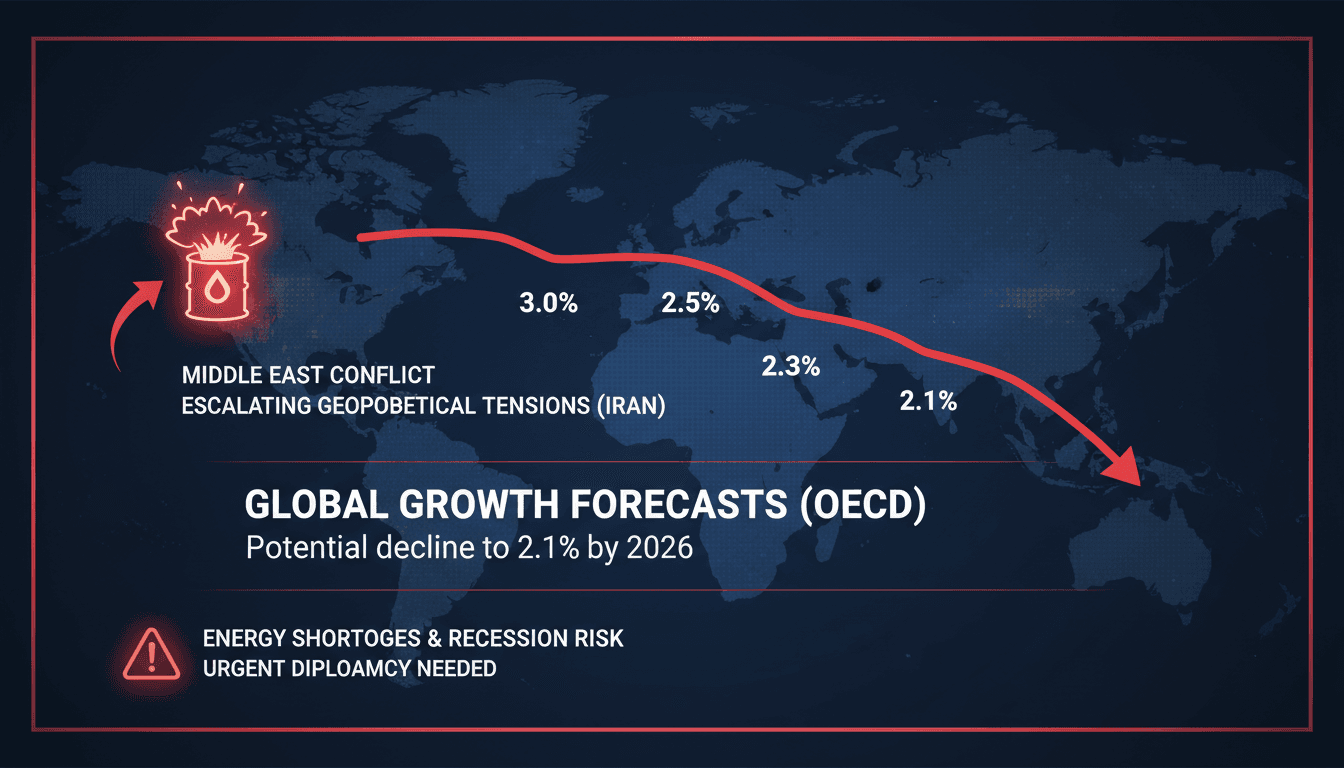
The OECD's downward revision of global growth forecasts signals potential economic instability that could impact markets and policy decisions worldwide. With projections indicating a drop to 2.1% growth in 2026, businesses and investors should prepare for a challenging economic landscape. Policymakers must prioritize diplomatic efforts to address the escalating conflict in the Middle East to mitigate risks of recession and energy shortages.
What happened
The OECD has issued a stark warning regarding the global economy, revising its growth forecasts downward due to the ongoing conflict in the Middle East, particularly concerning Iran. If the situation persists, global growth could plummet to 2.1% in 2026, marking a significant downturn. This projection highlights the potential for widespread recessions and energy shortages if the conflict continues into 2027.
The OECD's latest Economic Outlook emphasizes the severity of the economic impact, which could rival that of major global crises, including the Covid-19 pandemic. The organization has underscored the urgency for international diplomatic efforts to stabilize the situation and avert a deeper economic crisis.
The Context
The current geopolitical tensions in the Middle East are creating a precarious environment for the global economy. The OECD's forecasts reflect concerns that the ongoing conflict could lead to disruptions in energy production and shipping, further exacerbating economic challenges. As growth rates are projected to fall from 3.4% in 2025 to 2.1% in 2026, the implications for major economies are significant.
This situation is compounded by the potential for a prolonged disruption scenario without a peace agreement until 2027. The fragility of the global economy is evident, as stakeholders across various sectors must navigate the uncertainties posed by these geopolitical tensions.
Takeaway
Looking ahead, it is crucial to monitor developments in the Iran conflict and any diplomatic efforts aimed at achieving peace. Economic indicators in major economies will also be vital to watch, as they may signal impending recessions. The international community's response to the ongoing situation will play a critical role in shaping the global economic landscape.
As the OECD warns of potential energy shortages and widespread recessions, the need for urgent international cooperation becomes increasingly apparent. Addressing these challenges will be essential to stabilize economic prospects and prevent further downturns.
Regional and international reporting focused on Middle Eastern politics, diplomacy, and economics.
"Asharq Al-Awsat is a Saudi-owned international newspaper reflecting mainstream Gulf political perspectives."
— A47 Editor
OECD Cuts 2026 Global Growth Forecasts Over Mideast War Fallout
The OECD has revised its global growth forecasts for 2026 downward, attributing the cuts to the ongoing fallout from the conflict in the Middle East, which has exacerbated economic uncertainties. This adjustment reflects the organization's concerns o...
Macro commentary, policy analysis, growth/inflation themes, and global outlooks.
"Contextual macro coverage that complements day-to-day market headlines."
— A47 Editor
OECD cuts global growth outlook, warns of deeper damage without Iran peace deal
The OECD has revised its global growth outlook downward, warning that without a peace deal regarding Iran, the economic impact could deepen significantly. The organization predicts that if the conflict persists, global growth may drop to 2.1% in 2026...
Social/economic commentary and analysis relevant to business and markets.
"WSJ blends data-driven economic insight with commentary on policy and society."
— A47 Editor
OECD Warns of Severe Global Slowdown if Middle East Conflict Is Prolonged
The OECD has issued a warning that a prolonged conflict in the Middle East, particularly involving Iran, could lead to a significant global economic slowdown, with growth potentially dropping to 2.1% in 2026, the weakest rate this century outside of ...
UK and international business news, economics, and corporate coverage.
"The Guardian’s business section covers finance and markets with a progressive editorial tone."
— A47 Editor
OECD predicts spate of recessions globally if Iran conflict drags into 2027
The OECD has warned that if the conflict involving Iran continues without resolution until 2027, global economic growth could plummet to 2.1% in 2026, down from 3.4% in 2025, potentially leading to widespread recessions.
Editor-curated FT homepage stories spanning markets, business, world, and opinion.
"The Financial Times is a globally respected business publication with a centrist/center-left tone and strong markets focus."
— A47 Editor
OECD warns of ‘dark scenario’ if Gulf energy crisis drags on
The OECD has issued a stark warning regarding the potential for a severe economic downturn if the Gulf energy crisis persists, predicting growth rates could fall to levels rarely seen outside of major global events like the Covid-19 pandemic.