
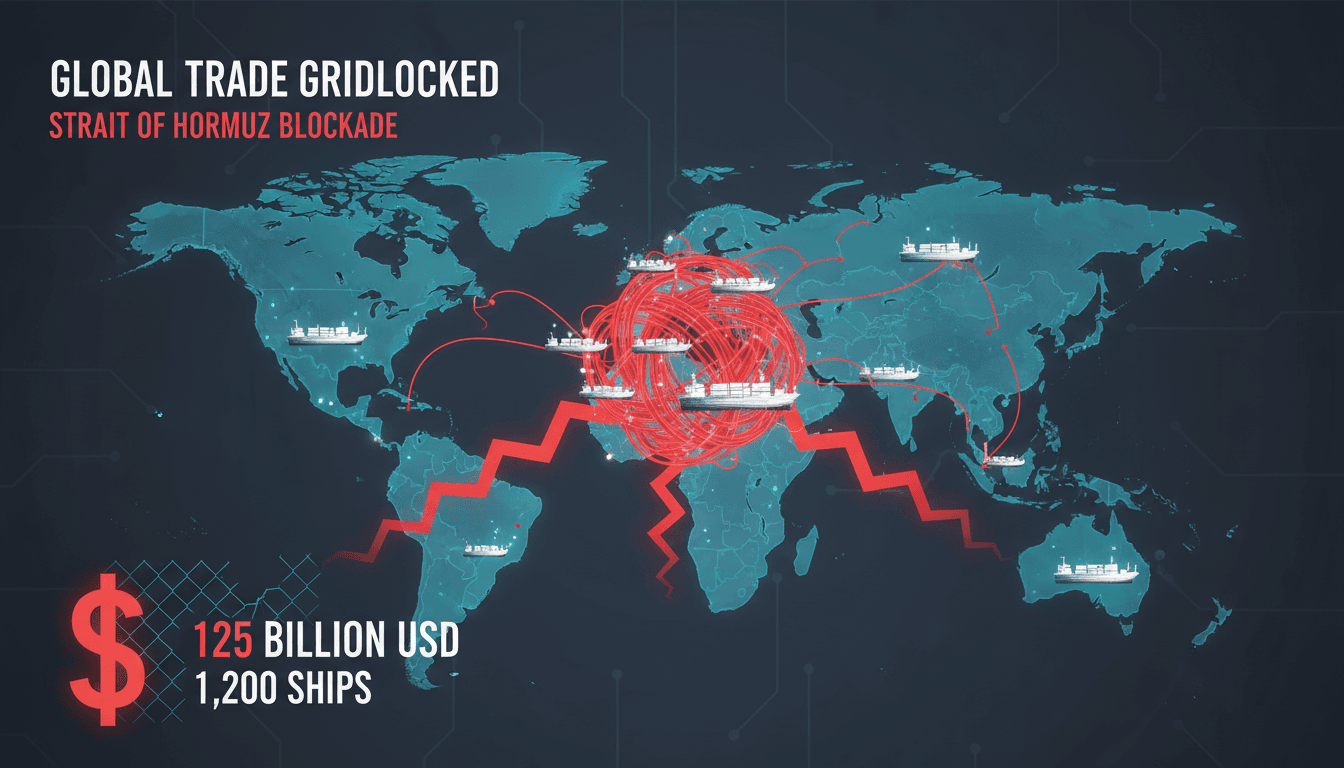
Closure of the Strait of Hormuz Strands 1,200 Cargo Ships and $125 Billion in Goods
Here's what it means for you.
The closure of the Strait of Hormuz has significant implications for global trade, affecting the flow of goods valued at approximately $125 billion. This blockade not only disrupts shipping routes but also raises concerns for thousands of sailors currently stranded. Stakeholders in the maritime industry must prepare for potential long-term impacts on supply chains and market dynamics. As geopolitical tensions escalate, the situation may prompt diplomatic efforts aimed at reopening this critical chokepoint. The ramifications could extend beyond immediate trade disruptions, influencing oil prices and global markets.
What happened
The Strait of Hormuz has been closed, resulting in approximately 1,200 cargo ships being stranded. These vessels are carrying goods valued at around $125 billion, highlighting the economic impact of this unprecedented blockade. The closure has left up to 20,000 sailors unable to proceed through the strait, creating a significant maritime crisis.
Reports of the blockade first emerged on June 23, 2026, with Allianz estimating the value of stranded goods the following day. This situation underscores the vulnerabilities in global trade routes and the potential for escalating geopolitical tensions to disrupt commerce.
The Context
The Strait of Hormuz is a critical chokepoint for global oil and goods transportation, making its closure particularly concerning for the maritime industry. Allianz has identified geopolitical uncertainty as the top risk for this sector, emphasizing the importance of monitoring developments closely. The blockade not only affects shipping companies but also has broader implications for global supply chains.
As tensions rise, the situation could lead to further disruptions in trade, impacting economies worldwide. Stakeholders must remain vigilant as the dynamics of this crisis evolve, with potential diplomatic efforts on the horizon.
Takeaway
The ongoing situation in the Strait of Hormuz could lead to significant disruptions in global trade and shipping routes. Stakeholders should watch for potential diplomatic efforts aimed at reopening the strait, as well as the impact on oil prices and global markets. The maritime industry will need to adapt to the changing landscape as the crisis unfolds.
As developments continue, the implications for thousands of sailors and the broader economy will be critical to monitor. The resolution or escalation of this situation could have far-reaching consequences for international commerce.
Pan-Arab news coverage spanning politics, business, sports, and regional affairs.
"Asharq Al-Awsat reflects a broad Arab editorial perspective with strong attention to regional geopolitics."
— A47 Editor
شحنات بقيمة 125 مليار دولار تنتظر عبور مضيق هرمز
Allianz Research reported that 1,150 ships, carrying goods valued at approximately $125 billion and manned by up to 20,000 sailors, are currently waiting to transit the Strait of Hormuz.
U.S. business news, corporate developments, and economy.
"The Wall Street Journal is respected for deep financial and economic reporting with a center-right editorial perspective."
— A47 Editor
Around $125 Billion of Vessels, Cargo Remain Stranded in Persian Gulf, Allianz Says
Allianz reported that approximately $125 billion worth of vessels and cargo remain stranded in the Persian Gulf due to geopolitical tensions, particularly the closure and mining of the Strait of Hormuz. This blockade has left nearly 1,200 cargo ships...
Editor-curated FT homepage stories spanning markets, business, world, and opinion.
"The Financial Times is a globally respected business publication with a centrist/center-left tone and strong markets focus."
— A47 Editor
Hormuz closure strands almost 1,200 cargo ships with $125bn worth of goods
The closure of the Strait of Hormuz has stranded nearly 1,200 cargo ships, carrying goods worth approximately $125 billion, due to an unprecedented blockade. This situation has raised significant concerns regarding the future of global maritime trade...