
Trump Faces Political Hurdles in Finalizing Iran Peace Deal
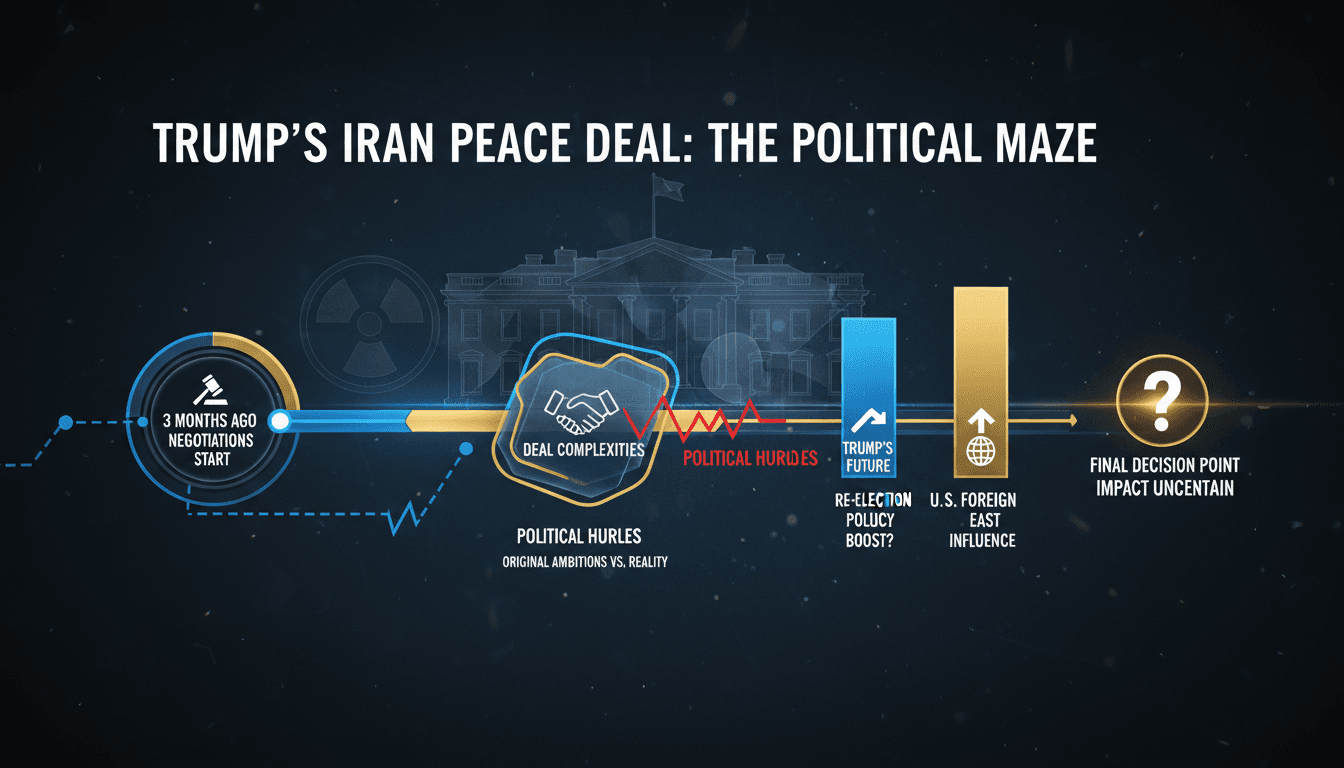
Here's what it means for you.
The ongoing negotiations for a peace deal with Iran are pivotal for President Trump's political future and U.S. foreign policy. As the complexities of the deal unfold, stakeholders are closely monitoring its implications for international relations. The outcome could redefine U.S.-Iran dynamics and influence Trump's legacy in office.
What happened
President Trump is currently facing significant challenges in finalizing a peace deal with Iran, which has evolved from his original ambitious goals. The negotiations have been ongoing for three months, highlighting the difficulties of aligning the agreement with the expectations set forth at the outset. This tentative deal requires Trump's approval and has encountered numerous challenges and criticisms along the way.
The complexities of dealing with Iran, a long-standing adversary of the U.S., have become increasingly apparent. As the negotiations progress, skepticism remains regarding whether the deal will meet Trump's initial objectives. The situation underscores the intricate nature of U.S.-Iran relations, which have been fraught with tension for decades.
The Context
The Iran deal represents a critical foreign policy decision for President Trump, with potential ramifications for both his administration and the broader geopolitical landscape. The negotiations began three months ago, and the evolving nature of the discussions reflects the challenges inherent in reaching an agreement with a historically difficult adversary. Trump's ability to navigate the political landscape is increasingly constrained, raising questions about the feasibility of achieving his original goals.
As the negotiations continue, various stakeholders, including Congress, are poised to react to the potential approval of the deal. The outcome will not only impact U.S.-Iran relations but also shape the political landscape for Trump moving forward. The complexities involved in this process highlight the delicate balance required in international diplomacy.
Takeaway
The success or failure of the Iran deal will likely have significant implications for Trump's political future and his foreign policy legacy. Observers should watch for reactions from Congress regarding the approval of the deal, as these responses could influence the trajectory of U.S.-Iran relations. Additionally, the potential implications for future diplomatic efforts in the region will be critical to monitor.
As the situation develops, the outcome of this deal could redefine the U.S.'s approach to foreign policy in the Middle East. The stakes are high, and the political ramifications will resonate beyond the immediate negotiations.
News from the United States including domestic politics, society, and culture.
"The Guardian is known for its progressive editorial stance and in-depth analysis, often advocating for social justice, environmental issues, and liberal values."
— A47 Editor
Looming Iran peace deal shows how Trump’s maximalist goals have shrunk
President Donald Trump is navigating a complex landscape as he attempts to negotiate a peace deal with Iran, a process that has revealed the limitations of his previously maximalist foreign policy goals. After months of discussions, the reality has s...
International coverage from The Guardian's global desks.
"The Guardian is known for its progressive editorial stance and in-depth analysis."
— A47 Editor
Looming Iran peace deal shows how Trump’s maximalist goals have shrunk
President Donald Trump is navigating a complex landscape as he attempts to negotiate a peace deal with Iran, a process that has revealed the limitations of his previously maximalist foreign policy goals. After months of discussions, the reality has s...
Capitol Hill news, legislation, and policy insight.
"The Hill specializes in U.S. politics and policy, with a focus on Capitol Hill developments and a reputation for insider reporting."
— A47 Editor
Trump faces heavy lift on selling Iran deal
President Trump is facing significant challenges in promoting his tentative peace deal with Iran, which he claims aligns with his objectives for the ongoing conflict. The deal's approval is critical as it aims to reshape U.S. relations with Iran amid...
Key macro releases (CPI, jobs, PMIs), surprise indexes, and market implications.
"Great for data-print awareness and instant read-through to rates and risk assets."
— A47 Editor
Analysis-Trump’s room to maneuver narrows as US, Iran close in on framework deal
The United States and Iran are reportedly nearing a framework deal to extend a ceasefire, which is pending approval from President Donald Trump. This development comes amid ongoing military tensions, including recent strikes by the U.S. on Iranian as...