
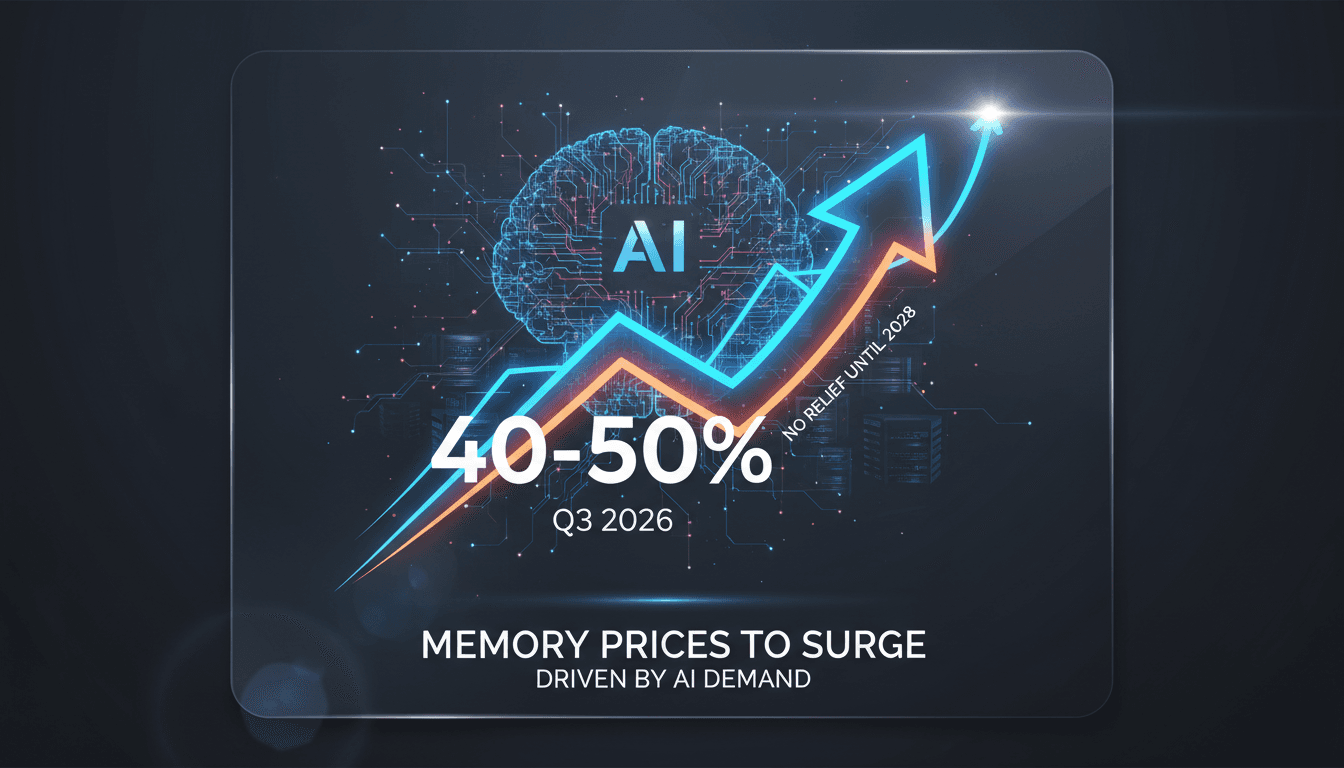
Memory prices expected to surge due to AI demand
Here's what it means for you.
The anticipated surge in memory prices signals a significant shift in the tech landscape, primarily driven by the escalating demand for AI applications. As memory costs rise, companies may need to reassess their budgets and production strategies, particularly in consumer electronics. This trend could lead to increased prices for end-users, impacting everything from smartphones to laptops. The ongoing supply-demand imbalance suggests that the tech industry will face challenges in meeting consumer needs while adapting to the evolving market dynamics. Stakeholders must stay vigilant as these changes unfold, as they will likely influence investment and operational decisions across the sector.
What happened
Jefferies Equity Research has forecasted a substantial increase in memory prices, primarily attributed to the growing demand from AI applications. Analysts predict a 40-50% rise in RAM prices in Q3 2026, followed by an additional 30-40% increase in Q4. This trend indicates a persistent supply-demand imbalance that is expected to last until at least 2028.
The memory market is currently experiencing unprecedented price hikes, which are expected to impact consumer electronics capacity significantly. As a result, companies may need to adapt their production strategies to navigate these challenges effectively.
The Context
The memory price surge is being driven by a notable shift in production strategies, with industry experts like Ming-Chi Kuo predicting that 15-20% of consumer electronics capacity will transition to data centers by 2027. This shift underscores the growing importance of AI technology and its influence on the memory market.
As demand for AI applications continues to rise, the memory supply-demand gap is projected to widen through 2027. This situation creates a challenging environment for manufacturers and consumers alike, as they grapple with rising costs and limited availability.
Takeaway
Looking ahead, stakeholders should closely monitor developments in AI technology and its impact on memory demand. The anticipated price increases will likely pressure the memory market, prompting shifts in production strategies across the tech industry.
As companies adapt to these changes, it will be crucial to observe how consumer electronics production evolves in response to the growing need for data center capacity. The ongoing demand for AI technology is expected to keep memory prices elevated for the foreseeable future.
Tech news, hardware, and AI tools coverage.
"PC/tech site increasingly covering AI hardware and apps."
— A47 Editor
RAM prices expected to rise another 40-50% in Q3 2026, and then 30% more in Q4 as AI demand outpaces supply
RAM prices are projected to increase by 40-50% in Q3 2026 and by an additional 30-40% in Q4, driven by surging demand from AI applications, according to Ethan Tan, a memory industry consultant. This forecast comes amid an ongoing RAM shortage that is...
Tech news and guides occasionally covering AI.
"Independent tech blog with practical tips and news."
— A47 Editor
Memory Prices Expected to Rise Up to 50% in Q3 With No Relief Until 2028, Jefferies Predicts
Jefferies Equity Research has forecasted a significant rise in memory prices, predicting an increase of up to 50% in the third quarter of 2026, with no relief anticipated until 2028. This projection highlights ongoing challenges in the semiconductor ...
Curated tech headlines including AI stories.
"Influential aggregator surfacing the day’s top tech/AI links."
— A47 Editor
Kuo: the memory supply-demand gap will widen through 2027, with an estimated 15%-20% of 2026 consumer electronics capacity shifting to data centers in 2027 (Ming-Chi Kuo)
Ming-Chi Kuo has projected that the memory supply-demand gap will continue to widen through 2027, with an estimated 15%-20% of consumer electronics capacity transitioning to data centers in 2027. This shift indicates a significant change in the alloc...