
Canada's inflation rate hits 29-month high at 3.2%
Here's what it means for you.
The recent surge in Canada's inflation rate to 3.2% signals rising cost pressures that could affect consumers and businesses alike. With gasoline prices climbing significantly, households may feel the pinch as they budget for essential expenses. This inflationary trend may prompt government officials to consider policy adjustments aimed at alleviating the financial burden on Canadians. As inflation impacts purchasing power, businesses may also need to reassess pricing strategies to remain competitive while managing costs. The situation calls for close monitoring of oil price fluctuations and their broader economic implications.
What happened
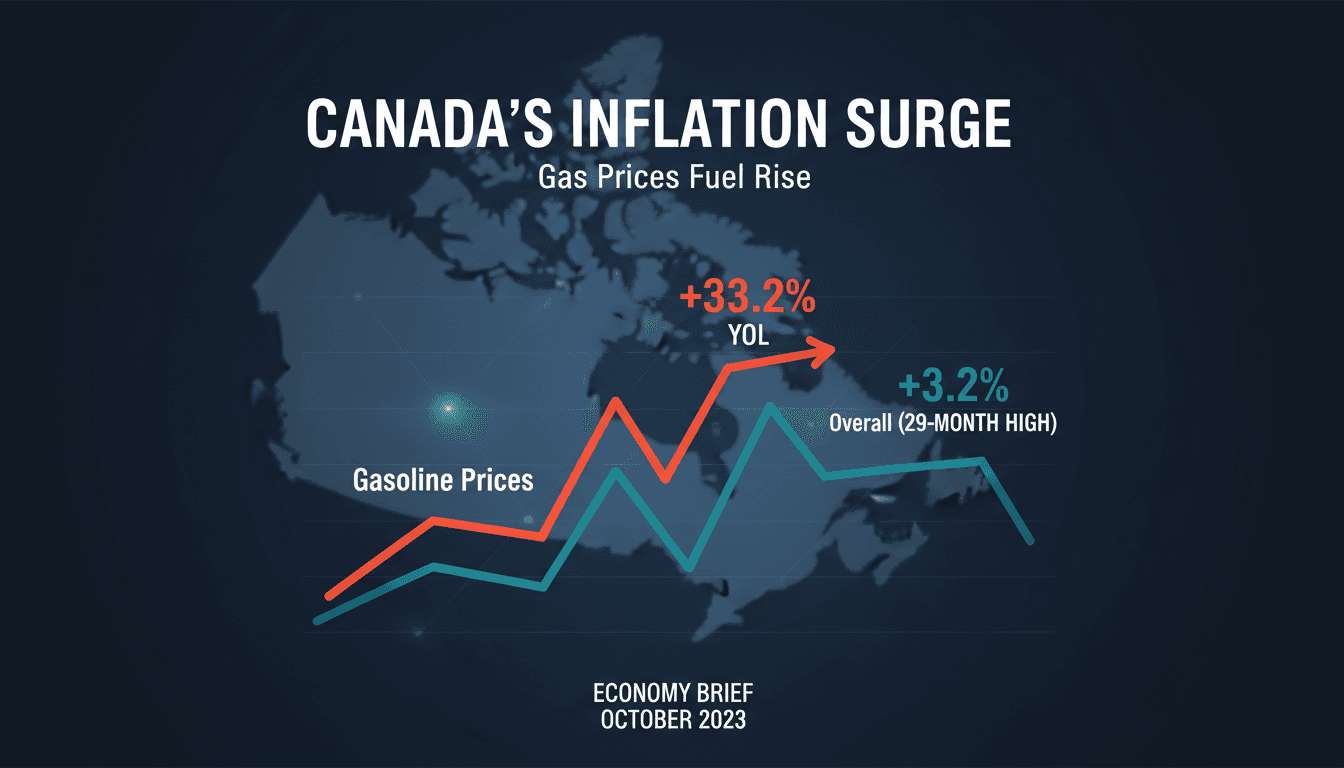
Canada's inflation rate has reached 3.2% in May, marking the highest level in nearly two and a half years. This increase is largely attributed to a dramatic 33.2% rise in gasoline prices compared to the previous year. Statistics Canada reported this inflation spike on June 22, 2026, highlighting the significant influence of higher oil and gas prices on overall inflation.
Despite this notable increase, price pressures in other sectors have remained relatively stable, suggesting that the inflationary concerns are primarily concentrated within the energy market. The current economic landscape indicates a focused issue rather than a widespread inflationary trend across all sectors.
The Context
The rise in Canada's inflation rate is a reflection of broader economic pressures, particularly in the energy sector. Gasoline prices have surged significantly, contributing to the overall inflation figure. Stakeholders, including consumers and policymakers, are closely watching these developments as they navigate the implications of rising costs.
The timing of this inflation increase is critical, as it coincides with ongoing volatility in oil prices. This situation raises concerns about the potential for further inflationary pressures, which could lead to adjustments in government policy aimed at protecting consumers from escalating costs.
Takeaway
Looking ahead, the ongoing rise in oil prices may continue to impact inflation rates in the coming months. It is essential to monitor future trends in oil prices and their potential effects on consumer spending and overall economic stability. Government responses to rising inflation and consumer price pressures will also be crucial in shaping the economic landscape.
As the situation evolves, stakeholders should remain vigilant and prepared for potential policy changes that could arise in response to these inflationary challenges.
Comprehensive coverage of Middle Eastern and global issues.
"Al Jazeera is a prominent voice from the Global South, especially the Middle East, with an emphasis on underreported stories."
— A47 Editor
Canada’s inflation hits 29-month high amid heightened oil prices
Canada has reported a significant rise in inflation, reaching a 29-month high, primarily driven by a 33.2 percent annual increase in petrol prices. This surge in oil prices has contributed to the overall inflationary pressures in the country.
Social/economic commentary and analysis relevant to business and markets.
"WSJ blends data-driven economic insight with commentary on policy and society."
— A47 Editor
Canada Inflation Heats Up to 3.2% in May
In May, inflation in Canada surged to 3.2%, marking the highest level in 29 months, primarily driven by rising gasoline prices. Despite this spike, other price pressures remained largely stable, indicating a complex economic landscape.
National coverage of politics and current events across Canada.
"Global News is a mainstream Canadian outlet with a centrist editorial stance, focusing on factual reporting."
— A47 Editor
Inflation spiked to 3.2% in May amid higher gas prices, says StatCan
Inflation in Canada rose to 3.2% in May, driven primarily by increased oil and gasoline prices, as reported by Statistics Canada. This marks a significant rise from the previous month's inflation rate of 2.8%, which was also influenced by higher gas ...