
Iran Suspends Indirect Negotiations with the U.S. Amid Rising Tensions
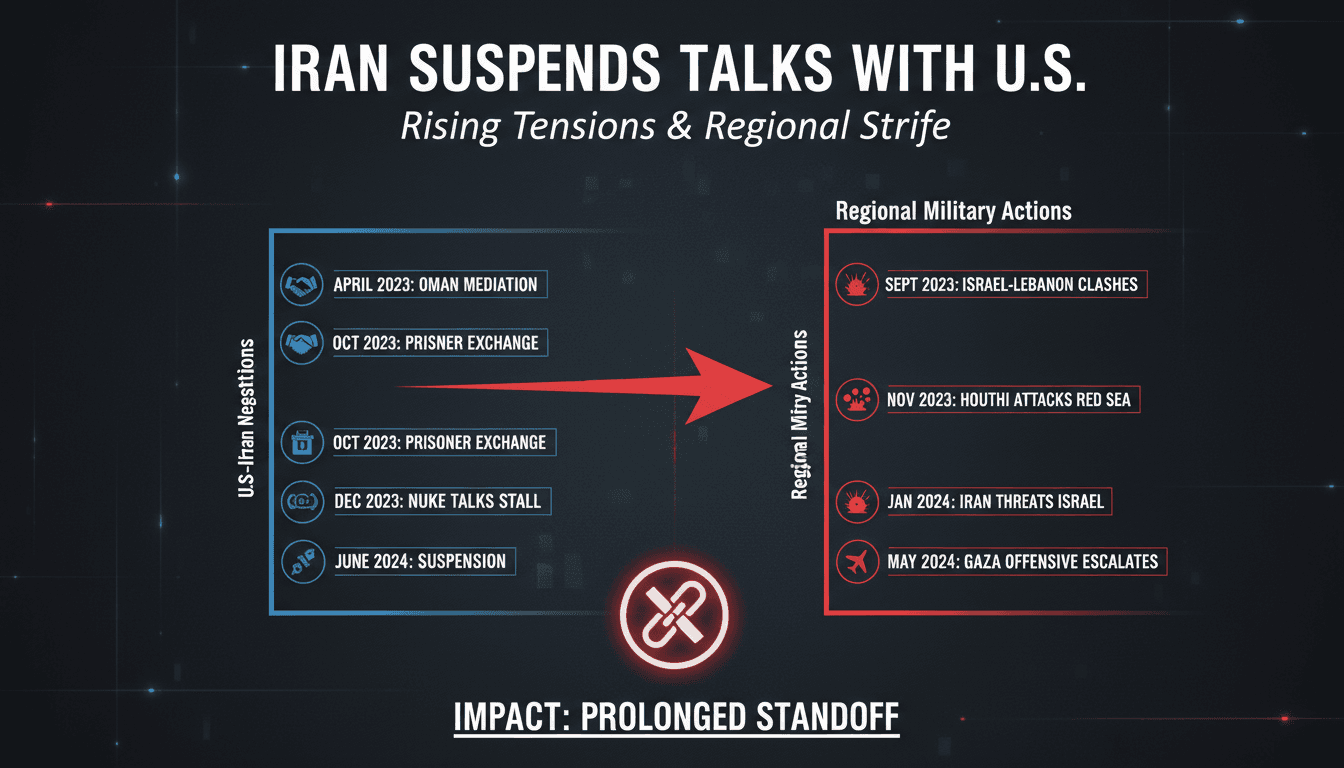
Here's what it means for you.
The suspension of indirect negotiations between Iran and the U.S. signals a critical juncture in international relations, particularly affecting regional stability. Stakeholders in global markets should brace for potential volatility as tensions escalate. The lack of communication could hinder diplomatic efforts, leading to increased uncertainty in policy-making and economic strategies. As Iran threatens military action against Israel, the implications for U.S. foreign policy are significant. The situation may prompt a reevaluation of strategies concerning economic sanctions and military presence in the region.
What happened
Iran has reportedly suspended indirect communications with the U.S. amid escalating tensions in the region. This decision comes in the wake of increased Israeli military actions in Lebanon, which have heightened fears of conflict. President Trump has stated that he has not received any official notification from Iran regarding the suspension of talks, despite reports suggesting otherwise.
Iran's threats against Israel coincide with its decision to halt communication with the U.S., indicating a potential escalation in hostilities. The ongoing disputes over Iran's nuclear and missile programs further complicate the negotiations, which were already fraught with challenges.
The Context
The diplomatic landscape between the U.S. and Iran is increasingly fraught with tension as both sides navigate a complex web of regional conflicts. President Trump has emphasized the continuation of economic pressure on Iran, which remains a key strategy despite the stalled negotiations. The situation is exacerbated by Iran's threats to target northern Israel if military actions against Lebanon persist.
This moment is critical not only for U.S.-Iran relations but also for broader Middle Eastern stability. The interplay of military actions and diplomatic efforts will be closely monitored by global stakeholders, as the potential for a prolonged standoff looms large.
Takeaway
As tensions rise, the likelihood of a diplomatic resolution appears diminished, with both sides potentially preparing for a prolonged standoff. Observers should monitor developments in Israeli military actions and Iranian responses closely, as these could significantly impact regional dynamics. Additionally, any changes in U.S. diplomatic strategy towards Iran will be crucial in shaping the future of these relations.
The situation remains precarious, with the potential for further escalation if diplomatic efforts fail. Stakeholders should remain vigilant as the implications of this standoff unfold.
Arabic-language coverage of Saudi, regional, and international affairs.
"Al Bilad offers mainstream Saudi newspaper coverage across domestic and broader Arab topics."
— A47 Editor
طهران تربط الاتفاق بـ«لبنان».. وترمب: لم نتلق ما يفيد بالتعليق.. تباين يعقد مسار التفاوض
The indirect negotiations between the United States and Iran have become more complicated, with mixed signals emerging regarding the future of the talks amid rising regional tensions, particularly in Lebanon. U.S. President Donald Trump has stated th...
Arabic-language coverage of political affairs and current events.
"Okaz political coverage typically follows mainstream Saudi framing on national and regional affairs."
— A47 Editor
ترمب: لم أتلقَّ ما يؤكد تعليق المفاوضات مع طهران
U.S. President Donald Trump stated that he has not received any official notification from Iran regarding the suspension of negotiations with the United States, denying any prior knowledge of such a decision. This follows media reports suggesting tha...
Pan-Arab news coverage spanning politics, business, sports, and regional affairs.
"Asharq Al-Awsat reflects a broad Arab editorial perspective with strong attention to regional geopolitics."
— A47 Editor
إيران تهدد شمال إسرائيل... وترمب يؤكد استمرار المحادثات
Iran has threatened to target northern Israel if Tel Aviv carries out its threat to bomb Beirut and its southern suburbs, marking an escalation in tensions that coincides with Tehran halting indirect communications with Washington.