
Japan and US Discuss Yen Weakness Amid Currency Concerns
Here's what it means for you.
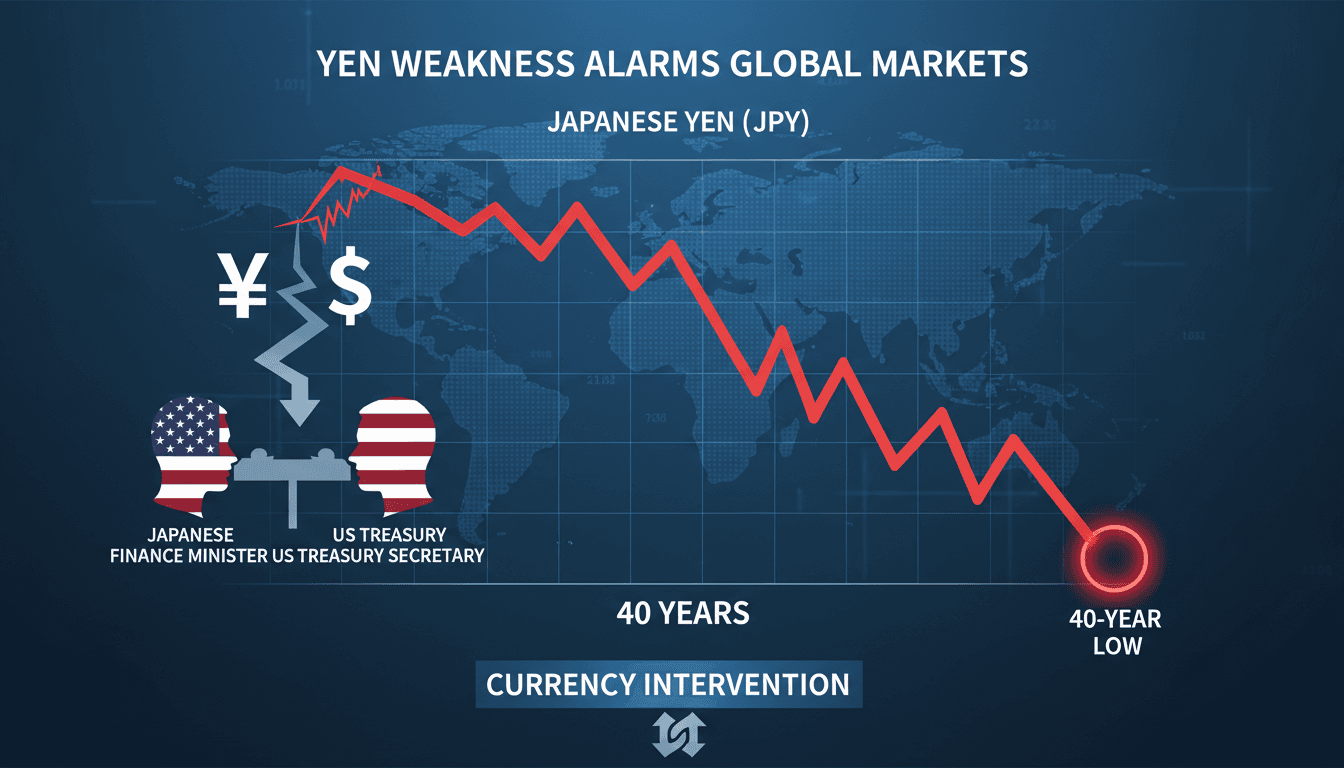
The recent discussions between Japan and the US regarding the yen's weakness highlight significant concerns for global financial markets. As the yen reaches its lowest point in 40 years, the potential for coordinated intervention could reshape currency dynamics. Stakeholders should remain vigilant as these developments may influence economic stability and trading strategies. The alignment of US and Japanese foreign exchange policies could signal a proactive approach to managing currency volatility. Investors and policymakers alike will be closely monitoring the situation for any signs of intervention or further statements from officials.
What happened
Japanese Finance Minister Satsuki Katayama and US Treasury Secretary Scott Bessent engaged in talks focused on the yen's significant weakness. The discussions were prompted by rising concerns over the currency's precarious value, which is currently at its lowest in four decades. Following the talks, traders noted a short-lived boost in the yen, indicating market sensitivity to the discussions.
The dialogue reflects a growing alignment between the two nations on foreign exchange issues, as both seek to stabilize the currency amidst increasing market volatility. The urgency of the situation underscores the potential for intervention to support the yen's value.
The Context
The yen's current weakness is a critical issue for both Japan and the US, as it poses risks to economic stability and market confidence. With traders on high alert for potential currency intervention, the stakes are high for both nations. The discussions between Katayama and Bessent signify a pivotal moment in addressing these challenges.
As the yen struggles, the implications extend beyond Japan and the US, potentially impacting global currency markets. The timing of these talks is crucial, as the economic landscape continues to evolve amid rising volatility and uncertainty.
Takeaway
Looking ahead, the potential for coordinated actions between Japan and the US may increase as both nations seek to stabilize the yen. Stakeholders should monitor for any announcements regarding currency intervention or further policy alignment. The ongoing discussions could lead to significant shifts in foreign exchange strategies that may affect global economic stability.
As the situation develops, attention will be focused on the responses from both governments and the market's reaction to any interventions. The outcome of these discussions will be pivotal in shaping future currency dynamics.
Macro commentary, policy analysis, growth/inflation themes, and global outlooks.
"Contextual macro coverage that complements day-to-day market headlines."
— A47 Editor
Japan’s Katayama held talks with US Treasury’s Bessent on financial markets
Japan's Finance Minister Satsuki Katayama held discussions with U.S. Treasury Secretary Scott Bessent regarding financial markets, focusing on foreign exchange policies and the current state of the yen. This conversation reflects ongoing efforts to a...
Global markets, investing, and macroeconomics from a premier financial newsroom.
"Bloomberg is respected for in-depth financial reporting and data-driven analysis."
— A47 Editor
US-Japan More Aligned on FX, Katayama Says After Bessent Talks
Japan’s Finance Minister Satsuki Katayama reported a phone conversation with US Treasury Secretary Scott Bessent, indicating a closer alignment on foreign exchange policies, although the yen's value remains near its weakest level in four decades.
Global markets, investing, and macroeconomics from a premier financial newsroom.
"Bloomberg is respected for in-depth financial reporting and data-driven analysis."
— A47 Editor
Yen Intervention Risk Rises After Katayama-Bessent Talks
Currency traders are increasingly vigilant regarding potential intervention in the yen's value following a recent discussion between Japanese Finance Minister Satsuki Katayama and U.S. Treasury Secretary Scott Bessent, amid ongoing yen weakness.