
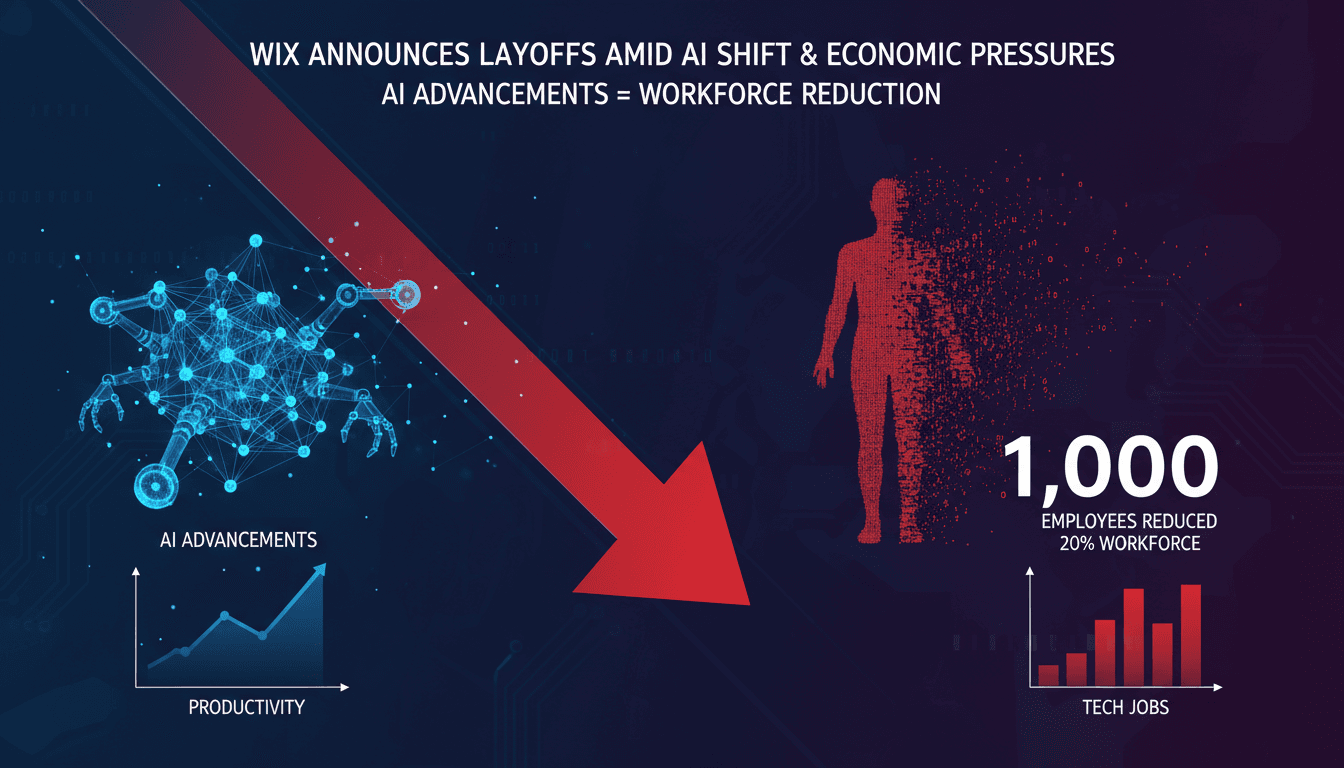
Wix announces layoffs of 1,000 employees amid AI advancements and economic pressures
Here's what it means for you.
Wix's decision to lay off 1,000 employees signals a significant shift in the tech landscape, reflecting the growing influence of artificial intelligence on workforce dynamics. As companies reassess their operational needs in light of AI advancements, job security in the tech sector may become increasingly precarious. This trend could lead to further workforce reductions across the industry, impacting both employees and the broader market. The implications extend beyond Wix, as other tech firms may follow suit, prompting a reevaluation of employment strategies. Stakeholders should remain vigilant as the evolution of AI continues to reshape the job market.
What happened
Wix has announced a substantial workforce reduction, cutting 1,000 jobs, which represents 20% of its total workforce. This decision was made in response to rapid advancements in artificial intelligence and ongoing economic pressures, including currency issues. The layoffs were officially communicated by CEO Avishai Abrahami through social media on May 29, 2026.
This move aligns with a broader trend in the tech industry, where companies are increasingly reassessing their workforce in light of AI developments and financial challenges. Wix's stock price has also seen a significant decline, nearly halving this year, further emphasizing the urgency of this decision.
The Context
The layoffs at Wix are part of a larger narrative within the tech sector, where many companies are grappling with the implications of AI technology on employment. As firms adapt to these rapid changes, workforce reductions have become a common strategy to maintain competitiveness. The timing of Wix's announcement coincides with a wave of similar job cuts across the industry, highlighting a collective reassessment of workforce needs.
Wix's leadership has recognized the necessity of aligning their workforce with evolving technological demands. This situation raises questions about the long-term implications for employment in the tech sector, as companies navigate the complexities of AI integration and economic challenges.
Takeaway
Looking ahead, the ongoing evolution of AI technology is likely to continue reshaping workforce dynamics in the tech industry. Companies like Wix may need to further adjust their workforce strategies, potentially leading to additional job cuts. Stakeholders should monitor other tech firms for similar layoffs and observe how Wix adapts its strategic direction in response to AI developments.
The uncertainty surrounding employment in technology remains a critical concern, as the sector grapples with the dual pressures of innovation and economic stability.
Stock market news, investing ideas, and trading analysis.
"TheStreet provides market news and retail-investor-focused analysis."
— A47 Editor
Wix CEO sends startling message to employees on AI
Wix CEO Avishai Abrahami announced significant layoffs, cutting 1,000 employees, attributing this decision to advancements in artificial intelligence and ongoing challenges such as slowing growth and stock price declines. This message was shared publ...
Consumer tech news, reviews, and buying guides for gadgets and electronics.
"TechRadar is known for comprehensive buying advice, hardware reviews, and consumer tech news targeted at mainstream audiences."
— A47 Editor
Wix CEO cites 'fast evolution of AI capabilities' in announcement of 20% workforce cut
Wix has announced a significant reduction in its workforce, cutting 20% of its employees, citing the rapid evolution of AI capabilities and issues related to the Dollar-Shekel currency as primary factors for this decision.
Corporate finance news, M&A, deals, and executive interviews.
"Finance Monthly serves a professional readership with corporate finance coverage."
— A47 Editor
Wix Layoffs Leave Tech Workers Wondering Which Jobs Are Safe
Wix has announced the layoff of approximately 1,000 employees, which constitutes about 20% of its workforce, citing advancements in artificial intelligence and ongoing challenges such as slowing growth and significant declines in stock prices.