
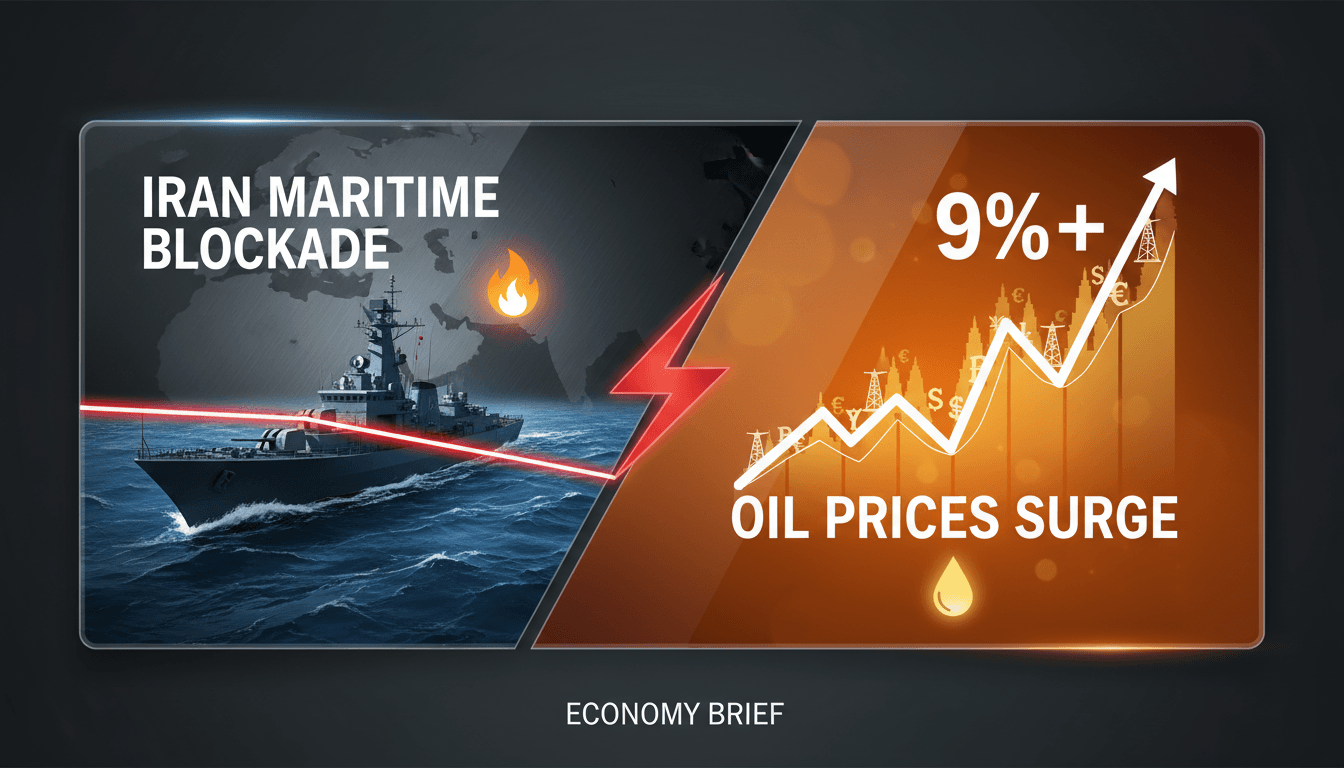
Oil prices surge over 9% amid U.S. maritime blockade plans against Iran
Here's what it means for you.
The recent surge in oil prices signals heightened volatility in the energy market, driven by geopolitical tensions in the Gulf region. As the U.S. prepares to implement a maritime blockade against Iran, traders are reacting to the potential for significant disruptions in oil supply routes. This situation could lead to increased costs for consumers and businesses reliant on oil, impacting everything from transportation to manufacturing. Market participants should closely monitor developments surrounding the blockade and Iran's potential responses, as these factors will likely influence oil prices in the near term. The implications of this situation extend beyond immediate price increases, potentially affecting global energy policies and supply chains.
What happened
Oil prices jumped by over 9% following the announcement of a U.S. maritime blockade against Iran. This significant increase marks the highest levels seen in a month, reflecting the market's reaction to escalating tensions in the Gulf region. The blockade is set to begin soon, raising concerns about energy shipments through the critical Strait of Hormuz.
Recent U.S. military actions against Iran have intensified fears of disruptions in oil supply, further contributing to the price surge. Brent crude prices rose to approximately $79.22 per barrel, while West Texas Intermediate crude increased to around $74.36 per barrel. These developments underscore the fragile state of the oil market amid geopolitical uncertainties.
The Context
The U.S. announcement of a maritime blockade against Iran comes in the wake of escalating military actions that have heightened tensions in the Gulf. Iran's potential retaliatory actions pose significant risks to energy shipments, particularly through the Strait of Hormuz, a vital passage for global oil transport. Recent agreements aimed at stabilizing oil supply have been undermined by these renewed hostilities, complicating the landscape for market participants.
The situation is further complicated by the interconnectedness of global oil markets, where any disruption can have far-reaching implications. Stakeholders, including governments and energy companies, are closely monitoring the evolving dynamics as they prepare for potential impacts on supply and pricing. The timing of these developments is critical, as they coincide with ongoing global energy demands.
Takeaway
As tensions in the Gulf continue to escalate, oil prices are expected to remain volatile in the near future. Market participants should watch for developments regarding the U.S. maritime blockade and Iran's response, as these factors will likely influence global oil supply and pricing. The ongoing geopolitical risks highlight the importance of strategic planning for businesses and consumers alike.
In the coming weeks, the market will react to any new information regarding military actions and diplomatic efforts aimed at de-escalation. The potential for further disruptions in supply chains remains a key concern, making it essential for stakeholders to stay informed and prepared for rapid changes in the energy landscape.
Pan-Arab news coverage spanning politics, business, sports, and regional affairs.
"Asharq Al-Awsat reflects a broad Arab editorial perspective with strong attention to regional geopolitics."
— A47 Editor
النفط يقفز نحو 10 % مع تشديد الحصار الأميركي على السواحل الإيرانية
Oil prices surged by over 9% on Monday, reaching their highest levels in a month, following the announcement by the United States regarding the impending maritime blockade set to take effect on Tuesday. This significant increase reflects market react...
Arabic-language coverage of Saudi, regional, and international affairs.
"Al Bilad offers mainstream Saudi newspaper coverage across domestic and broader Arab topics."
— A47 Editor
ارتفاع أسعار النفط بأكثر من 4%
Oil prices surged by more than 4% today following statements from U.S. President Donald Trump regarding the imposition of a maritime blockade on Iran. Brent crude futures increased by $3.21 per barrel, or 4.22%, reaching $79.22 per barrel, while West...
Sports reporting with a focus on Saudi and regional competitions.
"Okaz sports coverage is broad and audience-friendly, with strong attention to Saudi teams and leagues."
— A47 Editor
4 % ارتفاع لأسعار النفط.. برنت صوب 80 دولاراً
Oil prices surged by 4.10% as Brent crude reached $79.13 per barrel, driven by escalating Iranian attacks in the Gulf region following U.S. strikes, raising concerns over energy shipments through the Strait of Hormuz. West Texas Intermediate also saw...
Arabic-language political and world news coverage for UAE readers.
"Emarat Al Youm world coverage usually presents international developments through a UAE and Arab audience lens."
— A47 Editor
النفط يقفز بأكثر من 3% في ظل التوترات في مضيق هرمز النفط يقفز بأكثر من 3% في ظل التوترات في مضيق هرمز
Oil prices surged by more than 3% following U.S. strikes against Iran, raising concerns over the security of energy shipments through the Strait of Hormuz. This increase in futures contracts reflects market reactions to geopolitical tensions in the r...