
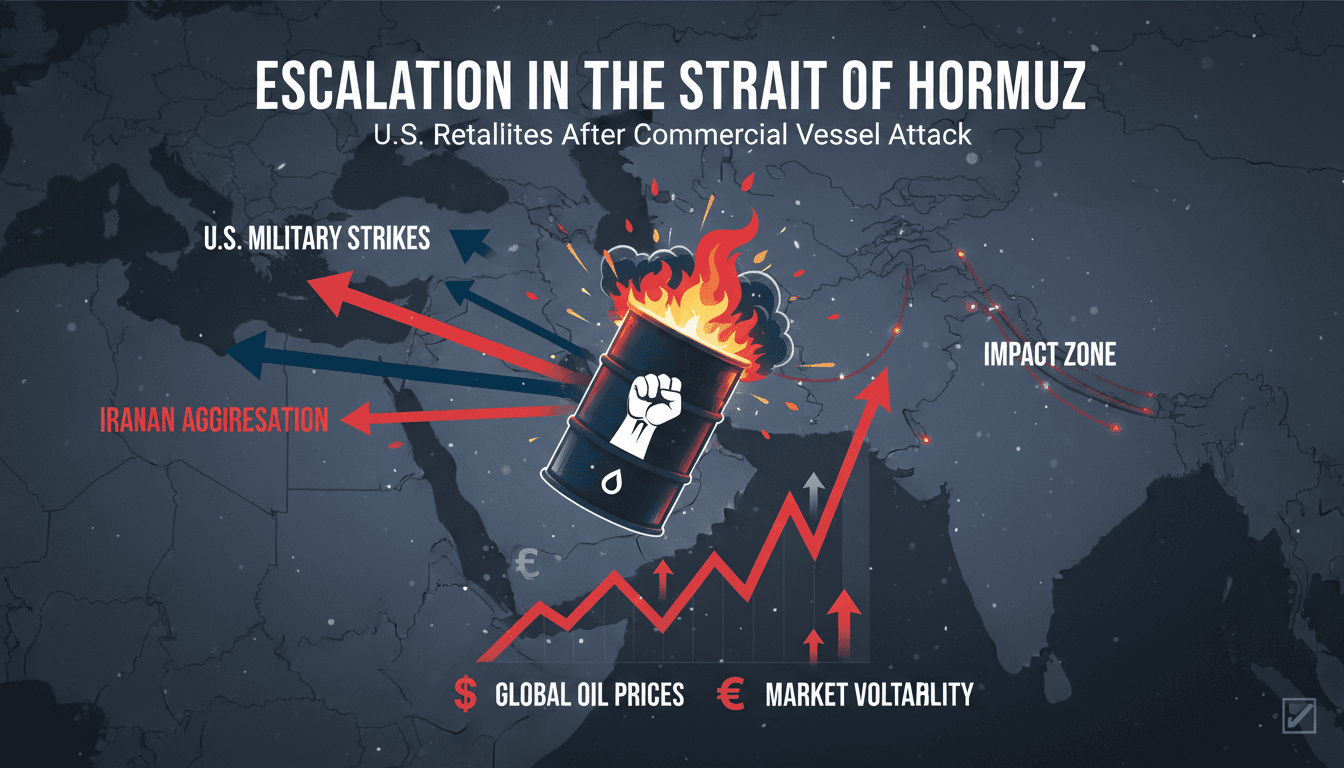
U.S. military strikes against Iran escalate following attack on commercial vessel in Strait of Hormuz
Here's what it means for you.
The recent escalation in U.S. military engagement against Iran signals a critical shift in regional security dynamics. As tensions rise, stakeholders in global oil markets should prepare for potential disruptions that could impact pricing and supply chains. Policymakers will need to navigate the complexities of international relations as diplomatic efforts may intensify to de-escalate the situation. The implications of this conflict extend beyond military action, affecting global economic stability and regional alliances. Observers should remain vigilant as the situation develops, particularly regarding Iran's maritime activities.
What happened
Iran has launched an attack on a commercial ship in the strategically vital Strait of Hormuz, prompting a decisive military response from the United States. In reaction to this aggression, U.S. Secretary of Defense Pete Hegseth has issued a stern warning, emphasizing that Iran will face severe consequences for its actions. This incident marks a significant escalation in U.S. military involvement in the region, with multiple strikes against Iranian targets already conducted.
The attack on the vessel highlights the fragile security situation in the Strait of Hormuz, a critical maritime route for global oil shipments. The U.S. military's response underscores the seriousness with which the U.S. views Iranian provocations.
The Context
The Strait of Hormuz is a crucial chokepoint for oil transportation, making any conflict in the area a matter of global concern. Iran's aggressive actions have drawn widespread international condemnation, further heightening regional instability. This incident is part of a broader pattern of Iranian hostility that has raised alarms among neighboring countries and global powers alike.
The U.S. has been closely monitoring Iranian activities, and this latest attack has prompted a reevaluation of military strategies in the region. The potential for further conflict looms large, as both sides may feel compelled to escalate their responses.
Takeaway
As the situation unfolds, the international community will be watching closely for additional U.S. military responses to Iranian provocations. The potential for further military actions raises concerns about the stability of global oil markets and the security of maritime routes. Diplomatic efforts may intensify as stakeholders seek to de-escalate tensions and prevent a broader conflict.
The ongoing conflict could lead to increased scrutiny of Iran's maritime activities, with implications for international relations and regional security dynamics. Observers should remain alert to developments that could affect both military and economic landscapes.
Arabic-language political and world news coverage for UAE readers.
"Emarat Al Youm world coverage usually presents international developments through a UAE and Arab audience lens."
— A47 Editor
وزير الحرب الأميركي: إيران اتخذت قراراً سيئاً بالعدوان على الملاحة في هرمز.. وهي تدفع الآن الثمن وزير الحرب الأميركي: إيران اتخذت قراراً سيئاً بالعدوان على الملاحة في هرمز.. وهي تدفع الآن الثمن
U.S. Secretary of Defense Pete Hegseth warned Iran of severe consequences following its attack on a commercial vessel while it was transiting through the Strait of Hormuz. This incident marks a significant escalation in tensions in a critical maritim...
Arabic-language coverage of international news and geopolitics.
"RT Arabic is a Russian state-funded outlet often criticized for promoting Kremlin-aligned narratives."
— A47 Editor
وزير الحرب الأمريكي: إيران تدفع الثمن
U.S. Secretary of War Pete Hegseth commented on the third round of American strikes against Iran that occurred early Sunday morning. This escalation reflects ongoing tensions between the U.S. and Iran, highlighting the military's stance on Iran's act...
Jordanian news and regional updates.
"Roya News is a Jordanian outlet focused on breaking news and local affairs."
— A47 Editor
وزير الدفاع الأمريكي: إيران اتخذت خياراً سيئاً وهي تدفع الثمن الآن
The U.S. Secretary of Defense stated that Iran has made a poor choice and is currently facing the consequences of that decision. This remark highlights the ongoing tensions between the U.S. and Iran, reflecting a critical stance on Iran's recent acti...