
OpenAI Develops AI-Agent-First Smartphone with MediaTek and Qualcomm
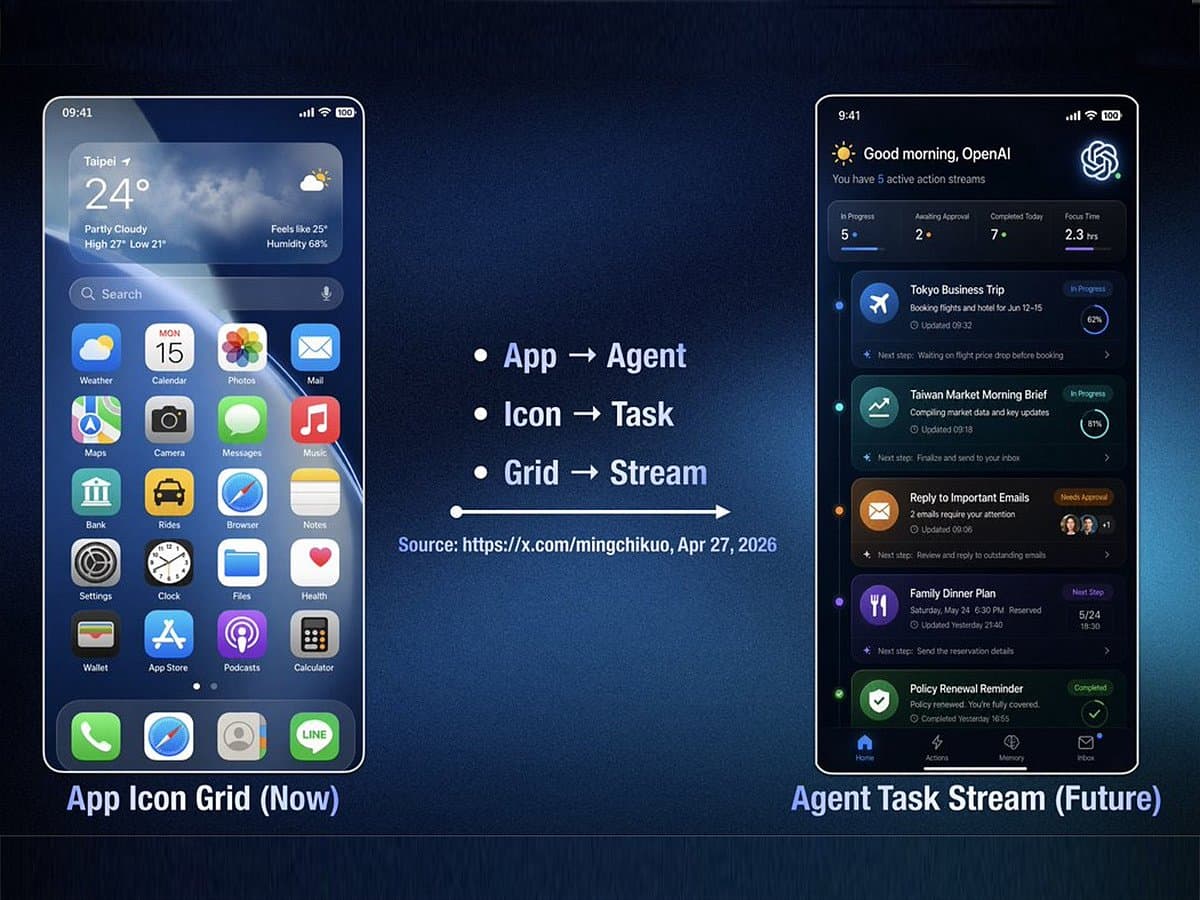
Why it matters
This development signals a significant shift in consumer technology, moving towards AI-driven interfaces that could replace traditional app ecosystems.
What happened (in 30 seconds)
- On April 27, 2026, analyst Ming-Chi Kuo reported that OpenAI is developing an AI-first smartphone featuring autonomous AI agents.
- Mass production is targeted for 2028, with partnerships involving MediaTek, Qualcomm, and Luxshare Precision.
- OpenAI's hardware ambitions stem from its acquisition of Jony Ive's design firm, aiming to innovate beyond existing smartphone capabilities.
The context you actually need
- OpenAI's acquisition of Jony Ive's io Products for $6.4 billion in May 2025 marked its serious entry into hardware, focusing initially on AI-native devices.
- CEO Sam Altman has criticized current smartphones as outdated for AI applications, prompting the exploration of new hardware solutions.
- Geopolitical factors are influencing supply chain strategies, with a shift away from reliance on China for manufacturing.
What's really happening
OpenAI's foray into smartphone development represents a convergence of advanced AI capabilities and consumer hardware, aiming to create a device that fundamentally alters user interaction with technology. The proposed smartphone will utilize autonomous AI agents to perform tasks traditionally managed by apps, streamlining user experience through a single intelligent interface. This innovation is rooted in OpenAI's strategic acquisition of Jony Ive's design firm, which has brought in a team of ex-Apple designers to focus on creating aesthetically pleasing and functional hardware.
The decision to partner with established chipmakers like MediaTek and Qualcomm indicates a commitment to leveraging existing technological expertise while ensuring robust performance. The collaboration with Luxshare Precision for manufacturing further emphasizes a focus on quality and efficiency in production. Analysts have noted that this move could disrupt the current smartphone market, which is heavily reliant on app ecosystems that may not be optimized for AI integration.
OpenAI's ambition to redefine the smartphone experience comes at a time when competitors have struggled with similar concepts, such as the Humane AI Pin and Rabbit R1. The failure of these devices highlights the challenges of consumer acceptance and the need for a seamless integration of AI into daily life. OpenAI's approach, focusing on a device that prioritizes AI functionality, could resonate more with users seeking efficiency and simplicity.
Moreover, the geopolitical landscape is influencing supply chain decisions, as companies look to diversify manufacturing away from China. This shift could lead to new opportunities for innovation and collaboration in regions like Taiwan and the United States, where OpenAI is based. As the smartphone market evolves, the introduction of an AI-first device could catalyze further advancements in AI technology, pushing competitors to adapt or risk obsolescence.
Who feels it first (and how)
- Tech enthusiasts: Early adopters will likely be the first to explore the capabilities of an AI-first smartphone.
- Consumers in high-tech markets: Regions with high smartphone penetration, like Dubai, will experience immediate impacts on retail and technology adoption.
- Investors in tech stocks: Stakeholders in companies like Qualcomm and MediaTek may see fluctuations in stock performance based on market speculation.
What to watch next
- Official announcements from OpenAI: Confirmation of the smartphone's features and release timeline will be crucial for market expectations.
- Consumer reactions to prototypes: Early feedback from testers could provide insights into user acceptance and potential adjustments needed before launch.
- Competitive responses from existing smartphone manufacturers: How companies like Apple and Samsung adapt their strategies in light of this new AI-driven competition will be telling.
OpenAI is developing an AI-first smartphone with a target production year of 2028.
The device will feature AI agents that replace traditional apps, streamlining user interaction.
The exact specifications and pricing of the smartphone remain unconfirmed.
Frequently Asked Questions
- Why it matters?
- This development signals a significant shift in consumer technology, moving towards AI-driven interfaces that could replace traditional app ecosystems.
- What happened (in 30 seconds)?
- On April 27, 2026, analyst Ming-Chi Kuo reported that OpenAI is developing an AI-first smartphone featuring autonomous AI agents. Mass production is targeted for 2028, with partnerships involving MediaTek, Qualcomm, and Luxshare Precision. OpenAI's hardware ambitions stem from its acquisition of Jony Ive's design firm, aiming to innovate beyond existing smartphone capabilities.
- What's really happening?
- OpenAI's foray into smartphone development represents a convergence of advanced AI capabilities and consumer hardware, aiming to create a device that fundamentally alters user interaction with technology. The proposed smartphone will utilize autonomous AI agents to perform tasks traditionally managed by apps, streamlining user experience through a single intelligent interface. This innovation is rooted in OpenAI's strategic acquisition of Jony Ive's design firm, which has brought in a team of ex
- Who feels it first (and how)?
- Tech enthusiasts: Early adopters will likely be the first to explore the capabilities of an AI-first smartphone. Consumers in high-tech markets: Regions with high smartphone penetration, like Dubai, will experience immediate impacts on retail and technology adoption. Investors in tech stocks: Stakeholders in companies like Qualcomm and MediaTek may see fluctuations in stock performance based on market speculation.
- What to watch next?
- Official announcements from OpenAI: Confirmation of the smartphone's features and release timeline will be crucial for market expectations. Consumer reactions to prototypes: Early feedback from testers could provide insights into user acceptance and potential adjustments needed before launch. Competitive responses from existing smartphone manufacturers: How companies like Apple and Samsung adapt their strategies in light of this new AI-driven competition will be telling.
Latest tech news, product reviews, and analysis for consumers and professionals.
"CNET delivers accessible and detailed technology reporting, including trusted product reviews and how-to guides."
— A47 Editor
OpenAI Said to Be Making Phone With AI Agents to Replace Apps
OpenAI is reportedly developing a smartphone that aims to replace traditional applications with AI agents, reflecting its ongoing innovation in artificial intelligence technology. This initiative aligns with previous rumors about multiple devices in ...
Photography news including AI tools and ethics.
"Covers AI’s impact on imaging and creative workflows."
— A47 Editor
Open AI May Be Making a Phone That Moves Away From Apps
OpenAI is reportedly developing a new smartphone that aims to replace traditional applications with AI agents, as indicated by recent reports. This innovative device, potentially branded as a ChatGPT phone, is expected to streamline various tasks thr...
Consumer tech news, reviews, and buying guides for gadgets and electronics.
"TechRadar is known for comprehensive buying advice, hardware reviews, and consumer tech news targeted at mainstream audiences."
— A47 Editor
Would you buy a ChatGPT-powered iPhone rival? OpenAI is reportedly developing a smartphone chip, which teases the possibility of a full-blown OpenAI mobile
OpenAI is reportedly developing a smartphone chipset that aims to integrate artificial intelligence at its core, potentially reducing reliance on traditional applications. This initiative suggests a significant shift towards a more AI-centric mobile ...
Electronics industry news including AI chips.
"Covers semiconductors and embedded AI trends."
— A47 Editor
OpenAI Prepares AI-First Smartphone for 2028
OpenAI is reportedly developing an AI-first smartphone set to launch in 2028, aiming to replace traditional apps with AI agents, a move that signifies a significant shift in mobile technology.
A curated Gulf News feed featuring major stories across news, business, opinion, and lifestyle.
"Gulf News is a major UAE newspaper whose featured stories feed reflects a broad editorial mix shaped for a Gulf audience."
— A47 Editor
OpenAI may be building the first true AI phone
OpenAI is reportedly developing the first true AI phone, a significant step in the evolution of mobile technology that could integrate advanced artificial intelligence capabilities directly into smartphones. This initiative aligns with OpenAI's ongoi...
UAE-based newspaper covering Gulf politics, society, and international developments.
"Gulf News is one of the UAE’s most prominent English-language publications."
— A47 Editor
OpenAI may be building the first true AI phone
OpenAI is reportedly developing the first true AI phone, a significant step in the evolution of mobile technology that could integrate advanced artificial intelligence capabilities directly into smartphones. This initiative aligns with OpenAI's ongoi...
Startup news with frequent AI coverage.
"Covers launches, funding, and product updates in AI."
— A47 Editor
OpenAI could be making a phone with AI agents replacing apps
There have been plenty of rumors about OpenAI's hardware plans, which involve launching a pair of earbuds. A new note from industry analyst Ming-Chi Kuo suggests that the AI company might be working on a phone in collaboration with MediaTek, Qualcomm...