
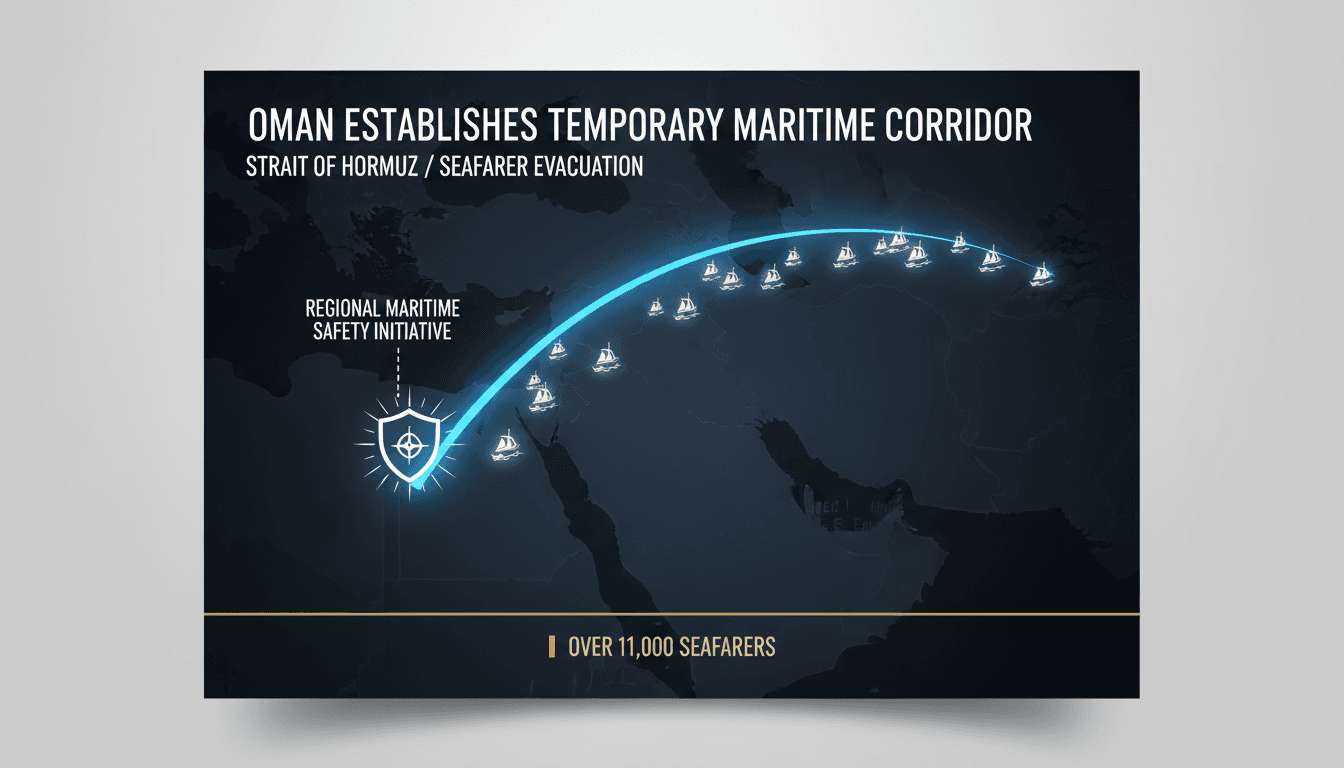
Oman Establishes Temporary Maritime Corridor in Strait of Hormuz for Stranded Seafarers
Here's what it means for you.
Oman's establishment of a temporary maritime corridor in the Strait of Hormuz signifies a proactive approach to maritime safety and humanitarian assistance. This initiative not only aims to evacuate over 11,000 stranded seafarers but also reinforces the importance of international maritime law in the region. The move is likely to enhance cooperation among Gulf Cooperation Council (GCC) states, potentially leading to a more unified stance on maritime security. The corridor's creation comes amid rising tensions and threats to navigation in the area, particularly from Iran. As such, this initiative may influence future maritime policies and security measures in the Gulf region.
What happened
Oman has announced the creation of a temporary maritime corridor in the Strait of Hormuz to assist in the evacuation of over 11,000 stranded seafarers. This initiative is coordinated with the International Maritime Organisation (IMO) and aims to enhance maritime safety and security in the region. The GCC has welcomed this move, viewing it as a significant step towards reinforcing international law and ensuring safe passage through this critical waterway.
The announcement follows increasing concerns over Iranian threats to maritime navigation, prompting the GCC to condemn such actions. The corridor is designed to facilitate the safe movement of vessels and personnel, addressing urgent humanitarian needs while maintaining compliance with international maritime regulations.
The Context
The establishment of the maritime corridor is a response to escalating tensions in the Strait of Hormuz, a vital passage for global oil shipments. The GCC, which includes Oman, has consistently opposed any fees for passage through this strategic waterway, emphasizing the need for free navigation. Jasem Mohamed Albudaiwi, the Secretary General of the GCC, has been vocal about the importance of maritime security in the region.
This initiative comes at a time when the GCC and the United States are discussing the reopening of the Strait of Hormuz and pursuing a permanent peace deal with Iran. The corridor's creation is seen as a crucial step in addressing both humanitarian concerns and the broader implications for regional stability.
Takeaway
The establishment of the maritime corridor may lead to improved relations among GCC states and bolster efforts to ensure maritime security in the region. As the situation evolves, it will be important to monitor Iran's response to this initiative and any further developments in GCC discussions regarding maritime safety. The corridor not only addresses immediate humanitarian needs but also sets a precedent for future maritime policies in the Gulf.
Looking ahead, stakeholders should remain vigilant about the implications of this corridor on regional dynamics and international maritime law. The GCC's unified stance against threats to navigation could pave the way for enhanced cooperation and security measures in the future.
English-language coverage focused on UAE news, government updates, and domestic affairs.
"Emirates 24|7 reflects a mainstream UAE editorial perspective with strong emphasis on official and domestic developments."
— A47 Editor
GCC welcomes Oman's announcement of temporary maritime corridor in Strait of Hormuz
The Gulf Cooperation Council (GCC) has welcomed Oman's announcement of a temporary maritime corridor in the Strait of Hormuz, aimed at facilitating the evacuation of over 11,000 stranded seafarers. This initiative, coordinated with the International ...
Arabic-language coverage of political affairs and current events.
"Okaz political coverage typically follows mainstream Saudi framing on national and regional affairs."
— A47 Editor
أمين مجلس التعاون يرحب بالمبادرة العُمانية في مضيق هرمز ويدين التهديدات الإيرانية
The Secretary-General of the Gulf Cooperation Council, Jasem Mohamed Al-Budaiwi, welcomed Oman's announcement, in coordination with the International Maritime Organization, to establish a temporary maritime corridor for ships, aiding in the evacuatio...
Arabic-language political and world news coverage for UAE readers.
"Emarat Al Youm world coverage usually presents international developments through a UAE and Arab audience lens."
— A47 Editor
البديوي: مجلس التعاون يرفض فرض رسوم في مضيق هرمز البديوي: مجلس التعاون يرفض فرض رسوم في مضيق هرمز
Jassim Al-Budaiwi, the Secretary-General of the Gulf Cooperation Council (GCC), reiterated the council's rejection of imposing tolls on navigation through the Strait of Hormuz. This statement underscores the GCC's stance on maintaining free passage i...
Business and economy coverage focused on Dubai, the UAE, Saudi Arabia, and the wider Middle East.
"Arabian Business is a well-known regional business outlet with strong focus on Gulf markets, leadership, and investment stories."
— A47 Editor
GCC, US call for Strait of Hormuz reopening and permanent Iran peace deal after Bahrain talks
The Gulf Cooperation Council (GCC) and the United States have called for the reopening of the Strait of Hormuz and supported efforts for a permanent peace deal with Iran during recent talks in Bahrain. The discussions also addressed regional issues c...