
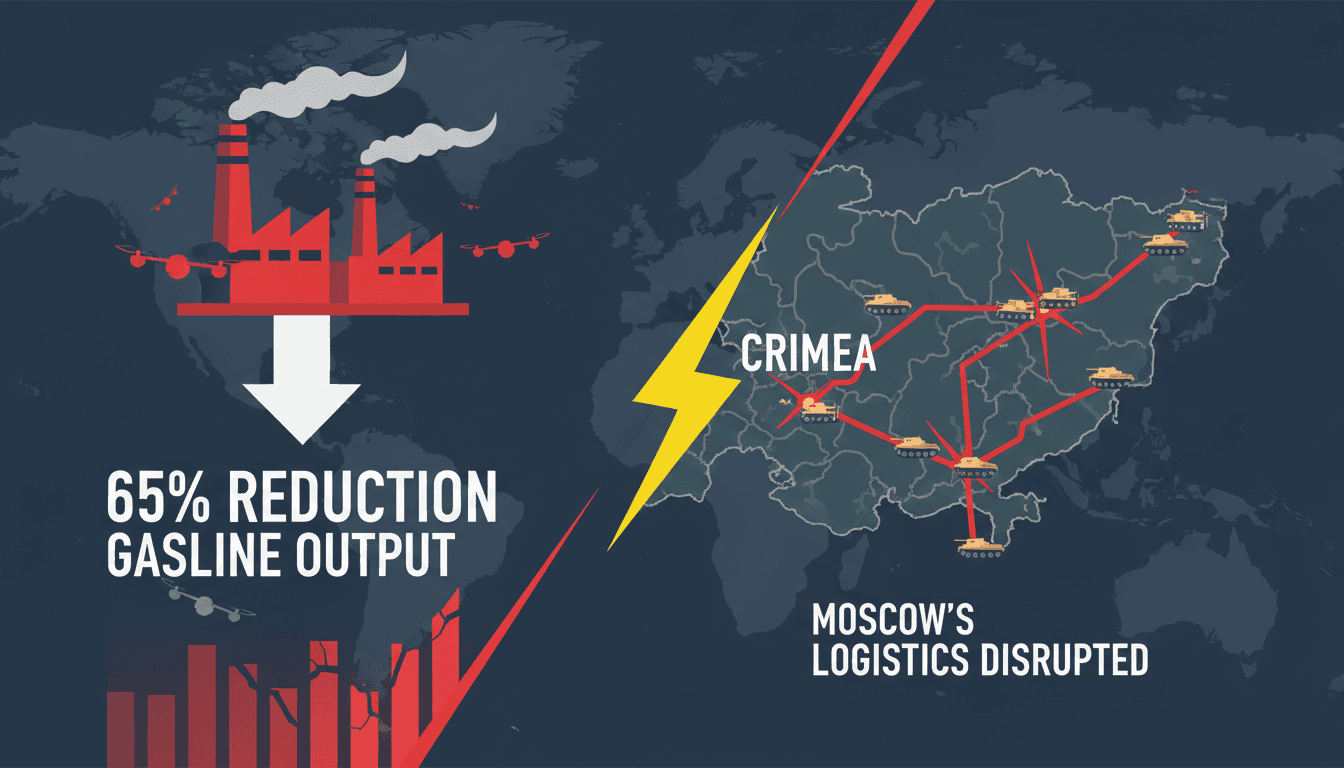
Ukraine's drone strikes reduce Russian gasoline output by 65%
Here's what it means for you.
The recent escalation in Ukraine's drone attacks on Russian energy infrastructure signifies a strategic shift in the ongoing conflict. By targeting gasoline production, Ukraine aims to disrupt Russia's military logistics, particularly in Crimea, which could have broader implications for regional stability. This development may lead to increased tensions and retaliatory measures from Russia, impacting energy markets and geopolitical dynamics. As the conflict intensifies, stakeholders in energy and defense sectors should closely monitor the situation. The effectiveness of Ukraine's military strategy could reshape the balance of power in the region, influencing policy decisions and market responses.
What happened
Ukraine's drone strikes have resulted in a staggering 65% reduction in Russia's gasoline output. This significant decline is attributed to targeted attacks on key oil refineries and supply routes, which are crucial for sustaining Russian military operations. The strikes have effectively disrupted major oil refineries, causing local fuel market pressures within Russia.
Additionally, Ukraine's unmanned systems are now targeting Russian shadow tankers, further choking fuel supplies. This strategic offensive marks a critical phase in the conflict, as Ukraine seeks to undermine Russia's logistical capabilities.
The Context
The ongoing conflict between Ukraine and Russia has seen a marked escalation, particularly with Ukraine's focus on energy infrastructure. By targeting oil refineries and overland fuel routes, Ukraine aims to weaken Russia's military logistics, which are vital for operations in Crimea. The timing of these attacks is significant, as they coincide with heightened military activities in the region.
The implications of these strikes extend beyond immediate military concerns, as they place increasing pressure on Russia's local fuel market. As Ukraine continues its offensive, the potential for retaliatory actions from Russia looms large, raising the stakes for both nations involved.
Takeaway
As Ukraine intensifies its drone strikes against Russian energy supplies, the conflict is poised for further escalation. Observers should monitor the impact of these attacks on Russia's military capabilities, as well as any potential retaliatory measures that may arise in response to the disruptions. The situation remains fluid, with significant ramifications for both military and economic landscapes.
The ongoing developments highlight the importance of energy infrastructure in modern warfare, suggesting that future engagements may increasingly focus on logistical vulnerabilities.
Global news coverage with extensive reporting on Middle Eastern conflicts and geopolitics.
"Al Jazeera is a Qatar-based broadcaster known for wide regional coverage and alternative perspectives."
— A47 Editor
Ukraine chokes fuel to Crimea, Russian consumers, targeting military supply
Ukraine has intensified its military operations by targeting Russian fuel supplies, cutting overland routes and striking Russian ships near Crimea. This escalation aims to disrupt the logistics supporting the Russian military presence in the region, ...
Comprehensive coverage of Middle Eastern and global issues.
"Al Jazeera is a prominent voice from the Global South, especially the Middle East, with an emphasis on underreported stories."
— A47 Editor
Ukraine chokes fuel to Crimea, Russian consumers, targeting military supply
Ukraine has intensified its military operations by targeting Russian fuel supplies, cutting overland routes and striking Russian ships near Crimea. This escalation aims to disrupt the logistics supporting the Russian military presence in the region, ...
Pan-Arab news coverage spanning politics, business, sports, and regional affairs.
"Asharq Al-Awsat reflects a broad Arab editorial perspective with strong attention to regional geopolitics."
— A47 Editor
المسيّرات الأوكرانية تربك سوق الوقود الروسية
Russia is facing increasing pressure on its domestic fuel market as a result of intensified Ukrainian drone attacks that have disrupted several of the country's largest oil refineries. This escalation in hostilities has significant implications for R...
International coverage of politics, security, and social issues.
"Global News is a mainstream Canadian outlet with a centrist editorial stance, focusing on factual reporting."
— A47 Editor
Russia’s gasoline output falls to 65 per cent after Ukrainian strikes: Sources
Russia's gasoline output has fallen to 65% following intensified Ukrainian drone strikes targeting its energy infrastructure, particularly oil refineries. This escalation aims to undermine Russia's military capabilities amid ongoing conflict.