
EU Implements Migration Reform to Expedite Deportations and Establish Detention Centers Abroad
Here's what it means for you.
If you work in international logistics or migration services, this reform could reshape operational frameworks and regulatory compliance.
Why it matters
This reform signals a shift in how the EU manages migration, potentially influencing global migration patterns and international relations.
What happened (in 30 seconds)
- On June 2, 2026, the EU approved a migration reform to expedite deportations and establish detention centers outside its borders.
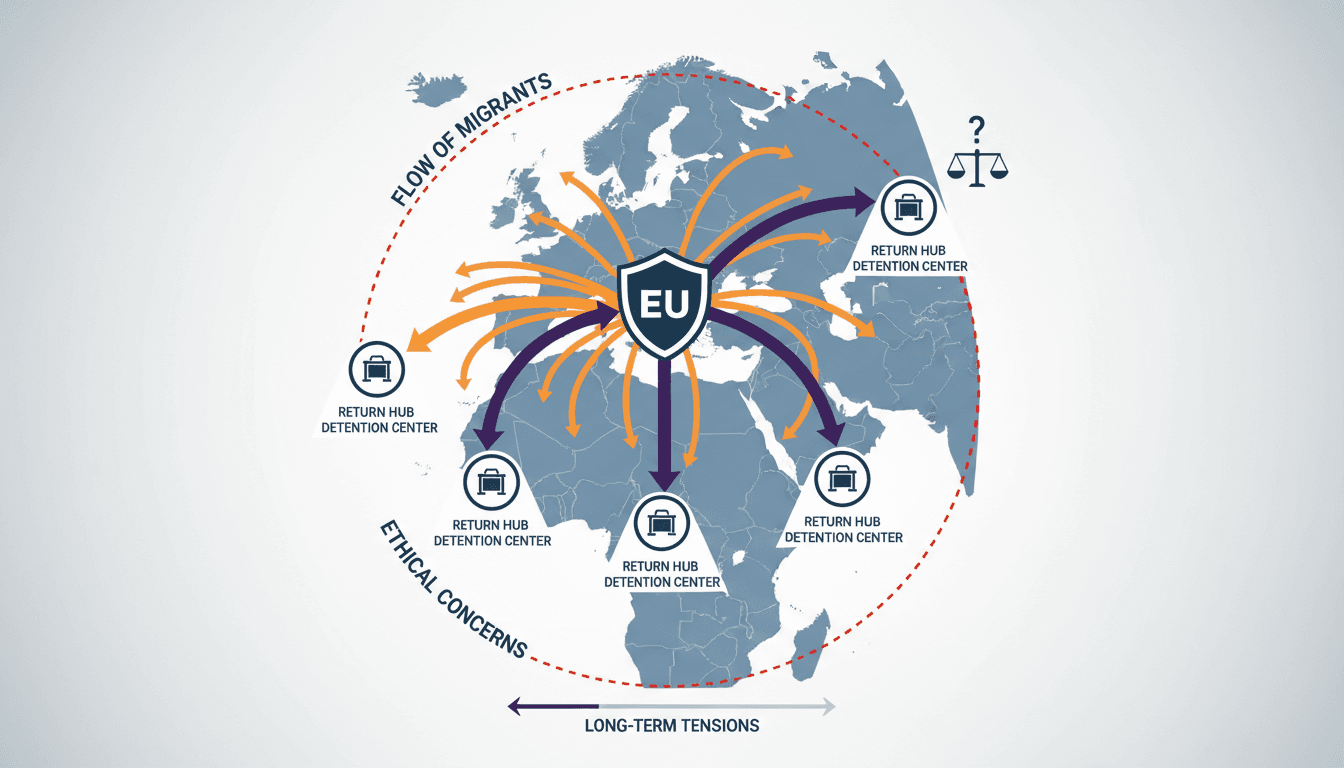
- Bilateral agreements are being negotiated with non-EU countries to create 'return hubs' for migrants.
- Critics warn that these measures may lead to increased deportations to countries where individuals could face persecution.
The context you actually need
- The 2015 refugee crisis saw approximately 1 million asylum seekers enter the EU, prompting a reevaluation of migration policies.
- Right-wing political parties have gained traction in Europe since 2024, advocating for stricter immigration controls.
- The current reform is part of a broader strategy to prevent future migration crises and manage irregular migration effectively.
What's really happening
The EU's migration reform, finalized on June 2, 2026, represents a significant shift in the bloc's approach to managing migration. The new regulations allow for the establishment of detention centers in non-EU countries, a move aimed at expediting the deportation process for individuals without legal rights to remain in the EU. This reform was negotiated through a trilogue involving the European Commission, European Council, and European Parliament, reflecting a consensus among key EU institutions.
At least five member states—Germany, Austria, the Netherlands, Denmark, and Greece—are currently engaged in discussions with African nations to host these return hubs. The law permits the detention of migrants deemed flight risks or security threats for up to 24 months, with a potential six-month extension. This extended detention period raises ethical concerns, particularly regarding the treatment of migrants in these facilities.
Supporters of the reform, including EU migration commissioner Magnus Brunner, argue that it is a necessary step to manage migration effectively and prevent a recurrence of crises similar to that of 2015. However, critics, including various rights organizations, express alarm that these measures normalize aggressive immigration tactics reminiscent of past U.S. policies. They argue that the establishment of detention centers abroad could lead to increased deportations to countries where individuals may face persecution, thus raising serious human rights concerns.
The reform is also a response to the evolving political landscape in Europe, where right-wing parties have gained influence and pushed for stricter immigration measures. This shift reflects a broader trend of tightening immigration policies across the continent, as governments seek to address public concerns about migration and security.
As the EU implements this reform, it will likely face scrutiny from human rights advocates and international organizations. The effectiveness of these measures in managing migration flows and ensuring the humane treatment of migrants will be closely monitored, both within the EU and globally.
Who feels it first (and how)
- Migrants: Individuals seeking asylum or migration may face increased risks of detention and deportation.
- Human rights organizations: Groups advocating for migrant rights will likely intensify their efforts to monitor and challenge these policies.
- Logistics and migration services: Companies involved in international logistics may need to adapt to new regulatory frameworks and compliance requirements.
What to watch next
- Implementation of return hubs: Monitor the establishment and operation of these detention centers in non-EU countries, as they will set precedents for future migration policies.
- Public response: Watch for public opinion shifts in EU member states regarding migration, as this could influence future policy decisions.
- International relations: Keep an eye on how these bilateral agreements with non-EU countries affect diplomatic relations and regional stability.
The EU has approved the migration reform and is in the implementation phase.
Increased scrutiny and criticism from human rights organizations regarding the treatment of migrants in detention centers.
The long-term effectiveness of these measures in managing migration flows and their impact on international relations.
Frequently Asked Questions
- Why it matters?
- This reform signals a shift in how the EU manages migration, potentially influencing global migration patterns and international relations.
- What happened (in 30 seconds)?
- On June 2, 2026, the EU approved a migration reform to expedite deportations and establish detention centers outside its borders. Bilateral agreements are being negotiated with non-EU countries to create 'return hubs' for migrants. Critics warn that these measures may lead to increased deportations to countries where individuals could face persecution.
- What's really happening?
- The EU's migration reform, finalized on June 2, 2026, represents a significant shift in the bloc's approach to managing migration. The new regulations allow for the establishment of detention centers in non-EU countries, a move aimed at expediting the deportation process for individuals without legal rights to remain in the EU. This reform was negotiated through a trilogue involving the European Commission, European Council, and European Parliament, reflecting a consensus among key EU institutio
- Who feels it first (and how)?
- Migrants: Individuals seeking asylum or migration may face increased risks of detention and deportation. Human rights organizations: Groups advocating for migrant rights will likely intensify their efforts to monitor and challenge these policies. Logistics and migration services: Companies involved in international logistics may need to adapt to new regulatory frameworks and compliance requirements.
- What to watch next?
- Implementation of return hubs: Monitor the establishment and operation of these detention centers in non-EU countries, as they will set precedents for future migration policies. Public response: Watch for public opinion shifts in EU member states regarding migration, as this could influence future policy decisions. International relations: Keep an eye on how these bilateral agreements with non-EU countries affect diplomatic relations and regional stability.
European current affairs, EU politics, and regional developments.
"France 24 is viewed as a globally focused outlet with balanced coverage and a European perspective."
— A47 Editor
EU strikes migration deal for more deportations and detention centers abroad
The European Union has advanced a significant overhaul of its migration policy, focusing on increasing deportations and establishing offshore detention centers abroad for failed asylum seekers. This move has drawn criticism from rights groups, who li...
Conservative-leaning political and national coverage.
"The Washington Times is a conservative-leaning newspaper known for its political coverage and advocacy of right-of-center viewpoints."
— A47 Editor
EU overhauling migration policy for more deportations and detention centers abroad
The European Union has initiated a significant overhaul of its migration policy, focusing on increasing deportations and establishing controversial detention centers abroad, drawing comparisons to the aggressive immigration strategies of the Trump ad...
International coverage from The Guardian's global desks.
"The Guardian is known for its progressive editorial stance and in-depth analysis."
— A47 Editor
EU accused of creating ICE-style immigration enforcement system
The European Union has agreed on new regulations aimed at enhancing immigration enforcement, allowing national authorities to conduct home raids for deporting undocumented migrants. This decision is part of a broader overhaul of the EU's asylum and m...
European current affairs, EU politics, and regional developments.
"France 24 is viewed as a globally focused outlet with balanced coverage and a European perspective."
— A47 Editor
Offshore detention hubs: Europe turns to Trump-style tactics on migration
The European Union has approved the establishment of offshore 'return hubs' aimed at deporting failed asylum seekers to third countries, a move reminiscent of tactics employed during the Trump administration. This decision is part of a broader overha...
International stories from NPR’s global desk.
"NPR is an American public media organization known for thoughtful reporting and a slightly left-leaning editorial tone."
— A47 Editor
EU strikes migration deal for more deportations and detention centers abroad
The European Union has advanced a significant overhaul of its migration policy, focusing on increasing deportations and establishing detention centers abroad. This move has drawn criticism, with some comparing it to the controversial immigration stra...
Regional and international reporting focused on Middle Eastern politics, diplomacy, and economics.
"Asharq Al-Awsat is a Saudi-owned international newspaper reflecting mainstream Gulf political perspectives."
— A47 Editor
EU Strikes Migration Deal for More Deportations and Detention Centers Abroad
The European Union has reached a new migration deal aimed at increasing deportations and establishing detention centers outside its borders. This agreement is part of the EU's strategy to manage migration flows more effectively and address ongoing ch...
24/7 international news from a French perspective in multiple languages.
"France 24 is viewed as a globally focused outlet with balanced coverage and a European perspective."
— A47 Editor
EU agrees deal for deporting migrants to third-country 'return hubs'
The European Union has reached an agreement to establish third-country 'return hubs' for the deportation of migrants ordered to leave the bloc. This legislation, which still requires formal approval from EU governments and the European Parliament, ha...