
Iranian Forces Issue Threats Amid U.S. Humanitarian Naval Operation in Strait of Hormuz
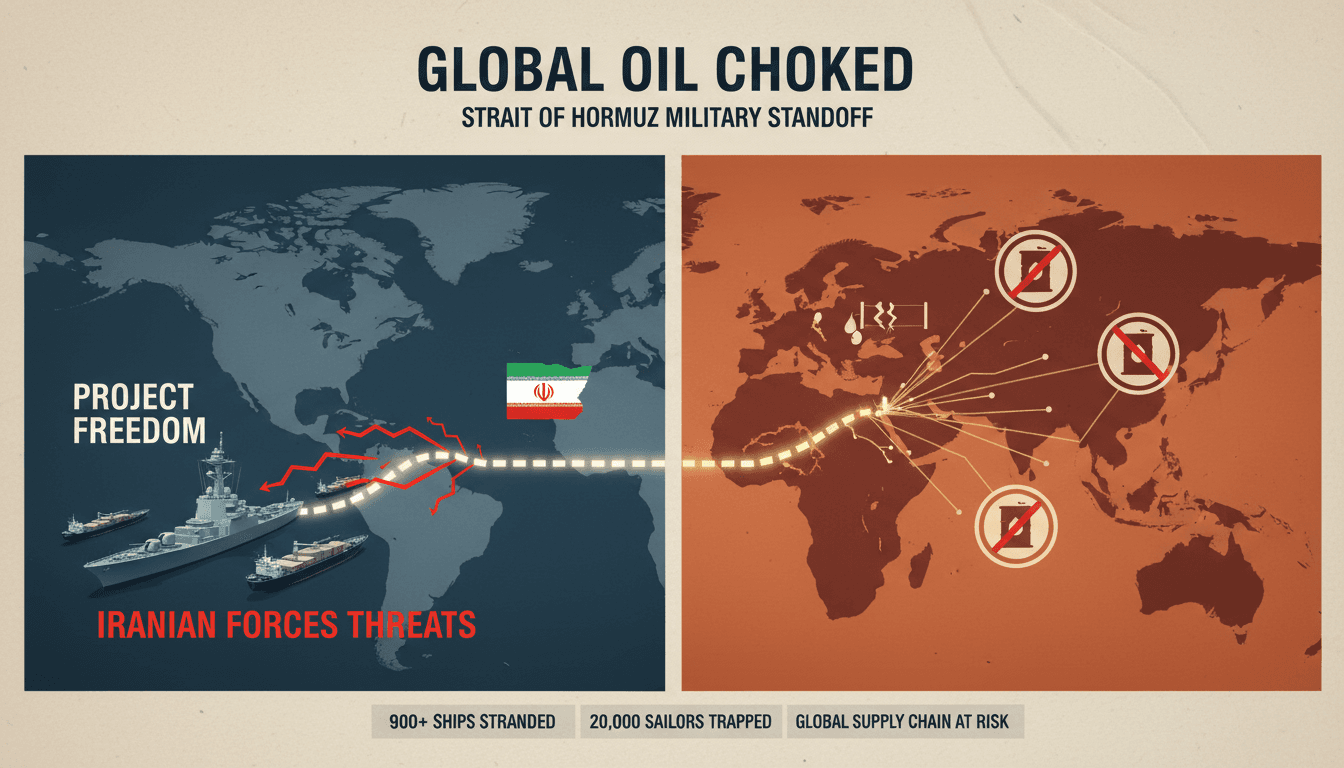
Here's what it means for you.
If you rely on global shipping or oil markets, the escalating tensions in the Strait of Hormuz could directly impact your costs and supply chains.
Why it matters
The Strait of Hormuz is a critical chokepoint for global oil transit, with 25% of the world's oil passing through it.
What happened (in 30 seconds)
- On May 4, 2026, the Iranian armed forces threatened to attack any foreign military approaching the Strait of Hormuz.
- U.S. President Trump initiated 'Project Freedom', a humanitarian naval operation to escort stranded commercial vessels amid a fragile ceasefire.
- Over 900 ships and 20,000 sailors remain stranded due to Iran's blockade, exacerbating global supply chain issues.
The context you actually need
- The U.S.-Israel-Iran war has led to a blockade of the Strait of Hormuz, halting most non-Iranian commercial shipping since early 2026.
- A ceasefire took effect on April 8, 2026, but tensions remain high, with Iran condemning U.S. actions as a violation.
- Oil prices have surged past $120 per barrel, affecting global markets and local economies, especially in regions like Dubai.
What's really happening
The situation in the Strait of Hormuz is a complex interplay of military posturing, humanitarian needs, and geopolitical strategy. The U.S. has launched 'Project Freedom' to address the humanitarian crisis caused by Iran's blockade, which has left over 900 vessels and 20,000 sailors stranded. This operation is not merely a response to immediate needs; it also serves as a strategic maneuver to assert U.S. influence in the region amid ongoing tensions.
Iran's threats to attack approaching foreign forces reflect its desire to maintain control over the Strait, a vital artery for global oil transport. The Iranian government perceives the U.S. operation as a breach of the fragile ceasefire established after weeks of conflict. This perception is compounded by the recent U.S. seizure of the carrier 'Tusca', which has heightened Iranian sensitivities and led to aggressive rhetoric from military officials.
The U.S. Central Command's deployment of 15,000 troops, guided-missile destroyers, and over 100 aircraft underscores the seriousness of the situation. This military buildup is intended to deter Iranian aggression while ensuring the safe passage of commercial vessels. However, it also raises the stakes for potential military confrontations, as any attack on U.S. forces could escalate into broader conflict.
The humanitarian aspect of 'Project Freedom' is critical, as the blockade has severe implications for global supply chains, particularly in oil and goods transportation. With oil prices already elevated, disruptions in the Strait could lead to further increases, impacting economies worldwide. For regions like Dubai, which rely heavily on stable oil prices and shipping routes, the situation is particularly precarious. Elevated fuel costs and potential delays in imports could strain local businesses and consumers alike.
As the U.S. and Iran navigate this tense landscape, the international community watches closely. French President Emmanuel Macron's call for coordination between the U.S. and Iran highlights the need for diplomatic solutions to prevent further escalation. The situation remains fluid, with both sides poised for action, and the potential for miscalculation looms large.
Who feels it first (and how)
- Shipping companies: Increased operational risks and potential delays in deliveries.
- Oil traders: Volatile prices and uncertainty in supply chains could affect profit margins.
- Consumers in Dubai: Higher fuel costs and potential shortages could impact daily expenses.
- Local businesses: Disruptions in imports may lead to increased prices and reduced availability of goods.
What to watch next
- Iran's military drills: Increased military activity could indicate preparations for further escalation or defensive posturing.
- U.S. response to Iranian threats: Any military engagement could significantly alter the geopolitical landscape and impact oil prices.
- Global oil market reactions: Monitoring price fluctuations will provide insight into how markets are responding to the ongoing tensions.
The Strait of Hormuz is critical for global oil transit, with significant implications for supply chains.
Continued military posturing from both the U.S. and Iran as they navigate the crisis.
The long-term effects on global oil prices and shipping routes if tensions escalate further.
This article was generated by AI from 6 verified sources and reviewed by A47 editorial systems.
Arabic-language reporting on global and regional news.
"BBC Arabic is part of the BBC, generally regarded for editorial standards and broad international coverage."
— A47 Editor
القوات المسلحة الإيرانية تتوعد بمهاجمة من يقترب من مضيق هرمز، وترامب يقول إن عملية "مشروع الحرية" بادرة إنسانية
U.S. President Donald Trump announced that American officials are having very positive discussions with Iran regarding potential steps to end the ongoing conflict. He also stated that a plan to free ships stranded in the Strait of Hormuz will commenc...
Regional coverage and analysis focused on politics, diplomacy, and business across the Middle East.
"Al-Monitor is known for analytical reporting on Middle East politics and policy developments."
— A47 Editor
Iran warns will attack US forces in Hormuz after Trump announces escort plan
Iran's military has issued a warning that it will attack U.S. forces if they enter the Strait of Hormuz, following President Donald Trump's announcement of a new initiative to escort ships through the critical waterway. This announcement comes amid o...
Top international stories selected by The Guardian editors.
"The Guardian is known for its progressive editorial stance and in-depth analysis."
— A47 Editor
Middle East crisis live: Iran warns it will attack US forces if they enter strait of Hormuz after Trump says US will help ‘guide’ stranded ships
Iran has issued a stern warning that it will respond forcefully to any U.S. military presence in the Strait of Hormuz, following President Trump's announcement that the U.S. Navy will assist in guiding ships through this critical maritime route. This...
Pan-Arab political news and analysis.
"Al-Quds Al-Arabi is a London-based Arabic newspaper known for political coverage."
— A47 Editor
إيران تهدد بضرب القوات الأمريكية إذا دخلت مضيق هرمز
The Iranian armed forces have threatened to attack any U.S. military forces that enter the Strait of Hormuz, following President Donald Trump's announcement of a mission to escort ships stranded in the Gulf waters. Major General Ali Abdullah from the...
Pan-Arab news coverage spanning politics, business, sports, and regional affairs.
"Asharq Al-Awsat reflects a broad Arab editorial perspective with strong attention to regional geopolitics."
— A47 Editor
إيران: أي تدخل أميركي في مضيق هرمز انتهاك لوقف النار
Iran has warned the U.S. Navy against entering the Strait of Hormuz, following the announcement of the United States' intention to initiate efforts to free stranded ships in the region. This warning underscores the heightened tensions in a strategica...
Pan-Arab political news and analysis.
"Al-Quds Al-Arabi is a London-based Arabic newspaper known for political coverage."
— A47 Editor
عاجل.. القوات المسلحة الإيرانية تحذر البحرية الأمريكية من الاقتراب من مضيق هرمز أو دخوله
The Iranian Armed Forces have issued a warning to the U.S. Navy against approaching or entering the Strait of Hormuz, a critical maritime passage for global oil shipments. This warning underscores the heightened tensions in the region, particularly c...