
OPEC crude oil production increases significantly due to US-Iran peace agreement
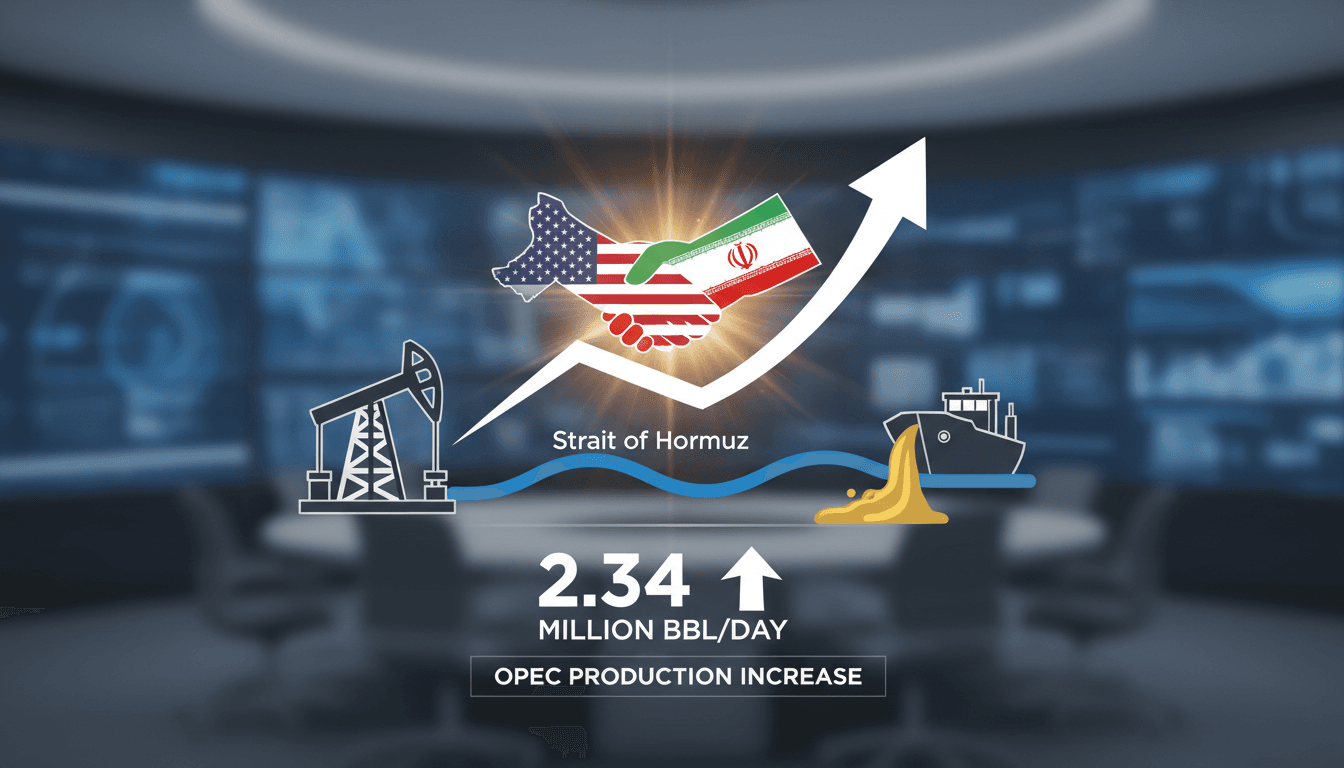
Here's what it means for you.
The recent surge in OPEC's crude oil production signals a shift in the global oil market, driven by geopolitical developments. As exports through the Strait of Hormuz resume, stakeholders must prepare for potential fluctuations in oil prices and supply stability. The upcoming OPEC Plus meeting will be critical in determining future production levels, which could further influence market dynamics. This increase, while significant, still leaves production below pre-war levels, indicating ongoing challenges in the region. Investors and policymakers alike will need to monitor these developments closely to navigate the evolving landscape.
What happened
In June, OPEC's crude oil production rose by 2.34 million barrels per day, a notable increase attributed to the resumption of exports through the Strait of Hormuz. This uptick follows a peace agreement between the US and Iran, which has improved export conditions in the region. Despite this increase, OPEC's output remains approximately 7.3 million barrels per day lower than pre-war levels.
The total production for OPEC reached 18.75 million barrels per day in June, reflecting the impact of geopolitical developments on oil supply. Investors are now closely watching the upcoming OPEC Plus meeting, where potential production adjustments will be discussed.
The Context
The increase in OPEC's production is a direct response to the easing of tensions following the US-Iran peace accord. The Strait of Hormuz is a crucial chokepoint for global oil exports, making its stability vital for market health. The geopolitical landscape surrounding oil production has long been fraught with uncertainty, and this recent agreement has opened the door for increased output.
However, the current production levels still fall short of those seen before the onset of conflict in the region, highlighting the ongoing challenges OPEC faces. The scheduled OPEC Plus meeting will be pivotal in determining how the organization navigates these complexities and responds to market demands.
Takeaway
As OPEC prepares for its upcoming meeting, the decisions made will be crucial in shaping the oil market's trajectory in the coming months. Stakeholders should keep an eye on potential production increases and any geopolitical developments that may affect exports through the Strait of Hormuz. The dynamics of oil production are shifting, and the outcomes of these discussions will have lasting implications for market stability.
Investors and policymakers alike must remain vigilant as the situation evolves, particularly with the potential for further adjustments in production levels. The balance between supply and demand will be key in determining future oil prices and market conditions.
Sports reporting with a focus on Saudi and regional competitions.
"Okaz sports coverage is broad and audience-friendly, with strong attention to Saudi teams and leagues."
— A47 Editor
إنتاج «أوبك» يقفز في يونيو مع تعافي تدفقات النفط عبر هرمز
A Bloomberg survey revealed a significant increase in OPEC's crude oil production in June, rising by 2.34 million barrels per day to a total of 18.75 million barrels per day, following the resumption of exports through the Strait of Hormuz after a pe...
Arabic-language coverage of international news and geopolitics.
"RT Arabic is a Russian state-funded outlet often criticized for promoting Kremlin-aligned narratives."
— A47 Editor
"بلومبرغ":زيادة إنتاج النفط لدى دول "أوبك" خلال يونيو الماضي
Bloomberg reported an increase in oil production among OPEC countries during June, coinciding with the resumption of crude exports from Gulf nations through the Strait of Hormuz following an agreement between the United States and Iran.
Global markets, investing, and macroeconomics from a premier financial newsroom.
"Bloomberg is respected for in-depth financial reporting and data-driven analysis."
— A47 Editor
OPEC Output Surged in June as Hormuz Flows Jumped, Survey Shows
OPEC's crude oil production saw a significant increase in June, driven by a restoration of exports through the Strait of Hormuz as Persian Gulf nations responded to a peace accord between the US and Iran, according to a Bloomberg survey.