
Pope Leo XIV issues historic apology for Vatican's role in slavery
Here's what it means for you.
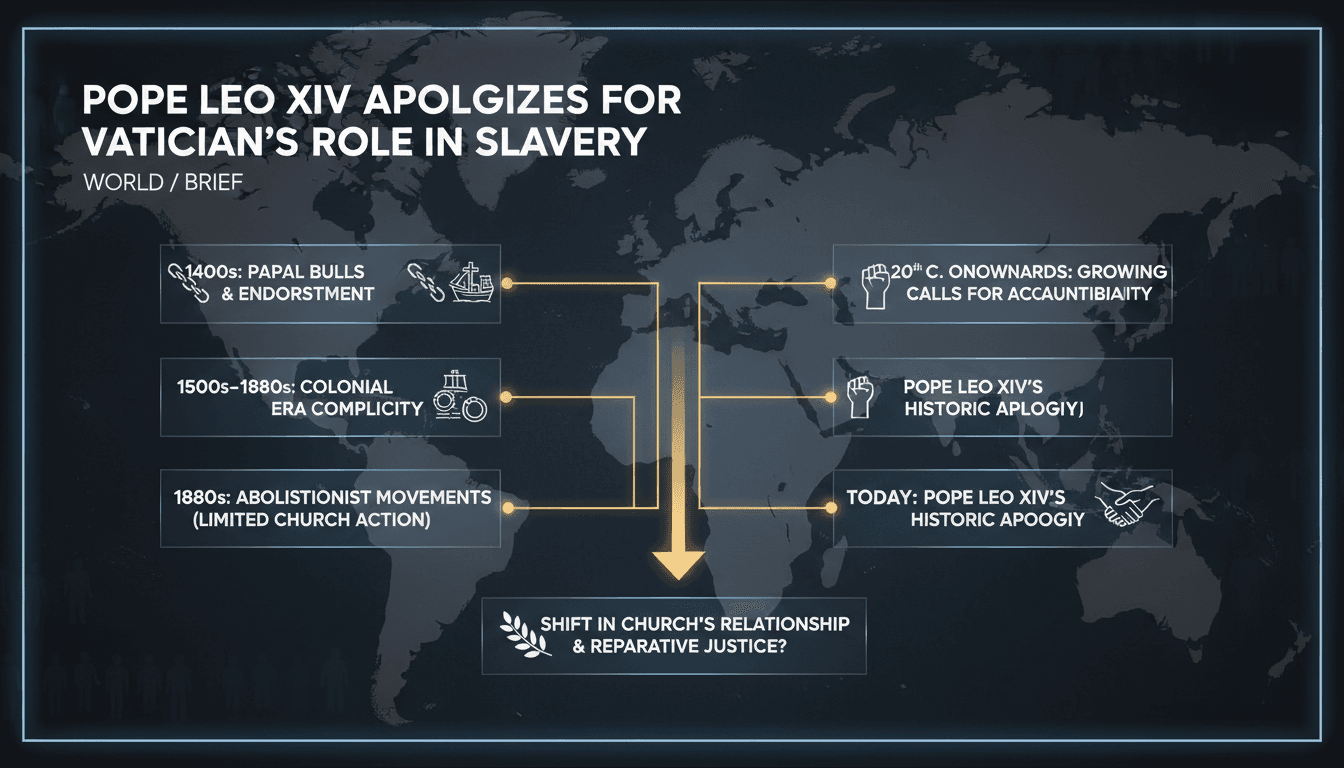
Pope Leo XIV's formal apology for the Vatican's involvement in slavery marks a pivotal moment for the Catholic Church, signaling a commitment to accountability and reconciliation. This unprecedented acknowledgment may reshape the Church's relationship with marginalized communities, fostering a dialogue on historical injustices. The implications extend beyond the Church, potentially influencing broader discussions on reparative justice within religious institutions.
What happened
On May 25, 2026, Pope Leo XIV issued a historic apology for the Vatican's role in legitimizing slavery. This apology is notable as it is the first of its kind from a U.S.-born pope, highlighting a significant shift in the Church's approach to its past. The Pope described the Church's historical record as a "wound in Christian memory," emphasizing the urgent need for reflection and healing.
The Vatican has faced criticism over the years for its historical stance on slavery, and this apology aims to address that legacy. By acknowledging its complicity, the Church seeks to promote healing and reconciliation with affected communities. This momentous event has garnered attention from multiple international news outlets, underscoring its global significance.
The Context
Pope Leo XIV's apology comes amid growing calls for accountability from religious institutions regarding their historical injustices. The Vatican's past involvement in slavery has long been a contentious issue, and this acknowledgment represents a crucial step toward addressing those grievances. The timing of the apology reflects a broader societal shift towards recognizing and rectifying historical wrongs.
As the first pope from the United States, Leo XIV's words carry particular weight, resonating with a diverse audience that includes both supporters and critics of the Church. This apology not only seeks to mend the Church's relationship with marginalized communities but also sets a precedent for future dialogues about accountability within religious organizations.
Takeaway
The apology from Pope Leo XIV may pave the way for further discussions on the Church's historical injustices and its role in promoting reparative justice. Observers will be keen to see how global religious leaders and communities respond to this unprecedented acknowledgment. Potential changes in Church policies regarding historical accountability could emerge as a result of this significant moment.
As the Church navigates its path forward, the implications of this apology may influence its engagement with marginalized groups and shape future conversations about justice and reconciliation. The world will be watching closely to see how this pivotal moment unfolds.
Global coverage of politics, crises, and international affairs.
"HuffPost provides progressive-oriented reporting on international developments, often focusing on humanitarian and social justice issues."
— A47 Editor
Pope Leo XIV Makes Historic Apology For Vatican's Role In Legitimizing Slavery
Pope Leo XIV, the first U.S.-born pope, made a historic apology for the Vatican's role in legitimizing slavery, describing the church's past actions as a significant 'wound in Christian memory.' This acknowledgment marks a pivotal moment in the Catho...
Conservative-leaning political and national coverage.
"The Washington Times is a conservative-leaning newspaper known for its political coverage and advocacy of right-of-center viewpoints."
— A47 Editor
Pope Leo XIV makes historic apology for Vatican's role in legitimizing slavery
Pope Leo XIV made a historic apology for the Vatican's role in legitimizing slavery, acknowledging the institution's failure to condemn this practice for centuries and describing it as a significant wound in Christian memory. This apology marks a piv...
Pan-Arab news coverage spanning politics, business, sports, and regional affairs.
"Asharq Al-Awsat reflects a broad Arab editorial perspective with strong attention to regional geopolitics."
— A47 Editor
البابا يعتذر عن الدور التاريخي للكنيسة في الرق
Pope Leo issued a clear apology regarding the historical role of the Catholic Church in slavery on Monday, marking a significant moment in the Church's acknowledgment of its past actions. This statement is considered one of the most explicit apologie...