
U.S. military conducts strikes against Iranian military assets in Strait of Hormuz
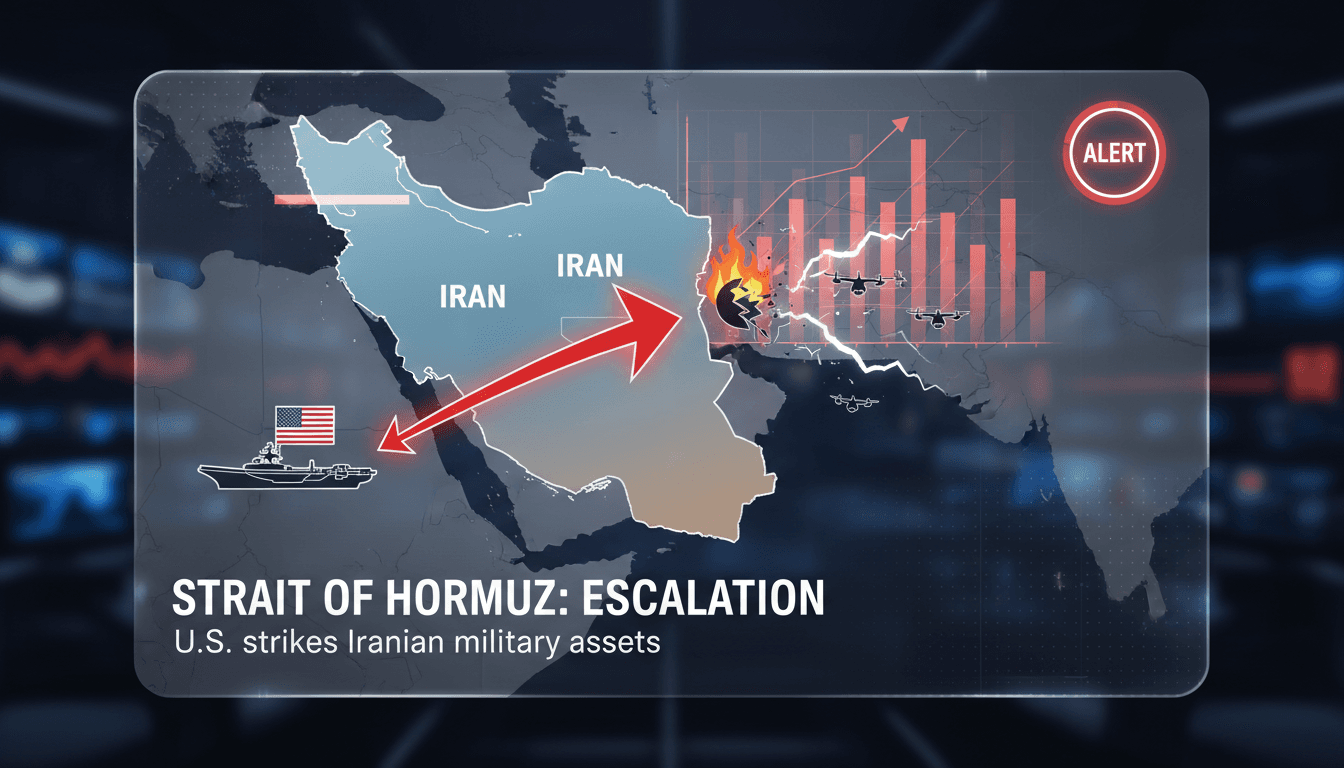
Here's what it means for you.
The recent U.S. military strikes against Iranian military assets signal a significant escalation in tensions between the two nations. This development could have far-reaching implications for regional stability and international shipping routes, particularly in the strategically vital Strait of Hormuz. Stakeholders in global markets should remain vigilant as the potential for further military engagements may impact oil prices and security policies. The ongoing confrontations highlight the fragility of diplomatic relations and the risks associated with military actions in the region. As both nations continue to assert their military capabilities, the situation warrants close monitoring by policymakers and analysts alike.
What happened
On May 28, 2026, the U.S. military conducted targeted strikes against an Iranian ground control station in Bandar Abbas. In addition to this strike, U.S. forces successfully intercepted and shot down four Iranian drones that posed a threat in the Strait of Hormuz. These drones were identified as one-way attack drones, indicating a serious level of aggression from Iran.
This military action follows Iran's Islamic Revolutionary Guard Corps (IRGC) claiming responsibility for targeting a U.S. airbase in retaliation for previous strikes. The incident underscores the escalating military confrontations in the region, particularly as both nations engage in provocative actions.
The Context
The strikes come amid rising tensions between the U.S. and Iran, with both sides demonstrating their willingness to engage militarily. The IRGC's recent claims of targeting a U.S. airbase illustrate Iran's response to perceived threats and its commitment to defending its interests. The Strait of Hormuz remains a critical chokepoint for global oil shipments, making any military escalation particularly concerning for international trade.
This incident is part of a broader pattern of confrontations that have characterized U.S.-Iran relations in recent years. As military operations intensify, the potential for miscalculation or unintended escalation increases, raising alarms among regional and global stakeholders.
Takeaway
The situation remains volatile, with the potential for further military engagements between the U.S. and Iran. Observers should closely monitor Iran's responses to the U.S. military actions, as these could influence future confrontations. Additionally, any escalation in military operations in the region could have significant implications for global oil markets and international security.
As both nations continue to assert their military capabilities, the outlook suggests that diplomatic efforts will be crucial in de-escalating tensions. Stakeholders should remain alert to developments that could impact regional stability and international relations.
Oil, metals, and agriculture: supply/demand headlines, OPEC chatter, inventories, and price action.
"Solid tape for energy and metals traders tracking macro and micro catalysts."
— A47 Editor
Iran’s IRGC say they targeted US airbase after strike near Bandar Abbas
Iran's Islamic Revolutionary Guard Corps (IRGC) announced that they targeted a U.S. airbase following a recent strike near Bandar Abbas, indicating escalating military tensions in the region. This development comes amid ongoing confrontations between...
Pan-Arab news coverage spanning politics, business, sports, and regional affairs.
"Asharq Al-Awsat reflects a broad Arab editorial perspective with strong attention to regional geopolitics."
— A47 Editor
ضربات أميركية جديدة ضد موقع عسكري ومسيّرات في إيران
On Wednesday, a U.S. official reported that the American military conducted new airstrikes in Iran, targeting a military site and successfully downing four Iranian attack drones that posed a threat in the Strait of Hormuz.
Capitol Hill news, legislation, and policy insight.
"The Hill specializes in U.S. politics and policy, with a focus on Capitol Hill developments and a reputation for insider reporting."
— A47 Editor
US military struck Iran's ground control station; shot down 4 drones
The U.S. military intercepted and shot down four Iranian one-way attack drones and targeted an Iranian ground control station in Bandar Abbas that was preparing to launch a fifth drone. This action highlights the escalating military tensions between ...