
Ancient Plague DNA Discovered in Siberian Hunter-Gatherers
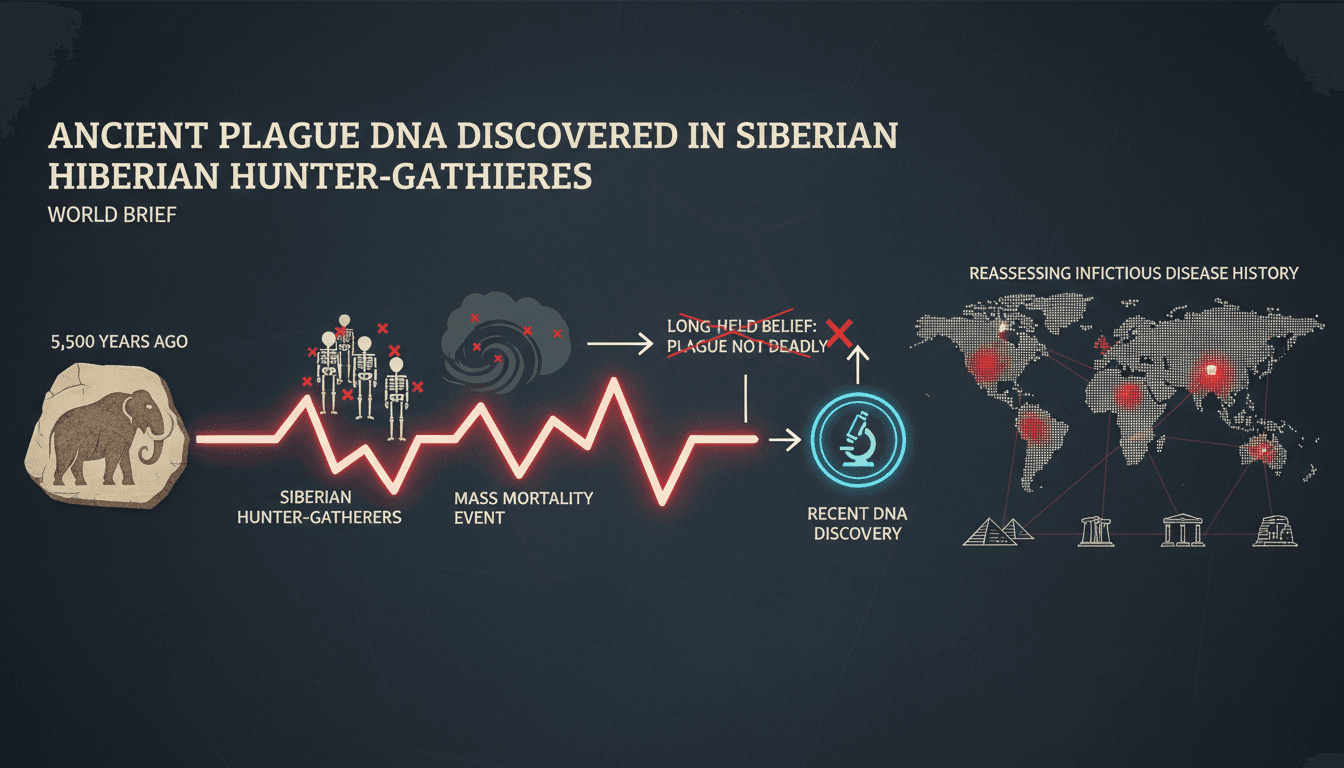
Here's what it means for you.
The discovery of ancient plague DNA in Siberian hunter-gatherers has significant implications for our understanding of infectious diseases. It challenges the prevailing notion that the plague was not a serious threat until later periods, suggesting that early human populations faced substantial health risks long before the advent of agriculture. This revelation may influence public health policies and historical research, prompting a reevaluation of how we perceive disease management in contemporary society.
What happened
Recent DNA evidence has revealed that plague bacteria caused significant mortality in a Siberian community of hunter-gatherers over 5,500 years ago. This finding contradicts the long-held belief that early strains of the plague were mild and that major outbreaks only occurred after the rise of agriculture. The remains of 42 individuals were discovered in graves, showing clear evidence of plague, indicating that the disease was a lethal threat in prehistoric times.
The implications of this discovery extend beyond mere historical interest. It highlights the severe impact of the disease on vulnerable populations, particularly children, who were significantly affected during this outbreak. This research opens new avenues for understanding the history of infectious diseases and their effects on early human societies.
The Context
The findings from this research challenge established narratives about the timeline of infectious diseases. Traditionally, it was believed that significant disease outbreaks began with the establishment of farming and larger settlements. However, this new evidence suggests that major outbreaks occurred much earlier, affecting hunter-gatherer communities that were previously thought to be less impacted by such diseases.
This research is crucial for historians and epidemiologists alike, as it reshapes our understanding of how diseases have influenced human populations throughout history. The timing of these findings is particularly relevant in today's context, where the study of ancient diseases can inform modern public health strategies and responses to emerging infectious threats.
Takeaway
As more evidence emerges regarding ancient diseases, it may lead to new insights into human health and disease management strategies. Future research will likely focus on exploring the evolution of plague bacteria over time and its effects on prehistoric populations. This ongoing investigation could reshape our understanding of infectious diseases and their historical significance, prompting further studies into how these diseases have shaped human societies.
The implications of this research extend beyond historical curiosity; they may inform contemporary public health approaches and enhance our understanding of disease dynamics in human history.
International coverage of politics, security, and social issues.
"Global News is a mainstream Canadian outlet with a centrist editorial stance, focusing on factual reporting."
— A47 Editor
New evidence of origin of the black death a ‘complete surprise’ experts say
Recent findings reveal that the black death, previously thought to have mild early strains, actually resulted in the deaths of prehistoric hunter-gatherers, challenging long-held beliefs about its origins. Experts describe this discovery as a ‘comple...
Discoveries, research, environment, and health innovations.
"New Scientist is a well-respected publication offering accessible science news, commentary, and expert analysis."
— A47 Editor
Oldest known plague outbreak killed hunter-gatherer children
Recent DNA evidence has revealed that a plague outbreak devastated a hunter-gatherer community in Siberia over 5,000 years ago, marking one of the earliest known instances of this deadly disease. This discovery challenges the long-held belief that si...
Health trends, medical research, and fitness reporting.
"The New York Times is a globally recognized newspaper offering authoritative reporting with a center-left editorial stance."
— A47 Editor
A Deadly Outbreak of Plague, Nearly 5,000 Years Before the Black Death
Recent discoveries in Siberian graves have revealed the oldest known cases of plague, dating back nearly 5,500 years, challenging previous assumptions that the disease was once mild. DNA analysis from the remains of hunter-gatherers indicates a letha...
Scientific research, space, environment, and health coverage.
"The New York Times is a globally recognized newspaper offering authoritative reporting with a center-left editorial stance."
— A47 Editor
A Deadly Outbreak of Plague, Nearly 5,000 Years Before the Black Death
Recent discoveries in Siberian graves have revealed the oldest known cases of plague, dating back nearly 5,500 years, challenging previous assumptions that the disease was once mild. DNA analysis from the remains of hunter-gatherers indicates a letha...
News in science and technology, with a focus on consumer and innovation stories.
"Popular Science simplifies complex scientific topics for general audiences and celebrates innovation."
— A47 Editor
Oldest traces of plague discovered in prehistoric teens buried in Russia
Recent discoveries in Russia have revealed the remains of 42 prehistoric hunter-gatherers, indicating that the Black Death, a deadly plague, was present and lethal approximately 5,500 years ago. This finding highlights the historical significance of ...