
2026 FIFA World Cup projected to generate nearly $1 billion economic impact in California
Here's what it means for you.
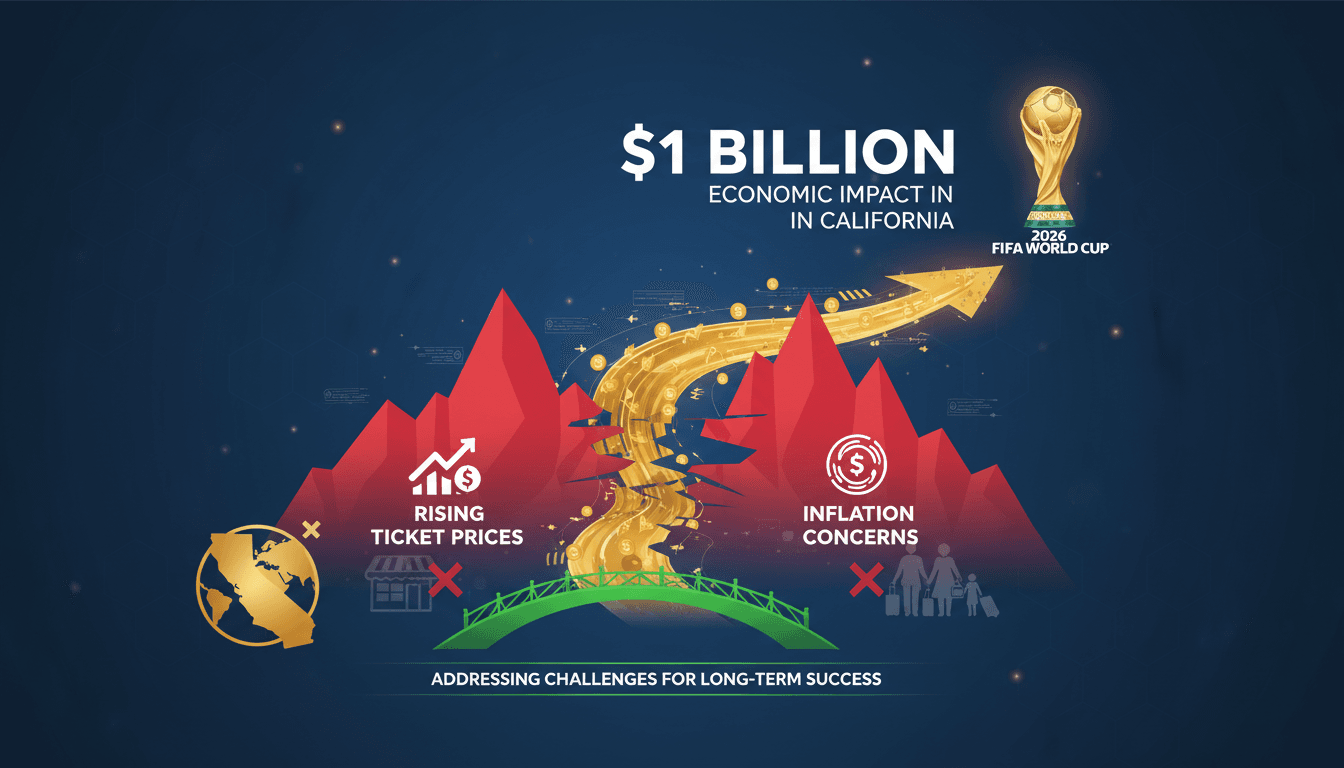
The upcoming 2026 FIFA World Cup is set to bring significant economic benefits to California, with projections nearing $1 billion. However, rising ticket prices and inflation pose challenges that could impact local businesses and tourism. Stakeholders must navigate these economic hurdles to fully capitalize on the event's potential. As the event approaches, the balance between opportunity and challenge will be crucial for maximizing benefits for the region. Addressing these concerns will be essential for ensuring a successful World Cup experience for both visitors and local enterprises.
What happened
The 2026 FIFA World Cup is anticipated to generate substantial economic benefits in California, with an estimated impact of nearly $1 billion. However, this optimism is tempered by rising ticket prices and inflation, which could hinder the expected advantages for local businesses and tourism. Cities across California are hopeful about the event, yet concerns about hotel bookings and affordability are emerging.
Local businesses are increasingly anxious about the potential effects of inflation and FIFA's price hikes. As preparations ramp up, the focus will be on how these economic factors will influence attendance and overall success.
The Context
California is poised to benefit significantly from the World Cup, particularly in cities like Los Angeles and the Bay Area. The event is expected to create a hiring boom in the U.S. service industry, which is gearing up for the influx of visitors. However, the rising costs associated with travel and accommodation are causing concern among local stakeholders.
The timing of these challenges is critical, as the World Cup preparations are already underway. The ability to address these economic issues will determine the extent to which California can leverage the event for long-term benefits.
Takeaway
The outlook for the World Cup's economic impact remains uncertain, with potential benefits overshadowed by rising costs and market challenges. Monitoring hotel booking trends and changes in FIFA's ticket pricing strategies will be essential as the event approaches. Local businesses must adapt to these economic realities to maximize their participation in the World Cup.
As the situation evolves, stakeholders should remain vigilant to ensure that the anticipated economic impact is realized. The balance between accessibility for travelers and the financial viability for local businesses will be key to the event's success.
Global news coverage with extensive reporting on Middle Eastern conflicts and geopolitics.
"Al Jazeera is a Qatar-based broadcaster known for wide regional coverage and alternative perspectives."
— A47 Editor
Will the FIFA World Cup be the economic bonanza US cities were promised?
The FIFA World Cup 2026 is set to take place across 16 stadiums in the United States, Canada, and Mexico, with cities expressing optimism about the economic benefits despite challenges such as lagging hotel bookings and high ticket prices that may de...
Comprehensive coverage of Middle Eastern and global issues.
"Al Jazeera is a prominent voice from the Global South, especially the Middle East, with an emphasis on underreported stories."
— A47 Editor
Will the FIFA World Cup be the economic bonanza US cities were promised?
The FIFA World Cup 2026 is set to take place across 16 stadiums in the United States, Canada, and Mexico, with cities expressing optimism about the economic benefits despite challenges such as lagging hotel bookings and high ticket prices that may de...
News across North, Central, and South America including politics and economics.
"France 24 is viewed as a globally focused outlet with balanced coverage and a European perspective."
— A47 Editor
Inflation and FIFA price hikes dampen hope of World Cup boost to US economy
As the 2026 FIFA World Cup approaches, a significant hiring boom is occurring in the US service industry, but local businesses are increasingly concerned that rising inflation and FIFA's price hikes may overshadow the anticipated economic benefits.
Breaking news, politics, business, and entertainment from the U.S. and around the world.
"The New York Post is a tabloid-format newspaper known for its sensationalist headlines and conservative-leaning editorial tone."
— A47 Editor
World Cup 2026 could deliver nearly $1 billion economic jackpot to California
The 2026 FIFA World Cup is anticipated to generate nearly $1 billion in economic impact for California, particularly benefiting Los Angeles and the Bay Area through increased tourism, hotel demand, and job creation.