
Saudi Arabia's merchandise exports surge driven by oil in May 2026
Here's what it means for you.
The recent surge in Saudi Arabia's merchandise exports, primarily fueled by oil, underscores the kingdom's ongoing dependence on oil revenue. This trend raises critical questions about the effectiveness of current economic diversification strategies, particularly as non-oil exports decline significantly. Stakeholders in various sectors should prepare for potential shifts in policy aimed at bolstering non-oil industries. As the global market fluctuates, the implications of these export figures could influence investment decisions and trade relations, particularly with major partners like China. The data suggests a need for a balanced approach to economic growth that addresses both oil and non-oil sectors.
What happened
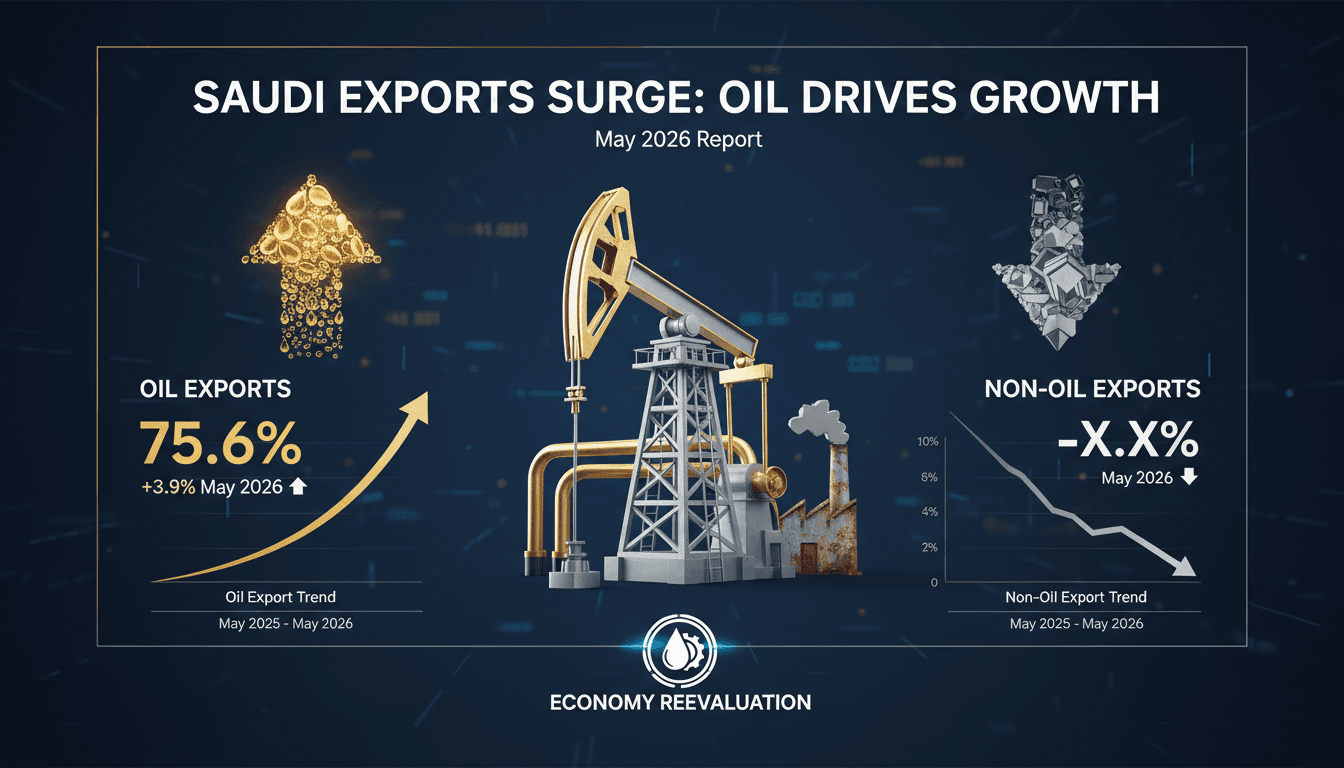
In May 2026, Saudi Arabia's merchandise exports rose by 3.9%, marking a notable increase in trade performance. The trade surplus experienced a remarkable year-on-year rise of 328.8%, reflecting the strength of the country's export activities. This growth was largely driven by oil exports, which accounted for 75.6% of total merchandise exports during the month.
Despite the overall increase in exports, non-oil exports, including re-exports, saw a significant decline of 26.1% year-on-year. The total merchandise exports reached approximately 94 billion Riyals, while imports decreased by 19.5% to about 67.7 billion Riyals. This contrasting performance highlights the challenges faced by non-oil sectors in the current economic landscape.
The Context
Saudi Arabia's trade performance in May 2026 is set against a backdrop of fluctuating global oil prices and ongoing efforts to diversify its economy. The country remains heavily reliant on oil exports, which have proven to be a significant driver of its trade surplus. China continues to be the largest trading partner, receiving 12.3% of Saudi exports, emphasizing the importance of international trade relationships.
The decline in non-oil exports raises concerns about the effectiveness of the kingdom's diversification strategies, particularly as the largest non-oil export category—machinery and electrical equipment—also faced a 31.6% decline. This situation calls for a reevaluation of economic policies to foster growth in non-oil sectors, which are crucial for sustainable development.
Takeaway
Looking ahead, it will be essential to monitor trends in global oil prices and their impact on Saudi exports. The significant reliance on oil revenue may prompt policymakers to consider strategies aimed at enhancing non-oil sectors to achieve a more balanced economic framework. Potential policy changes could emerge as the government seeks to address the challenges posed by declining non-oil exports.
As Saudi Arabia navigates its economic landscape, the focus will likely remain on boosting oil production while simultaneously addressing the needs of non-oil industries. Stakeholders should remain vigilant for any developments that could signal shifts in economic strategy or trade dynamics.
Arabic-language coverage of Saudi, regional, and international affairs.
"Al Bilad offers mainstream Saudi newspaper coverage across domestic and broader Arab topics."
— A47 Editor
غير النفطية تتراجع وفائض الميزان التجاري يقفز 328.8%.. ارتفاع الصادرات 3.9% مدعومة بنمو «النفطية» 19.5%
The General Authority for Statistics reported that the international trade index for goods in May 2026 showed a 3.9% increase in merchandise exports, reaching 94 billion riyals, compared to the same month in 2025. This growth was driven by a 19.5% ri...
Pan-Arab news coverage spanning politics, business, sports, and regional affairs.
"Asharq Al-Awsat reflects a broad Arab editorial perspective with strong attention to regional geopolitics."
— A47 Editor
الميزان التجاري السعودي يُحلق عند 329 %... والصادرات تقود المكاسب
The Saudi trade performance in May revealed a remarkable surge in the trade balance surplus, which increased by approximately 329% year-on-year. This significant growth highlights the strength of the country's export sector.
English-language reporting on Saudi politics, policy, and society.
"Saudi Gazette reflects mainstream Saudi institutional perspectives."
— A47 Editor
Saudi merchandise exports rise 3.9% as trade surplus surges 328.8%
Saudi Arabia's merchandise exports rose by 3.9% in May 2026 compared to the previous year, primarily due to a significant 19.5% increase in oil exports, as reported by the General Authority for Statistics. The trade surplus surged by 328.8% year-on-y...
English-language reporting focused on Saudi Arabia and regional affairs.
"Saudi Gazette provides English-language coverage that often aligns with mainstream Saudi news priorities."
— A47 Editor
Saudi merchandise exports rise 3.9% as trade surplus surges 328.8%
Saudi Arabia's merchandise exports rose by 3.9% in May 2026 compared to the previous year, primarily due to a significant 19.5% increase in oil exports, as reported by the General Authority for Statistics. The trade surplus surged by 328.8% year-on-y...
Sports reporting with a focus on Saudi and regional competitions.
"Okaz sports coverage is broad and audience-friendly, with strong attention to Saudi teams and leagues."
— A47 Editor
بزيادة 3.9%.. صادرات السعودية السلعية ارتفعت إلى 93.78 مليار في 30 يوماً
According to data from the General Authority for Statistics, Saudi Arabia's merchandise exports increased by 3.9% in May 2026, reaching approximately 93.78 billion riyals compared to 90.29 billion riyals in May 2025. The rise in petroleum exports was...
Pan-Arab news coverage spanning politics, business, sports, and regional affairs.
"Asharq Al-Awsat reflects a broad Arab editorial perspective with strong attention to regional geopolitics."
— A47 Editor
ارتفاع الصادرات السلعية السعودية خلال مايو بنسبة 3.9 %
Saudi Arabia's merchandise exports increased by 3.9% year-on-year in May 2026, indicating a positive trend in the country's trade performance. This growth reflects the resilience of the Saudi economy amidst global market fluctuations.