
GCC Foreign Ministers Condemn Iranian Attacks on Bahrain Kuwait and Jordan
Here's what it means for you.
The recent condemnation by the Gulf Cooperation Council (GCC) foreign ministers signals a significant escalation in regional tensions, particularly concerning Iranian actions. This unified stance emphasizes the importance of collective security among member states, which may lead to increased military cooperation. Stakeholders in the region should prepare for potential shifts in diplomatic relations and security strategies as the GCC seeks to address these threats. The GCC's response also highlights the delicate balance between diplomacy and defense, suggesting that future interactions with Iran will be closely monitored. The implications of these developments could resonate beyond the immediate region, influencing international diplomatic efforts and security policies.
What happened
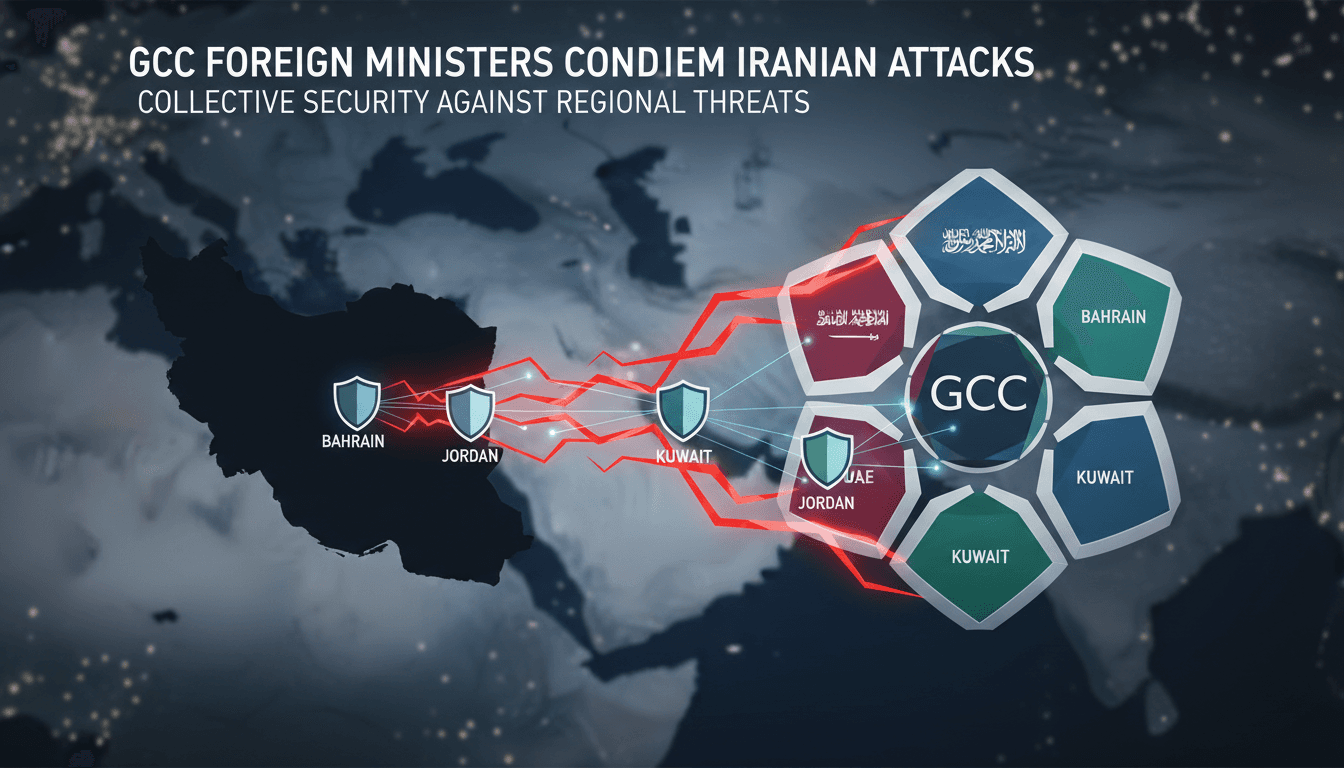
During a meeting in Manama, Bahrain, the foreign ministers of the Gulf Cooperation Council condemned recent Iranian attacks targeting Bahrain, Kuwait, and Jordan. The ministers emphasized the indivisibility of security among member states and called for an immediate halt to Iranian aggression. They reaffirmed their commitment to pursuing diplomatic solutions while expressing solidarity with the affected nations.
The Iranian attacks involved the use of drones and ballistic missiles, which were described as violations of international law and threats to regional stability. The GCC ministers collectively stated that any attack on one member state is considered an attack on all, reinforcing their commitment to mutual defense.
The Context
The GCC meeting comes amid escalating tensions with Iran, following a series of attacks that have raised concerns about regional security. The foreign ministers' condemnation reflects a broader strategy to address Iranian aggression and protect member states. The timing of this meeting is critical, as it underscores the urgency of a unified response to perceived threats.
The GCC's solidarity with Bahrain, Kuwait, and Jordan highlights the interconnected nature of security in the Gulf region. As these nations face direct threats, the GCC's collective stance serves as a warning to Iran and a call for international support, including a request for the United Nations Security Council to condemn the attacks.
Takeaway
The GCC's strong response to Iranian aggression indicates a potential shift towards increased military cooperation among member states. As the situation develops, it will be essential to monitor the GCC's diplomatic efforts and any subsequent actions taken against Iran. The council's readiness to defend against further threats suggests that future interactions with Iran will be closely scrutinized.
In the coming weeks, stakeholders should watch for developments in GCC-Iran relations and any responses from the international community regarding the situation. The GCC's unified stance may influence broader geopolitical dynamics in the region, particularly concerning security and diplomatic relations.
Pan-Arab news coverage spanning politics, business, sports, and regional affairs.
"Asharq Al-Awsat reflects a broad Arab editorial perspective with strong attention to regional geopolitics."
— A47 Editor
التطورات الإقليمية تهيمن على المباحثات الخليجية - الكندية
Recent regional developments, particularly Iranian attacks targeting Kuwait and Bahrain, dominated discussions between Gulf Cooperation Council (GCC) foreign ministers and their Canadian counterpart. The talks reflect heightened tensions in the regio...
English-language reporting on Saudi politics, policy, and society.
"Saudi Gazette reflects mainstream Saudi institutional perspectives."
— A47 Editor
GCC challenges Iran: How can future ties be built while attacks continue?
The Gulf Cooperation Council (GCC) has reiterated its commitment to peace and diplomatic solutions while expressing concerns over ongoing Iranian missile and drone attacks targeting Bahrain, Kuwait, and Jordan. The GCC's statement followed its 167th ...
English-language reporting focused on Saudi Arabia and regional affairs.
"Saudi Gazette provides English-language coverage that often aligns with mainstream Saudi news priorities."
— A47 Editor
GCC challenges Iran: How can future ties be built while attacks continue?
The Gulf Cooperation Council (GCC) has reaffirmed its commitment to peace and diplomatic solutions while questioning the feasibility of future relations with Iran amid ongoing attacks against regional states. This statement followed a ministerial mee...
Arabic-language coverage of political affairs and current events.
"Okaz political coverage typically follows mainstream Saudi framing on national and regional affairs."
— A47 Editor
وزراء خارجية مجلس التعاون: اعتداءات إيران تقوّض الثقة وتزرع الشقاق وتُغلق أبواب الحوار
The foreign ministers of the Gulf Cooperation Council (GCC) condemned recent Iranian attacks on Bahrain, Kuwait, and Jordan, asserting that the security of GCC states is indivisible and that any aggression against one is an aggression against all. Th...