
Fitch Ratings affirms Saudi Arabia's credit rating at A+ with stable outlook
Here's what it means for you.
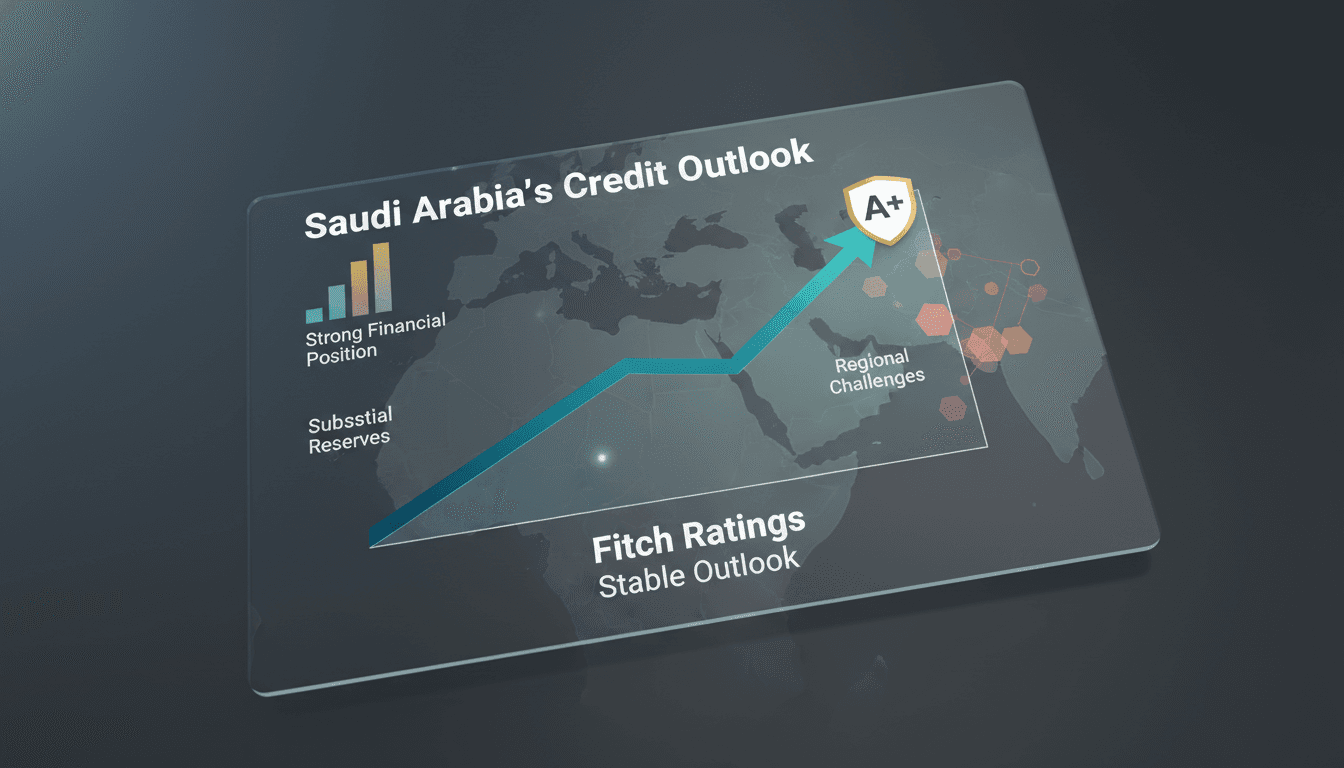
Fitch Ratings' affirmation of Saudi Arabia's credit rating at 'A+' signals strong investor confidence in the nation's economic stability. This rating reflects the country's robust financial position and substantial reserves, which are crucial for maintaining economic resilience. However, the potential for slower growth due to regional conflicts necessitates careful monitoring of geopolitical developments. The stable outlook indicates that while the current financial management is sound, external factors could pose risks to future growth. Stakeholders should remain vigilant as these dynamics unfold.
What happened
Fitch Ratings has confirmed Saudi Arabia's credit rating at 'A+' with a stable outlook. This decision was made on July 11, 2026, and highlights the strength of the country's public finances and external position. The affirmation is underpinned by significant financial reserves and low government debt levels, which contribute to the overall positive assessment.
Despite this favorable rating, Fitch has indicated that growth may slow due to ongoing regional challenges. These challenges could impact the economic landscape and require strategic navigation by the Saudi government.
The Context
The affirmation of Saudi Arabia's credit rating comes at a time when the nation is focusing on economic diversification and fiscal management. Stakeholders, including investors and policymakers, are keenly aware of the implications of regional conflicts that could affect economic stability. The low government debt levels compared to financial reserves further bolster the country's creditworthiness.
Fitch's assessment reflects a broader confidence in Saudi Arabia's financial management, but it also serves as a reminder of the geopolitical complexities that could hinder growth. As the region continues to face challenges, the implications for Saudi Arabia's economy will be closely watched.
Takeaway
While Saudi Arabia maintains a strong credit rating, the potential for slower growth necessitates close monitoring of regional developments and economic strategies. Investors and policymakers should keep an eye on how ongoing conflicts may influence the country's economic trajectory. Updates on fiscal policies and efforts toward economic diversification will also be critical in assessing future stability.
The stable outlook suggests resilience, but external factors remain a significant concern. Stakeholders should prepare for potential shifts in the economic landscape as these dynamics evolve.
Arabic-language coverage of Saudi, regional, and international affairs.
"Al Bilad offers mainstream Saudi newspaper coverage across domestic and broader Arab topics."
— A47 Editor
“فيتش” تُثبّت تصنيف المملكة عند A+ بنظرة مستقرة
Fitch Ratings has affirmed Saudi Arabia's credit rating at A+ with a stable outlook, highlighting the strength of the country's public finances and external position as key factors supporting this rating. The agency noted the significant financial re...
Regional and international reporting focused on Middle Eastern politics, diplomacy, and economics.
"Asharq Al-Awsat is a Saudi-owned international newspaper reflecting mainstream Gulf political perspectives."
— A47 Editor
Fitch Affirms Saudi Arabia at 'A+', Outlook Stable
Fitch Ratings has affirmed Saudi Arabia's long-term foreign-currency issuer default rating at 'A+' with a stable outlook, reflecting the Kingdom's strong fiscal position and significant financial reserves. This affirmation comes amidst ongoing geopol...
UAE-based English-language newspaper covering regional politics, economics, and global affairs.
"The National reflects Emirati policy perspectives while maintaining international editorial standards."
— A47 Editor
Fitch maintains Saudi Arabia's rating but sees slower growth amid war challenges
Fitch Ratings has maintained Saudi Arabia's long-term foreign-currency issuer default rating at 'A+' with a stable outlook, despite acknowledging challenges to economic growth due to ongoing regional conflicts. The agency's assessment reflects the Ki...