
Oman opposes Iran's transit fee proposal in the Strait of Hormuz
Here's what it means for you.
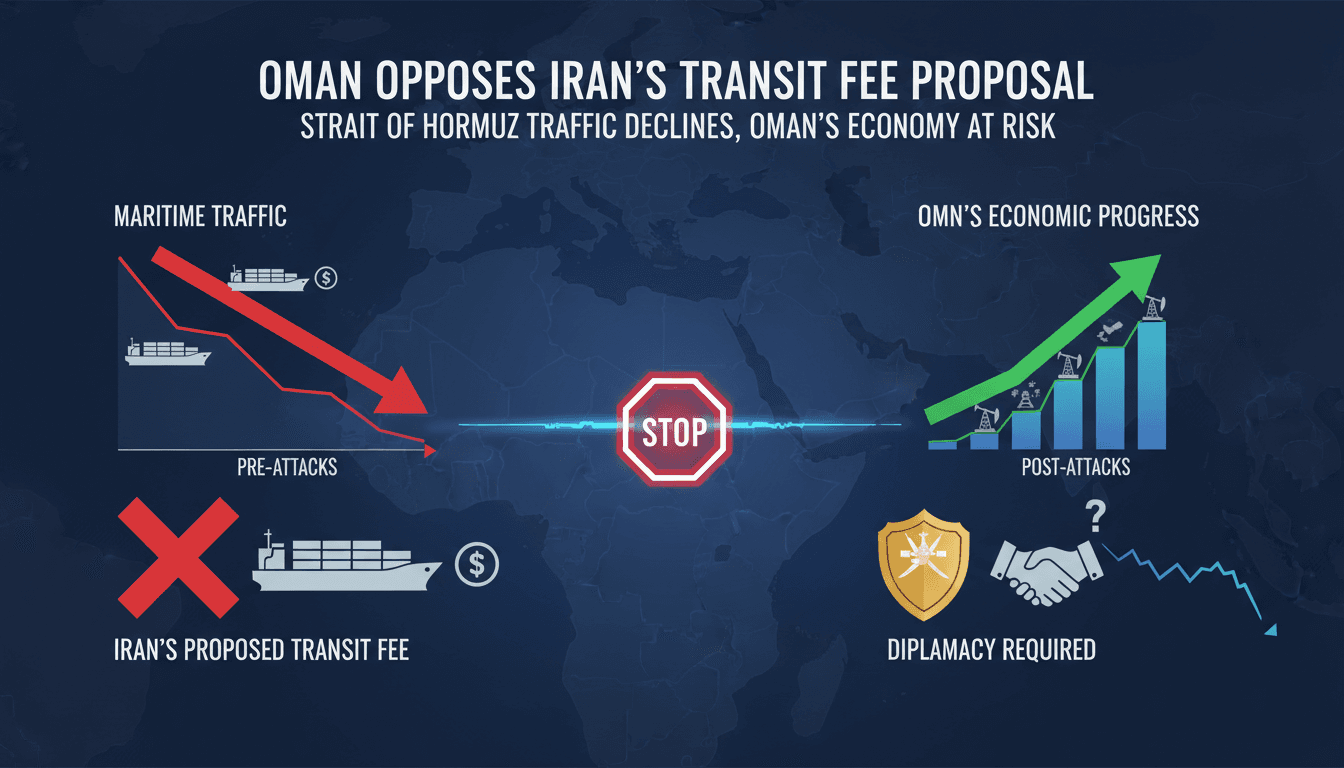
Oman's opposition to Iran's proposed transit fees in the Strait of Hormuz signals potential economic and diplomatic challenges for the nation. As maritime traffic declines due to rising tensions, Oman's economic progress could be jeopardized. Stakeholders should closely monitor how this disagreement may affect regional stability and Oman's diplomatic strategies moving forward.
What happened
Oman has publicly opposed Iran's plan to impose transit fees on vessels passing through the strategically vital Strait of Hormuz. This opposition was articulated during a recent statement at the United Nations. The disagreement comes at a time when maritime traffic through the strait has sharply declined, following a series of attacks on vessels and escalating tensions between the United States and Iran.
The decline in traffic has raised concerns about the economic implications for Oman, which has recently improved its ranking in the Index of Economic Freedom. The situation is further complicated by the fact that vessels not linked to Iran have largely avoided the southern Omani route.
The Context
Oman's position in the Strait of Hormuz is critical, as it serves as a major maritime route for global oil shipments. Iran's advocacy for tolls on vessels passing through this strait adds a layer of complexity to the already tense geopolitical landscape. The recent attacks on vessels have not only decreased traffic but have also heightened fears regarding maritime security in the region.
Oman's significant rise in the Index of Economic Freedom, moving up 19 places, underscores its recent economic progress. However, the imposition of transit fees could threaten this advancement, necessitating careful diplomatic efforts to safeguard Oman's interests.
Takeaway
The situation in the Strait of Hormuz remains precarious, with potential implications for both regional stability and Oman's economic future. Observers should monitor further developments in US-Iran relations, as these could significantly impact maritime security and economic conditions in the region. Oman's diplomatic maneuvers will be crucial in navigating these challenges and maintaining its economic interests.
Regional coverage and analysis focused on politics, diplomacy, and business across the Middle East.
"Al-Monitor is known for analytical reporting on Middle East politics and policy developments."
— A47 Editor
Hormuz traffic slumps as US, Iran trade strikes
Traffic through the Strait of Hormuz has significantly decreased following a series of attacks on commercial vessels and renewed military strikes between the United States and Iran. Analysts noted that the southern Omani route, previously used by man...
Global markets, investing, and macroeconomics from a premier financial newsroom.
"Bloomberg is respected for in-depth financial reporting and data-driven analysis."
— A47 Editor
Oman Tells UN It’s Against Imposing Transit Fees in Hormuz
Oman has expressed its opposition to the imposition of transit fees in the Strait of Hormuz during a statement to the United Nations' shipping agency. This stance may create tensions with Iran, which is advocating for such fees for vessels navigating...
Conservative-leaning coverage of current events.
"Fox News is a highly influential conservative news outlet known for right-leaning political commentary and coverage."
— A47 Editor
Iran’s Strait of Hormuz scheme could derail one Gulf nation’s bright future
Oman has recently made significant strides in the Index of Economic Freedom, jumping 19 places. However, ongoing discussions with Tehran regarding the imposition of tolls for the transit of vessels through the Strait of Hormuz threaten to undermine t...