
Nissan CEO Implements Revitalization Plan Amid Tariff Challenges
Here's what it means for you.
Nissan's strategic revitalization plan under CEO Ivan Espinosa is a critical response to the dual pressures of competition and tariffs. The focus on maintaining U.S. production is not just about immediate survival; it reflects a broader commitment to innovation and market adaptability. Stakeholders in the automotive industry should closely monitor how these changes may influence market dynamics and consumer choices. As Nissan navigates these challenges, the implications for employment and local economies in the U.S. could be significant. The outcome of this plan will likely set a precedent for how automakers respond to similar pressures in the future.
What happened
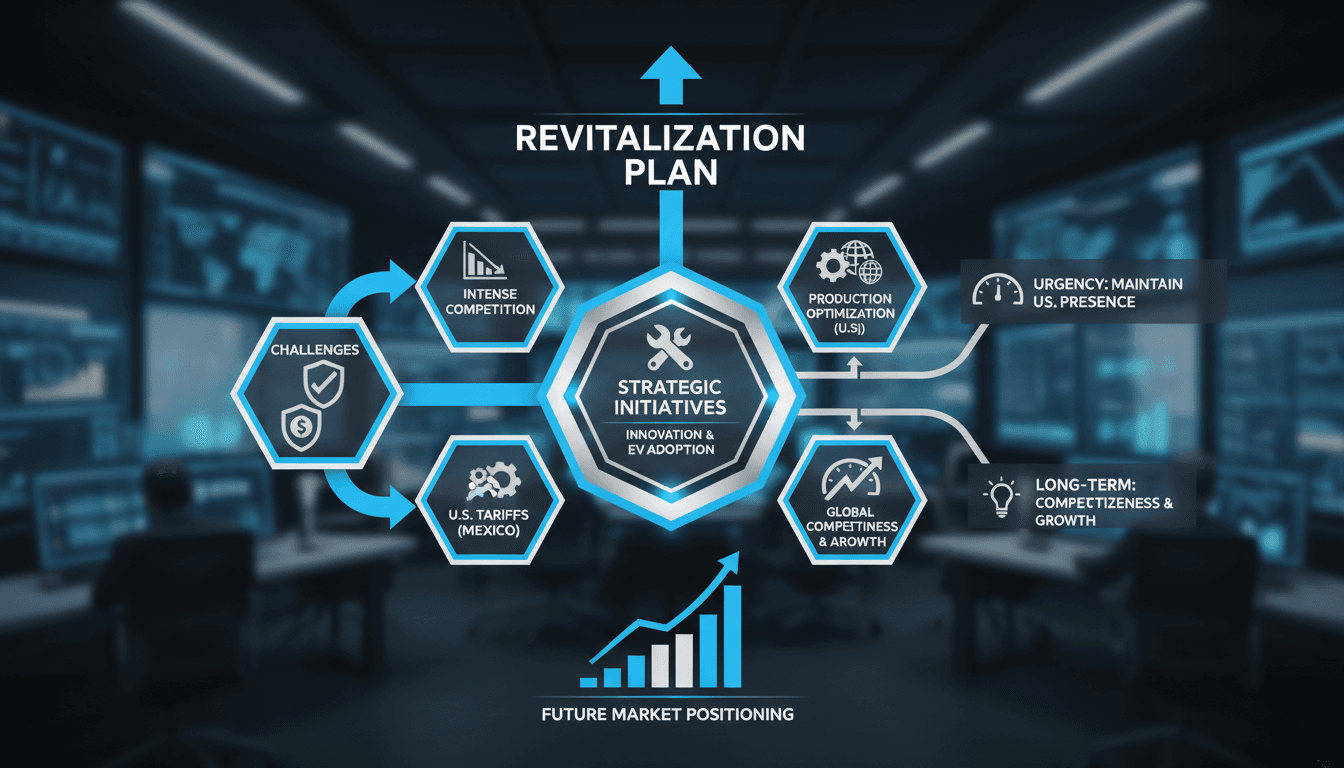
Nissan's CEO Ivan Espinosa is implementing a revitalization plan to address significant challenges facing the automaker. This initiative comes in response to fierce competition, particularly from Chinese manufacturers, and the impact of U.S. tariffs on Mexican-made vehicles. Espinosa's leadership is crucial as he formulates this strategic plan within a tight six-week timeframe.
The 25% tariff on Mexican-made cars sold in the U.S. has created substantial operational hurdles for Nissan. Despite these economic pressures, Espinosa remains committed to the viability of U.S. car production, emphasizing the importance of maintaining a competitive edge in the automotive market.
The Context
Nissan is at a pivotal moment as it confronts intense competition and trade issues that threaten its market position. The automotive landscape is evolving rapidly, with Chinese automakers gaining ground and U.S. tariffs complicating the sales of vehicles produced in Mexico. Espinosa's focus on U.S. production underscores a strategic pivot aimed at sustaining the company's operations amid these challenges.
The urgency of this revitalization plan is heightened by the need for Nissan to adapt quickly to changing market conditions. As the automotive industry faces increasing scrutiny over trade policies, the decisions made by Nissan will resonate beyond the company, influencing broader industry trends and consumer perceptions.
Takeaway
Looking ahead, Nissan's strategy will hinge on its ability to innovate and adapt to market conditions. The company must navigate potential changes in U.S. trade policy that could further impact automotive tariffs. Additionally, developments in Nissan's autonomous driving technology initiatives will be critical to its long-term competitiveness.
As the situation unfolds, stakeholders should keep an eye on how Nissan's revitalization efforts shape its operational strategies and market positioning. The outcomes of these initiatives will likely serve as a barometer for the automotive industry's response to similar challenges.
Corporate leadership, finance, technology, and market trends.
"Fortune covers financial trends, leadership, and innovation with a pragmatic editorial approach."
— A47 Editor
Nissan CEO Ivan Espinosa was forced to put together a plan to save the Japanese carmaker in just six weeks: ‘I knew what had to be done’
Nissan CEO Ivan Espinosa has been tasked with developing a strategic plan to revitalize the struggling automaker within a tight six-week timeframe, facing challenges from intense competition in China and tariffs imposed by the U.S. government.
Technology business and AI-related headlines.
"Data-driven tech newsroom with global scope."
— A47 Editor
Nissan CEO on Autonomous Driving, Making Cars in US
Nissan Motor Co. President and CEO Ivan Espinosa discussed the future of autonomous driving and the company's investment strategies in the US during an interview on Bloomberg Surveillance. He highlighted the challenges posed by a 25% tariff on Mexica...
Technology business news, market impacts, and innovation trends.
"Bloomberg is a premier financial and tech news provider, respected for its in-depth reporting and analytical rigor."
— A47 Editor
Nissan CEO on Autonomous Driving, Making Cars in US
Nissan Motor Co. President and CEO Ivan Espinosa discussed the future of autonomous driving and the company's investment strategies in the US during an interview on Bloomberg Surveillance. He highlighted the challenges posed by a 25% tariff on Mexica...
Global markets, investing, and macroeconomics from a premier financial newsroom.
"Bloomberg is respected for in-depth financial reporting and data-driven analysis."
— A47 Editor
Nissan CEO Says It Still Makes Sense to Build Cars in US
Nissan President and CEO Ivan Espinosa stated that it remains viable for the company to manufacture vehicles in the United States, despite ongoing trade tensions and a depreciating yen. This assertion was made during an interview on Bloomberg Surveil...