
U.S. Defense Secretary Calls for Increased Military Spending Among Asian Allies to Counter China
Here's what it means for you.
The call for increased military spending among Asian allies signifies a pivotal shift in U.S. defense policy, emphasizing shared responsibilities in regional security. This move is particularly relevant for defense contractors and policymakers, as it may lead to increased defense budgets and procurement opportunities in Asia. As the U.S. encourages allies to bolster their military capabilities, the landscape of defense spending in the region is likely to evolve significantly.
What happened
During the Shangri-La Dialogue, U.S. Defense Secretary Pete Hegseth urged Asian allies to enhance their military capabilities and spending in response to China's military expansion. He highlighted the necessity for these nations to take on greater responsibility for their own defense, marking a notable shift in U.S. defense policy. Hegseth's remarks come amid concerns over China's significant military modernization, which he described as the largest in its recent history.
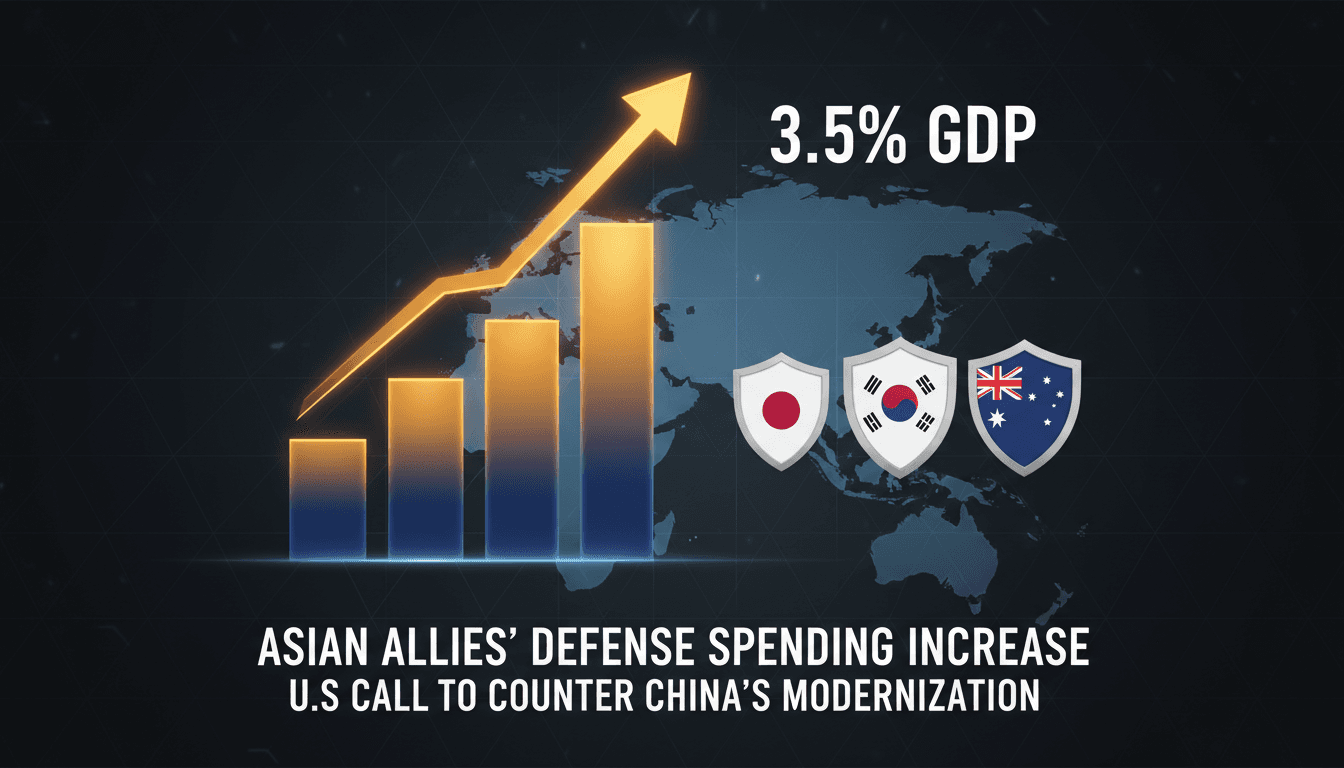
The Secretary emphasized that the U.S. is prepared to respond militarily if diplomatic efforts with Iran fail, underscoring the urgency of strengthening alliances in Asia. He set a target for U.S. allies to increase their defense budgets to 3.5% of GDP to ensure regional stability. This call to action reflects a broader strategy of shared defense responsibilities among allies.
The Context
Hegseth's address at the Shangri-La Dialogue signals the end of an era where the U.S. primarily funded the defense of wealthy nations. The shifting dynamics in U.S. defense policy come as China continues to modernize its military capabilities, raising concerns among regional allies. The dialogue serves as a platform for discussing security challenges in the Asia-Pacific region, making Hegseth's comments particularly timely.
The U.S. expects its Asian partners to respond to these challenges by increasing their defense budgets, which could reshape the defense spending landscape in the region. This collaborative approach aims to foster a more balanced distribution of defense responsibilities, reducing the reliance on U.S. military support. The implications of this shift are significant for both U.S. foreign policy and regional security dynamics.
Takeaway
Looking ahead, the U.S. is likely to continue advocating for increased defense spending among its allies in Asia. Observers should monitor the defense budget increases among these nations, as well as any developments in U.S.-China military communications. The emphasis on shared responsibilities may lead to a more robust defense posture among U.S. allies, potentially altering the balance of power in the region.
As tensions with China persist, maintaining open channels of communication will be crucial to managing conflicts and avoiding escalation. The evolving defense landscape in Asia will be a key area to watch in the coming years, as nations respond to the call for enhanced military capabilities.
Pan-Arab news coverage spanning politics, business, sports, and regional affairs.
"Asharq Al-Awsat reflects a broad Arab editorial perspective with strong attention to regional geopolitics."
— A47 Editor
وزير الدفاع الأميركي يخفف نبرته التحذيرية تجاه الصين ويهاجم «الحلفاء» الأوروبيين
U.S. Secretary of Defense, Heigseth, has toned down his warning tone towards China while criticizing European allies, stating that the era of U.S. support for wealthy nations' defense has ended and emphasizing the need for partners rather than countr...
Arabic-language coverage of political affairs and current events.
"Okaz political coverage typically follows mainstream Saudi framing on national and regional affairs."
— A47 Editor
وزير الدفاع الأمريكي: عصر الاعتماد على واشنطن انتهى.. ولا مكان لـ«المتطفلين» أمنياً
U.S. Defense Secretary Pete Hegseth warned of China's growing military capabilities, urging U.S. allies in Asia to increase their defense spending to counter Beijing's rapid military expansion and maintain regional stability. Speaking at the Shangri-...
Arabic-language coverage of international news and geopolitics.
"RT Arabic is a Russian state-funded outlet often criticized for promoting Kremlin-aligned narratives."
— A47 Editor
هيغسيث: حلفاؤنا الأوروبيون بدأوا في اللحاق بالركب وقنوات الاتصال مع العسكريين الصينيين مفتوحة
U.S. Secretary of Defense, Beth Higgsith, stated that European allies are beginning to catch up by increasing their defense spending, while also noting that communication channels with Chinese military officials remain open.