
Attack on supertanker in Strait of Hormuz escalates US-Iran tensions and impacts oil prices
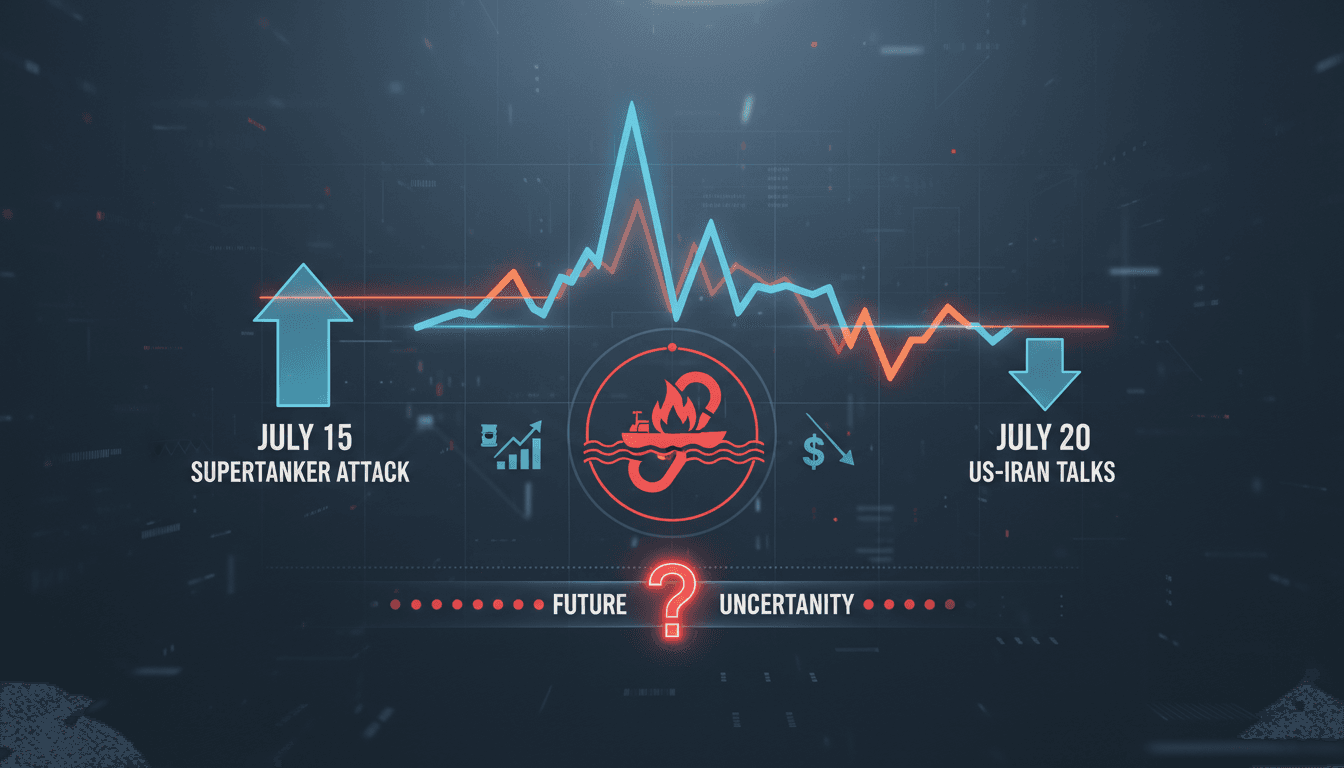
Here's what it means for you.
The recent attack on a supertanker in the Strait of Hormuz has significant implications for global oil markets and geopolitical stability. Fluctuations in oil prices, particularly the drop below $70 a barrel for WTI crude, indicate heightened market volatility. As the US and Iran engage in negotiations to prevent further hostilities, stakeholders must remain vigilant about potential disruptions in oil supply routes. The ongoing tensions in this critical waterway could lead to sustained instability, affecting not only oil prices but also broader economic conditions. Monitoring diplomatic efforts will be essential for understanding future market movements.
What happened
A cargo ship carrying Qatari crude oil was attacked in the Strait of Hormuz, a vital passage for global oil transport. This incident has led to immediate fluctuations in oil prices, with Brent crude initially rising before experiencing a decline. The attack has prompted discussions between the US and Iran aimed at halting further hostilities.
Despite the initial spike in oil prices following the attack, market reactions have shown a significant downturn. WTI crude prices fell below $70 a barrel, reflecting the uncertainty surrounding the situation. The incident underscores the fragility of oil supply routes in the region.
The Context
The Strait of Hormuz is a critical waterway for global oil transport, making any disruptions particularly impactful. The attack on the supertanker highlights the ongoing tensions between the US and Iran, which have historically influenced oil markets. As both nations engage in negotiations, the potential for further conflict remains a concern.
The timing of this incident is crucial, as it coincides with broader geopolitical dynamics in the region. Stakeholders, including oil producers and consumers, are closely monitoring developments to gauge their potential impact on supply and pricing. The situation emphasizes the interconnectedness of geopolitical events and market stability.
Takeaway
As diplomatic efforts continue, the oil market remains sensitive to geopolitical developments in the Strait of Hormuz. Stakeholders should watch for any changes in US-Iran relations that could lead to further attacks or escalations. The ongoing tensions could result in continued volatility in oil prices and supply routes.
Future monitoring of the situation will be essential for understanding the long-term implications for oil markets. The potential for instability in this critical region underscores the need for vigilance among market participants.
Global markets, investing, and macroeconomics from a premier financial newsroom.
"Bloomberg is respected for in-depth financial reporting and data-driven analysis."
— A47 Editor
Oil Rises as US and Iran Set to Halt Attacks Following Flare-Up
Oil prices have risen following an agreement between the US and Iran to halt mutual attacks, which comes after a recent flare-up involving a supertanker carrying Qatari crude near the Strait of Hormuz. This development signals a potential easing of t...
Global markets, investing, and macroeconomics from a premier financial newsroom.
"Bloomberg is respected for in-depth financial reporting and data-driven analysis."
— A47 Editor
Oil Heads for Weekly Decline Despite Hormuz Ship Attack
Oil prices are on track for their largest weekly decline in a month, following an attack on a cargo ship in the Strait of Hormuz, which has raised concerns about maritime safety and disrupted oil transit. Despite the attack, shipping traffic through ...
Global business headlines with AI angles.
"General business outlet that frequently covers AI."
— A47 Editor
Oil Prices Fall Despite Iranian Attack Against Vessel In Hormuz Strait; WTI Drops Below $70 a Barrel
Oil prices fell on Friday, with West Texas Intermediate (WTI) dropping below $70 a barrel, following an Iranian attack on a vessel in the Strait of Hormuz. This incident has raised concerns about maritime security in a region critical for global oil ...
Global news coverage with extensive reporting on Middle Eastern conflicts and geopolitics.
"Al Jazeera is a Qatar-based broadcaster known for wide regional coverage and alternative perspectives."
— A47 Editor
Oil prices climb after attack in Strait of Hormuz halts evacuation plan
Oil prices have surged following an attack on a cargo ship in the Strait of Hormuz, leading to the suspension of a United Nations evacuation plan for seafarers in the region. This incident has raised concerns about maritime safety and stability in a ...
Comprehensive coverage of Middle Eastern and global issues.
"Al Jazeera is a prominent voice from the Global South, especially the Middle East, with an emphasis on underreported stories."
— A47 Editor
Oil prices climb after attack in Strait of Hormuz halts evacuation plan
Oil prices have surged following an attack on a cargo ship in the Strait of Hormuz, leading to the suspension of a United Nations evacuation plan for seafarers in the region. This incident has raised concerns about maritime safety and stability in a ...