
Gold prices decline sharply amid stronger U.S. dollar and Federal Reserve signals
Here's what it means for you.
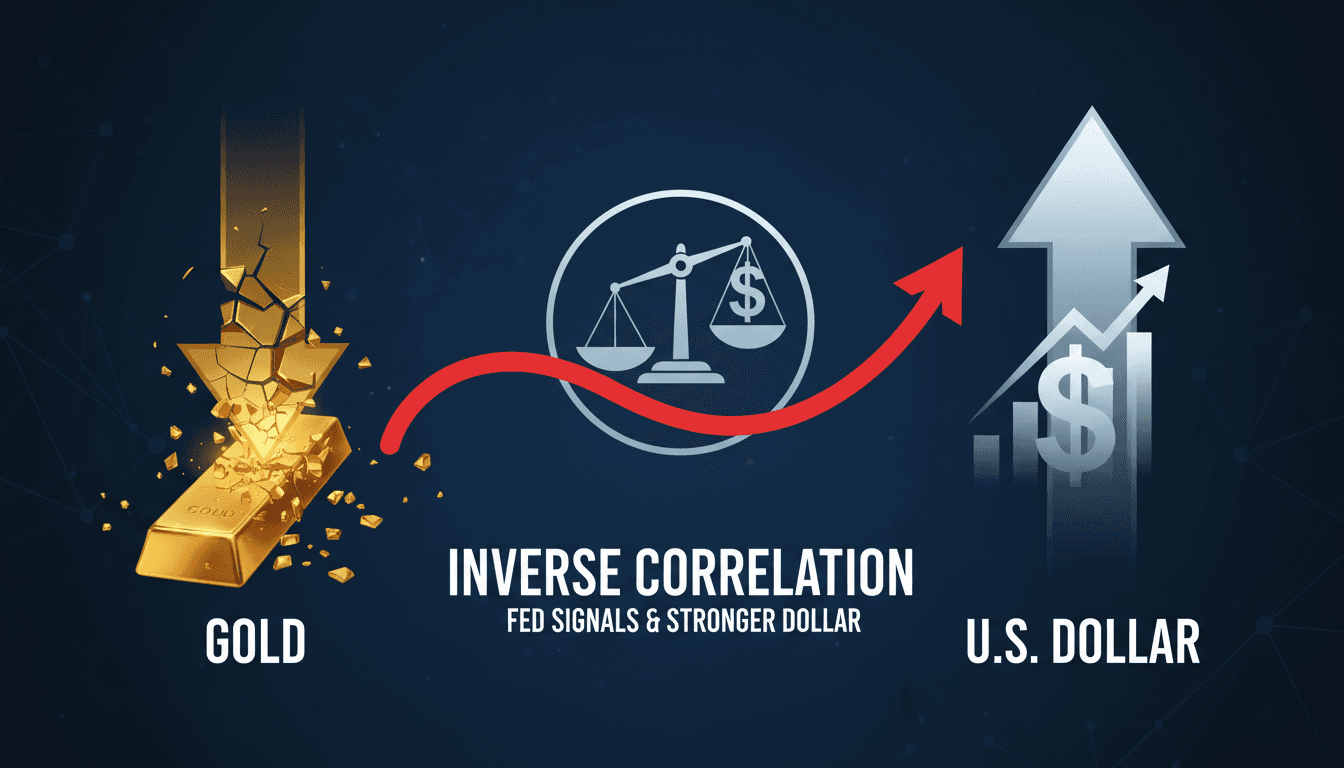
The recent decline in gold prices signals a shift in market dynamics, primarily influenced by the Federal Reserve's monetary policy. Investors are reassessing their strategies as the stronger U.S. dollar makes gold less attractive, particularly for international buyers. This trend may lead to increased volatility in precious metals, impacting investment portfolios and market stability. As the Federal Reserve hints at potential interest rate hikes, the demand for gold as a non-yielding asset diminishes. Stakeholders should remain vigilant, as these developments could affect broader economic conditions and investment strategies.
What happened
Gold prices fell sharply following the Federal Reserve's decision to maintain interest rates while signaling possible future tightening. The current spot price of gold is $4,245.99, reflecting a 0.3% decline. This downturn is attributed to a stronger U.S. dollar, which rose by 0.7%, making gold more expensive for international buyers.
Weaker investment demand and outflows from exchange-traded funds have further contributed to the decline in gold prices. Additionally, gold futures dropped 2.6% to $4,265.50, while other precious metals like silver, platinum, and palladium also experienced declines.
The Context
The Federal Reserve's hawkish stance has led to expectations of a rate hike by December, influencing market sentiment. This environment has resulted in reduced demand for gold, as investors anticipate higher interest rates that could diminish the appeal of non-yielding assets.
Physical demand for gold, particularly from China, is providing some market support despite the overall weakness. The interplay between the U.S. dollar's strength and the Fed's monetary policy is crucial for understanding the current landscape of precious metals.
Takeaway
Gold prices are likely to remain volatile as market sentiment continues to be influenced by interest rate expectations and geopolitical developments. Upcoming U.S. economic data releases will be critical in shaping investor outlooks and could lead to further fluctuations in gold prices.
Additionally, developments in the Middle East may affect market stability, adding another layer of complexity to the precious metals market. Stakeholders should monitor these factors closely to navigate the evolving landscape effectively.
Markets desk coverage, trading insights, and investor updates.
"WSJ’s markets reporting provides in-depth analysis and context for investors."
— A47 Editor
Gold Extends Losses on Fed’s Hawkish Turn
Gold prices have extended their losses as investors react to a more hawkish tone from Federal Reserve officials, indicating potential future interest rate hikes. This shift has contributed to a decline in gold's appeal as a safe-haven asset amid fluc...
Business, markets, economy, and corporate news with strong UAE and regional relevance.
"Emirates 24|7 business coverage tends to center UAE markets, property, regulation, and regional economic developments."
— A47 Editor
Gold falls as stronger dollar and Fed outlook weigh on prices
Gold prices have declined as a stronger U.S. dollar and hawkish signals from the Federal Reserve have reduced demand for the precious metal, with spot gold falling 0.3% to $4,245.99 per ounce. This follows a 1.7% drop in the previous session, and U.S...
Pan-Arab news coverage spanning politics, business, sports, and regional affairs.
"Asharq Al-Awsat reflects a broad Arab editorial perspective with strong attention to regional geopolitics."
— A47 Editor
الذهب يتحول للهبوط عالمياً بعد «تجريد» بيان «الفيدرالي» من لغة التيسير النقدي
Gold prices experienced a sharp decline in spot trading, losing all gains made during the session, following the Federal Reserve's decision to maintain interest rates. This shift came after the Fed's statement was stripped of any language suggesting ...