
WSJ Dollar Index declines 0.5% amid disappointing jobs data
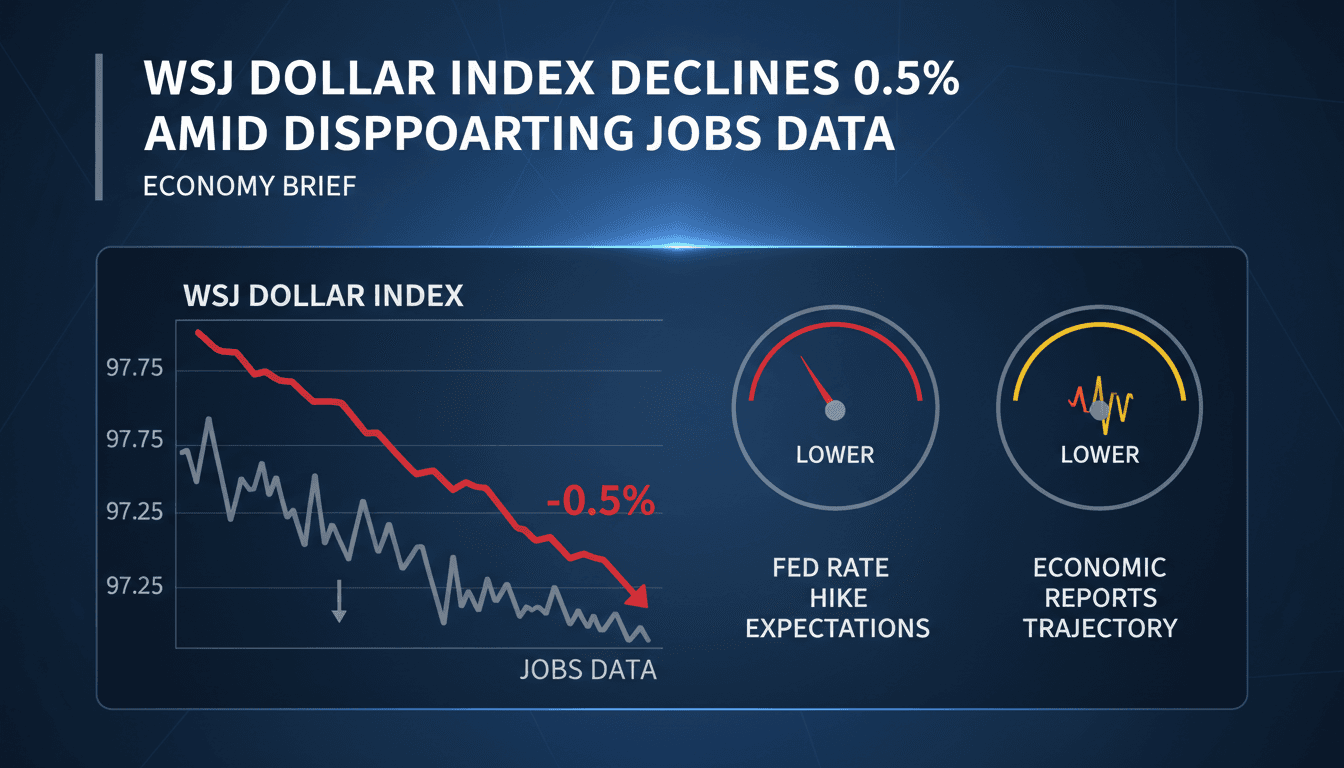
Here's what it means for you.
The recent decline of the WSJ Dollar Index signals a shift in market sentiment, primarily driven by disappointing jobs data. This downturn may influence Federal Reserve policy decisions, which are crucial for traders and investors alike. As the dollar weakens, market participants will need to reassess their strategies in light of potential volatility. The performance of the dollar is now closely tied to upcoming economic reports, particularly the US payroll data. A continued decline could lead to further adjustments in monetary policy, impacting various sectors of the economy.
What happened
The WSJ Dollar Index fell to 97.25, marking a 0.5% decline and ending a two-day winning streak. This drop is attributed to disappointing jobs data that has affected expectations for Federal Reserve rate hikes. The dollar's performance is now under scrutiny as traders anticipate further economic indicators.
This decline represents the dollar's worst day since late April, highlighting the sensitivity of the currency to economic news. Market focus is shifting towards the upcoming US payroll data, which could provide further insights into the labor market and economic health.
The Context
The dollar's recent decline reflects broader market anxieties regarding economic indicators and potential shifts in monetary policy. Stakeholders, including traders and policymakers, are closely monitoring the situation as concerns about potential yen intervention also influence market sentiment.
The timing of this decline is critical, as it coincides with the anticipation of key economic reports that could shape the Federal Reserve's response. The interplay between domestic economic data and global economic concerns will be pivotal in determining the dollar's trajectory.
Takeaway
Market participants will closely monitor upcoming economic data to gauge future dollar performance. The release of US payroll data will be particularly significant, as it may influence the Federal Reserve's decisions regarding interest rates.
The dollar's trajectory will largely depend on these economic reports and the Fed's subsequent policy decisions, which could either stabilize or further weaken the currency. As the situation evolves, traders should remain vigilant to shifts in market sentiment and economic indicators.
Markets desk coverage, trading insights, and investor updates.
"WSJ’s markets reporting provides in-depth analysis and context for investors."
— A47 Editor
WSJ Dollar Index Falls 0.47% to 97.25
The WSJ Dollar Index fell by 0.47% to 97.25, marking the end of a two-day winning streak. This decline reflects ongoing volatility in the currency market, where fluctuations have become increasingly common.
Currency market headlines, FX rates, central-bank chatter, and macro drivers moving major pairs.
"Investing.com’s forex stream is useful for fast updates across USD, EUR, JPY, GBP and emerging-market FX."
— A47 Editor
Dollar set for worst day since end of April as jobs data dents Fed rate hike bets
The U.S. dollar is set to experience its worst trading day since late April, as disappointing jobs data has weakened expectations for future interest rate hikes by the Federal Reserve. This decline follows a period where the dollar had been buoyed by...
Macro commentary, policy analysis, growth/inflation themes, and global outlooks.
"Contextual macro coverage that complements day-to-day market headlines."
— A47 Editor
Dollar steady as focus turns to US payrolls, yen intervention jitters persist
The U.S. dollar remains steady as market attention shifts towards the upcoming U.S. payrolls report, while concerns about potential intervention in the weakening Japanese yen continue to loom. The yen has recently reached a 40-year low against the do...