
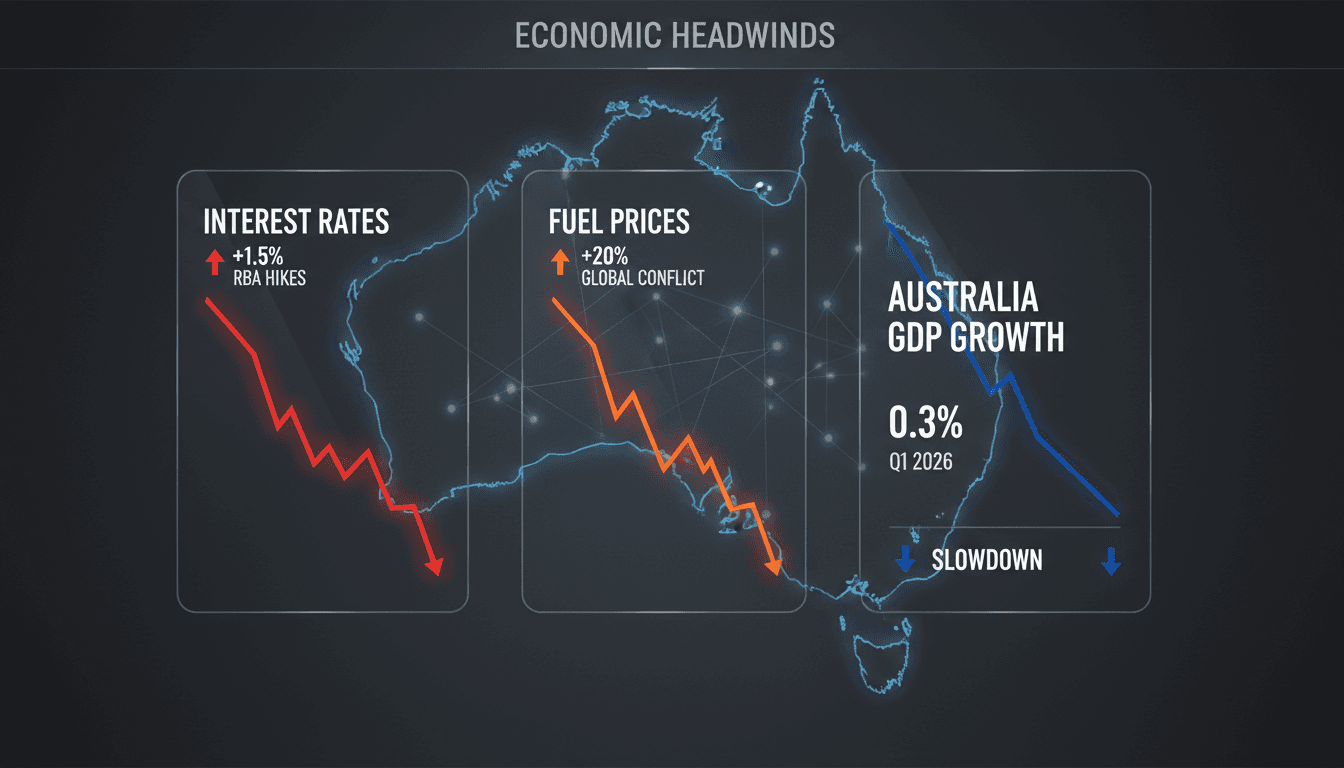
Australia's GDP growth slows to 0.3% amid rising interest rates and fuel prices
Here's what it means for you.
The slowdown in Australia's GDP growth to 0.3% signals potential challenges for consumers and businesses alike. Rising interest rates may lead to higher borrowing costs, impacting spending and investment decisions. Additionally, surging fuel prices could strain household budgets and contribute to inflationary pressures. As the economic landscape shifts, stakeholders should remain vigilant about the implications for policy and market dynamics. The uncertainty surrounding inflation and external factors may influence future economic strategies.
What happened
Australia's GDP growth has decreased to 0.3% in the first quarter of 2026. This figure reflects a significant slowdown in economic activity compared to previous quarters. The decline is primarily attributed to the Reserve Bank of Australia's recent interest rate hikes and escalating fuel prices linked to the ongoing conflict in the Middle East.
The central bank's decision to raise interest rates began in early 2026, aiming to combat inflation. However, these measures have coincided with rising fuel costs, further complicating the economic environment. As a result, the lower-than-anticipated GDP growth rate raises concerns about the overall health of the Australian economy.
The Context
The Reserve Bank of Australia's interest rate hikes are a response to persistent inflationary pressures that have been affecting the economy. The ongoing conflict in the Middle East has exacerbated fuel prices, creating additional strain on consumers and businesses. These factors contribute to a complex economic landscape that requires careful navigation by policymakers.
As inflation continues to be a significant concern, the economic outlook for Australia remains uncertain. Stakeholders, including businesses and consumers, must consider how these developments may impact their financial decisions. The interplay between domestic monetary policy and international events will be crucial in shaping future economic conditions.
Takeaway
Looking ahead, it is essential to monitor future interest rate decisions by the Reserve Bank of Australia. These decisions will likely influence borrowing costs and consumer spending patterns. Additionally, developments in the Middle East could further affect fuel prices, adding another layer of complexity to the economic outlook.
As inflationary pressures persist, Australia's economic growth may continue to face headwinds in the coming months. Stakeholders should remain informed and adaptable to navigate the evolving landscape effectively.
Social/economic commentary and analysis relevant to business and markets.
"WSJ blends data-driven economic insight with commentary on policy and society."
— A47 Editor
Australia’s Economic Growth Slows
Australia's economic growth has slowed in the first quarter of 2026, coinciding with the central bank's decision to raise interest rates amid rising fuel prices driven by ongoing conflicts in the Middle East. This slowdown reflects broader economic c...
Key macro releases (CPI, jobs, PMIs), surprise indexes, and market implications.
"Great for data-print awareness and instant read-through to rates and risk assets."
— A47 Editor
Australia Q1 GDP grows less than expected amid inflation, M.East headwinds
Australia's GDP growth for the first quarter of 2026 was lower than anticipated, reflecting ongoing inflationary pressures and geopolitical challenges, particularly from the Middle East. The economy's growth rate fell short of expectations, indicatin...
Macro commentary, policy analysis, growth/inflation themes, and global outlooks.
"Contextual macro coverage that complements day-to-day market headlines."
— A47 Editor
Australia economic growth slows to 0.3% in Q1
Australia's economic growth slowed to 0.3% in the first quarter of 2026, reflecting ongoing inflationary pressures and geopolitical challenges, particularly from the Middle East. This growth rate fell short of expectations, indicating potential vulne...