
Lebanon condemns Israeli airstrikes as tensions escalate in southern Lebanon
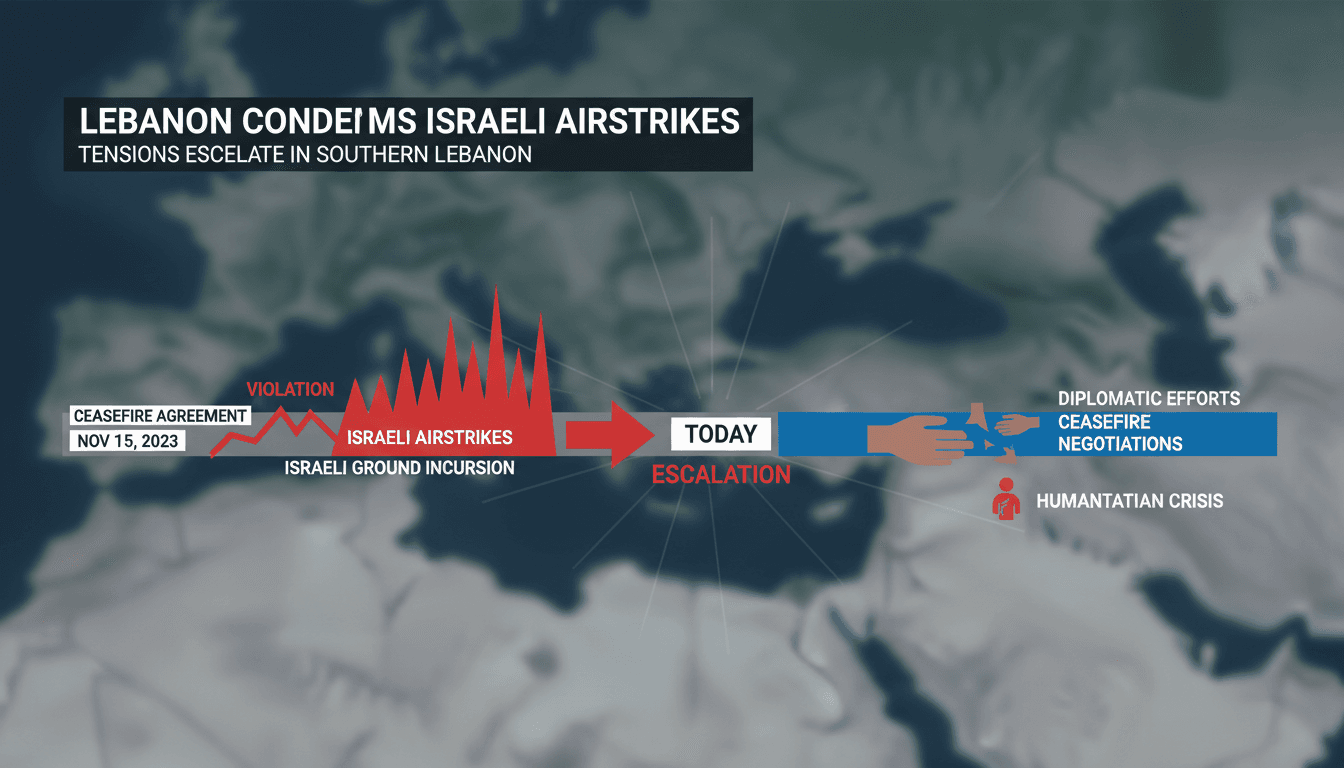
Here's what it means for you.
The recent escalation of airstrikes by Israel in southern Lebanon has significant implications for regional stability and international relations. Lebanese Prime Minister Nawaf Salam's condemnation highlights the urgent need for diplomatic intervention to prevent further deterioration of the situation. As military actions intensify, the potential for a humanitarian crisis looms, necessitating immediate attention from global powers. The ongoing conflict not only affects Lebanon but also has broader ramifications for Middle Eastern geopolitics. Stakeholders must closely monitor developments to understand the evolving dynamics and potential impacts on international policy.
What happened
Israel has intensified its airstrikes in southern Lebanon, leading to strong condemnation from Lebanese officials, particularly Prime Minister Nawaf Salam. He characterized these military actions as a "scorched-earth policy" and called for an immediate ceasefire. The airstrikes are a direct response to Israel's military advancements deeper into Lebanese territory, which have violated a previously established ceasefire agreement.
As a result of these developments, evacuation warnings were issued for more than a dozen locations in southern Lebanon. The situation remains highly volatile, with the potential for further escalation if diplomatic efforts do not materialize.
The Context
The ceasefire between Israel and Hezbollah was expected to take effect on April 17, but it has not been observed, leading to increased tensions. Israeli Prime Minister Benjamin Netanyahu's announcement of military advancements into Lebanon has exacerbated the situation, prompting accusations of collective punishment from Lebanese officials. Salam's remarks underscore the violation of international norms and the urgent need for a resolution.
The conflict's escalation is critical, as it threatens to destabilize the region further. The humanitarian implications are severe, with the potential for widespread suffering if military actions continue unchecked.
Takeaway
The situation in southern Lebanon remains precarious, with the possibility of further escalation if diplomatic efforts for a ceasefire fail. Observers should monitor developments regarding ceasefire negotiations and international responses to the conflict. The urgency for a resolution is underscored by the growing humanitarian crisis, which could have lasting effects on the region.
As military actions persist, the international community's role in facilitating dialogue and peace will be crucial in stabilizing the area and preventing further violence.
Regional coverage and analysis focused on politics, diplomacy, and business across the Middle East.
"Al-Monitor is known for analytical reporting on Middle East politics and policy developments."
— A47 Editor
Lebanon PM denounces Israeli campaign as fresh strikes hit south
Lebanon's Prime Minister Nawaf Salam condemned Israel's military actions in southern Lebanon, describing them as a 'scorched-earth policy' and calling for an immediate ceasefire as Israeli airstrikes intensified and evacuation warnings were issued fo...
European coverage of Middle East politics and security issues.
"France 24 offers international reporting with a European editorial perspective."
— A47 Editor
Lebanon PM condemns Israeli 'scorched-earth policy' as fresh strikes hit south
Lebanon's Prime Minister Nawaf Salam condemned Israel's actions as a 'scorched-earth policy' following renewed airstrikes in southern Lebanon, despite a ceasefire with Hezbollah that took effect on April 17. The strikes have resulted in significant c...
24/7 international news from a French perspective in multiple languages.
"France 24 is viewed as a globally focused outlet with balanced coverage and a European perspective."
— A47 Editor
Lebanon PM condemns Israeli 'scorched-earth policy' as fresh strikes hit south
Lebanon's Prime Minister Nawaf Salam condemned Israel's actions as a 'scorched-earth policy' following renewed airstrikes in southern Lebanon, despite a ceasefire with Hezbollah that took effect on April 17. The strikes have resulted in significant c...
Arabic-language coverage of international news and geopolitics.
"RT Arabic is a Russian state-funded outlet often criticized for promoting Kremlin-aligned narratives."
— A47 Editor
نواف سلام: الاعتداءات والتهديدات الإسرائيلية ترقى إلى عقاب جماعي تدينه كل الأعراف والشرائع الدولية
Lebanese Prime Minister Nawaf Salam condemned the ongoing Israeli attacks and threats against Lebanon, stating that these actions amount to collective punishment that violates international norms and laws.