
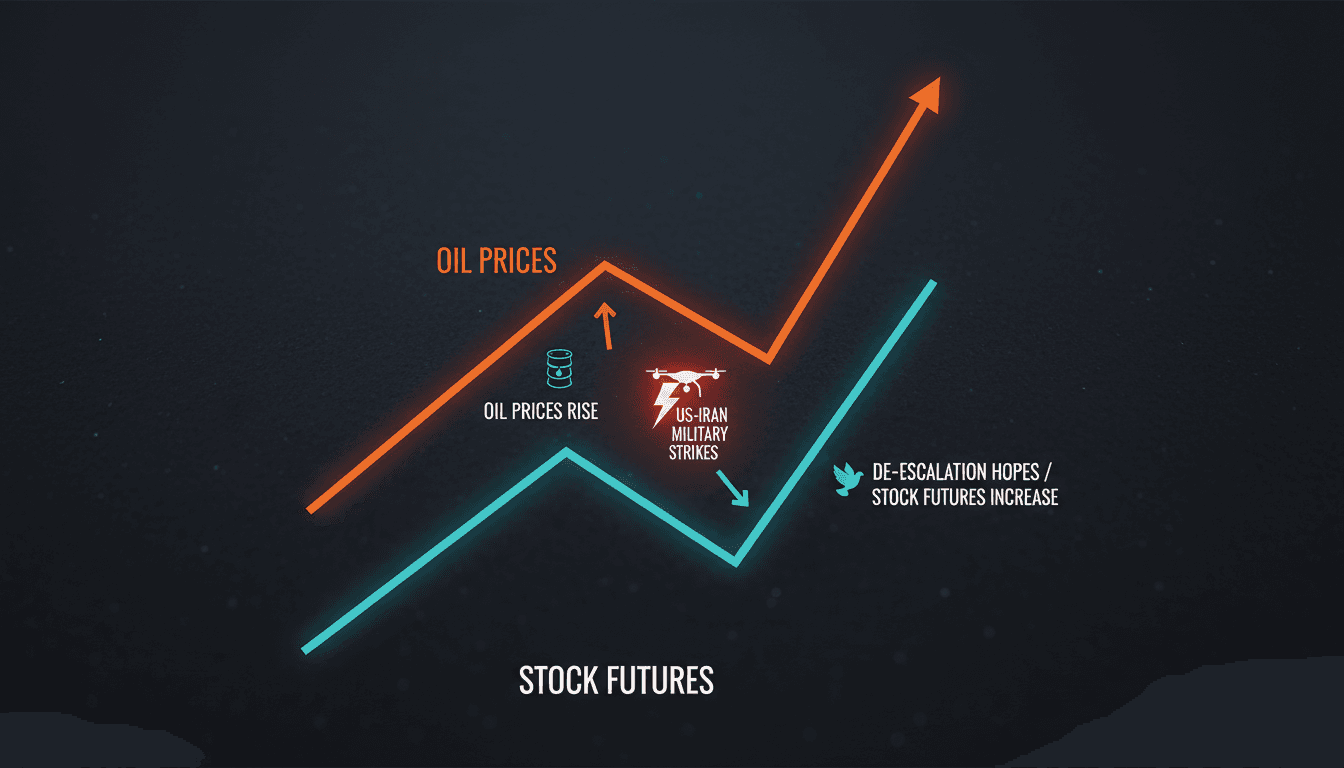
Oil prices rise amid renewed US-Iran military strikes but stock futures increase on de-escalation hopes
Here's what it means for you.
The recent military exchanges between the US and Iran have led to a notable increase in oil prices, reflecting heightened geopolitical tensions. However, the rise in US stock futures suggests that investors are cautiously optimistic about potential de-escalation efforts. This duality in market reactions indicates a complex interplay between immediate conflict and longer-term stability. As the situation evolves, stakeholders should remain vigilant, as any shifts in diplomatic communications could significantly impact both oil prices and broader market sentiment. The fragile ceasefire underscores the importance of monitoring developments closely.
What happened
Oil prices have climbed following renewed military actions between the US and Iran in the Middle East. The immediate trigger for this shift is the ongoing military exchanges, which have raised concerns about regional stability. Despite these tensions, US stock futures have increased, buoyed by reports suggesting that both nations may be stepping back from further escalation.
This juxtaposition of rising oil prices and increasing stock futures highlights the market's complex response to geopolitical events. Investors are weighing the immediate risks against the potential for a stabilized ceasefire, which could mitigate further volatility.
The Context
The military strikes between the US and Iran have underscored the instability of their ceasefire agreement, a critical factor for regional peace. Both nations have engaged in military actions, yet there are indications that they are seeking to avoid further escalation. This situation is pivotal not only for the countries involved but also for global oil markets and geopolitical stability.
The fragile state of the ceasefire is represented by the number one, symbolizing the precarious balance that exists. As diplomatic efforts unfold, the outcomes will likely influence both oil prices and market dynamics in the coming weeks.
Takeaway
The outlook remains uncertain as the situation develops, with potential for increased volatility in oil prices and shifts in market sentiment. Stakeholders should monitor US-Iran diplomatic communications closely for signs of de-escalation, as these could significantly impact future market conditions. Additionally, watching oil price trends in response to ongoing military actions will provide insights into market reactions.
As developments unfold, the interplay between military actions and diplomatic efforts will be crucial in determining the trajectory of both oil prices and broader economic stability.
Arabic-language coverage of international news and geopolitics.
"RT Arabic is a Russian state-funded outlet often criticized for promoting Kremlin-aligned narratives."
— A47 Editor
النفط يصعد بعد تجدد الضربات الأمريكية الإيرانية في الشرق الأوسط
Oil prices rose on Monday following renewed strikes between the United States and Iran in the Middle East, highlighting the fragility of the temporary agreement aimed at ending the conflict.
Oil, metals, and agriculture: supply/demand headlines, OPEC chatter, inventories, and price action.
"Solid tape for energy and metals traders tracking macro and micro catalysts."
— A47 Editor
Oil climbs following renewed US, Iran strikes in Middle East
Oil prices have climbed following renewed strikes between the US and Iran in the Middle East, reflecting ongoing geopolitical tensions that impact global markets. The recent flare-up has raised concerns about the stability of oil supplies, particular...
Global markets, investing, and macroeconomics from a premier financial newsroom.
"Bloomberg is respected for in-depth financial reporting and data-driven analysis."
— A47 Editor
US Stock Futures Rise, Oil Pares Climb on Iran: Markets Wrap
US equity-index futures rose following reports that the US and Iran have de-escalated tensions, alleviating fears surrounding the fragile ceasefire that supports ongoing peace negotiations. This positive sentiment in the markets reflects a cautious o...