
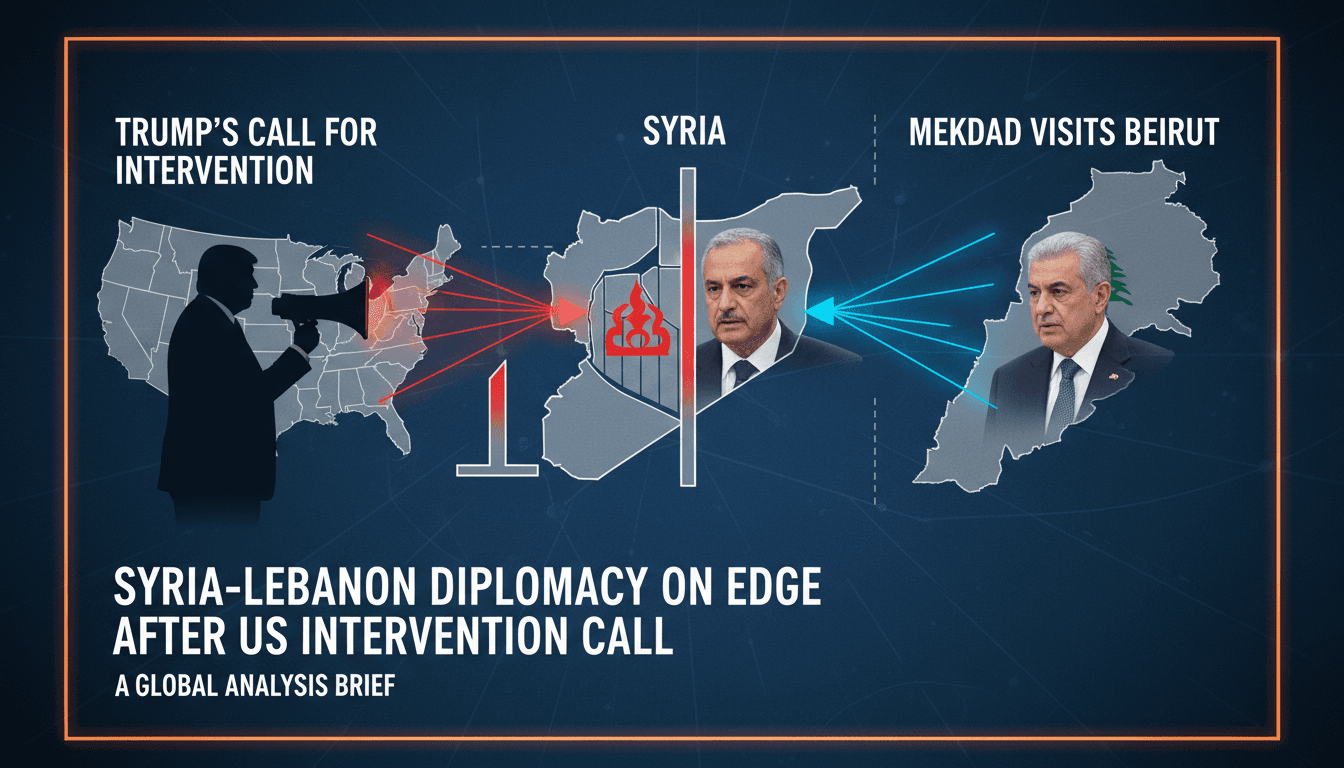
Syrian Foreign Minister Mekdad visits Beirut following Trump's call for U.S. intervention in Syria
Here's what it means for you.
The recent visit of Syrian Foreign Minister Faisal Mekdad to Beirut highlights the delicate balance of power in the region amid rising tensions. As former President Trump's comments on U.S. military intervention in Syria resonate, the implications for regional stability are significant. Stakeholders in Lebanon and Syria are closely monitoring these developments, as they could influence diplomatic relations and security dynamics. The situation underscores the complexities of Middle Eastern geopolitics, where external military suggestions can provoke strong reactions from local powers. The potential for conflict or diplomatic resolution remains uncertain as the region navigates these challenges.
What happened
Syrian Foreign Minister Faisal Mekdad's visit to Beirut follows former President Trump's controversial remarks advocating for U.S. intervention in Syria to combat Hezbollah. This diplomatic engagement comes amid rising tensions and criticism from former U.S. officials who deem Trump's proposal as unrealistic and dangerous. Mekdad's visit signifies Syria's ongoing efforts to strengthen ties with Lebanon in the face of external pressures.
The timing of this visit is crucial, occurring just one day after Trump's comments on July 1, 2026. The discussions in Beirut are likely focused on the implications of U.S. foreign policy and its potential impact on Hezbollah's influence in Lebanon.
The Context
Trump's comments suggest a military approach to counter Hezbollah's influence, raising concerns among former U.S. officials about the feasibility of such intervention. Jeffrey Feltman, a former U.S. envoy, has publicly criticized the idea, labeling it impractical and potentially dangerous. This backdrop of skepticism adds complexity to Mekdad's visit, as Syria seeks to navigate the evolving geopolitical landscape.
The relationship between Syria and Lebanon has historically been intertwined, with both nations facing external pressures that could reshape their diplomatic engagements. Mekdad's visit serves as a reminder of the ongoing diplomatic efforts in the region, particularly as U.S. foreign policy shifts regarding Hezbollah come into play.
Takeaway
As regional dynamics shift in response to U.S. policy, the potential for conflict or diplomatic resolution remains uncertain. Observers should watch for potential responses from Hezbollah and the Lebanese government regarding U.S. intervention talks. Additionally, further diplomatic engagements between Syria and Lebanon may emerge following Mekdad's visit, as both nations seek to solidify their positions amid external pressures.
The situation is fluid, and the reactions from key players will be critical in determining the next steps in this complex geopolitical landscape.
Regional and international reporting focused on Middle Eastern politics, diplomacy, and economics.
"Asharq Al-Awsat is a Saudi-owned international newspaper reflecting mainstream Gulf political perspectives."
— A47 Editor
Syrian Foreign Minister Visits Beirut after Trump Comments about Taking on Hezbollah
Syrian Foreign Minister Asaad al-Shibani visited Beirut following comments from former U.S. President Donald Trump, who suggested that Syria could intervene against Hezbollah in Lebanon. This visit marks a significant diplomatic engagement amid risin...
UAE-based English-language newspaper covering regional politics, economics, and global affairs.
"The National reflects Emirati policy perspectives while maintaining international editorial standards."
— A47 Editor
Former US envoy Jeffrey Feltman questions Trump’s call for Syrian intervention in Lebanon
Former US envoy Jeffrey Feltman has expressed skepticism regarding Donald Trump's suggestion for Syrian intervention in Lebanon, particularly in the context of combating Hezbollah. Feltman labeled the proposal as 'preposterous,' highlighting the comp...
UAE-based English-language newspaper covering regional politics, economics, and global affairs.
"The National reflects Emirati policy perspectives while maintaining international editorial standards."
— A47 Editor
Trump push for Syria to fight Hezbollah is 'preposterous', says former US envoy to Lebanon
Former US envoy to Lebanon has criticized Donald Trump's suggestion to involve Syria in combating Hezbollah, labeling the idea as 'preposterous'. This statement comes amid ongoing tensions in Lebanon and the region, where Hezbollah's influence remain...