
U.S. job growth data disappoints, impacting stock market and interest rate expectations
Here's what it means for you.
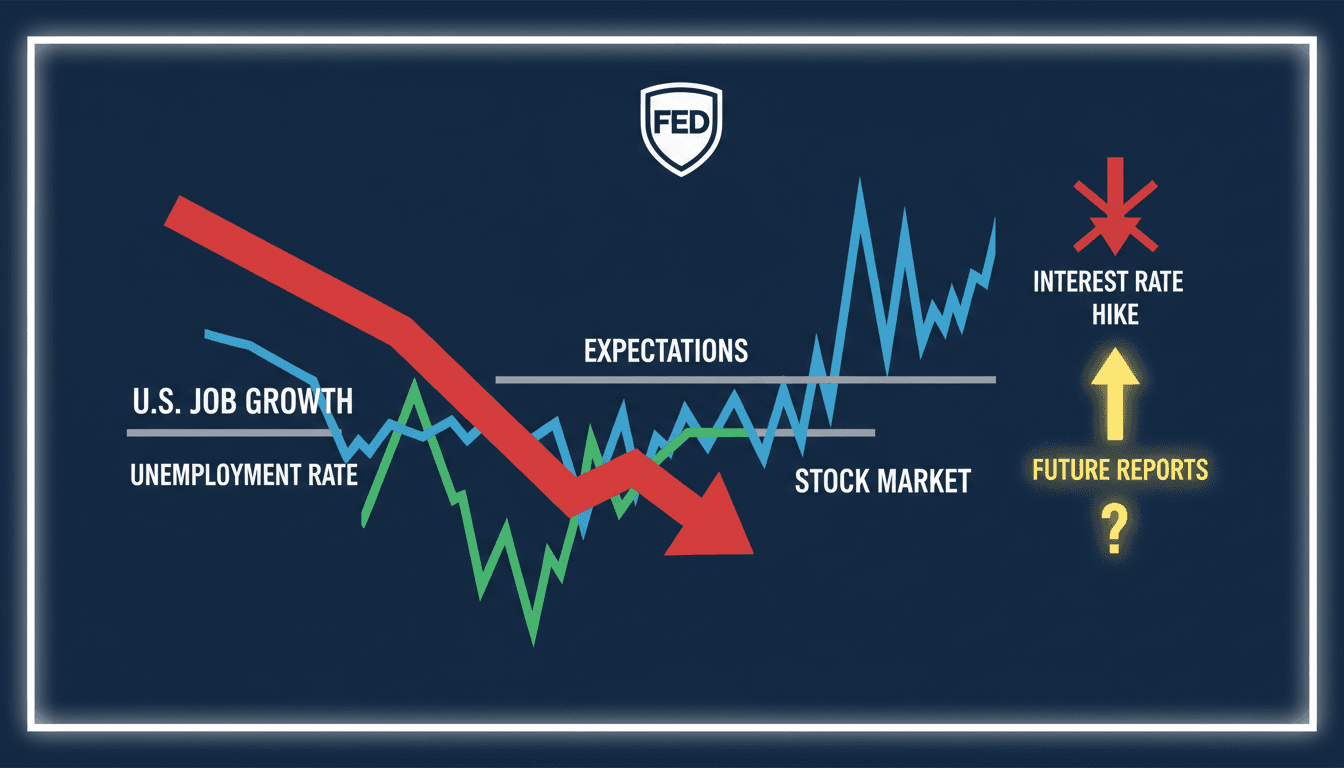
The recent U.S. job growth data for June has raised concerns among investors and policymakers alike. With the unemployment rate falling to 4.2%, the decline in the labor force suggests underlying issues in the job market. This mixed performance in job growth has led to a reassessment of interest rate hike expectations by the Federal Reserve, impacting market sentiment. As market participants await further economic indicators, the focus will shift to upcoming job reports that could influence Federal Reserve policy decisions. The current landscape indicates a cautious approach as stakeholders navigate these developments.
What happened
U.S. job growth in June fell short of expectations, leading to a mixed performance in the stock market. The unemployment rate decreased to 4.2%, but this was accompanied by a decline in the labor force, raising concerns about the overall health of the job market. Investor sentiment shifted as concerns regarding an imminent interest rate hike by the Federal Reserve eased.
The disappointing job growth data has prompted a reevaluation of market predictions, with investors dialing back their bets on a potential interest rate increase. As a result, the stock market reacted with varied performance, reflecting the uncertainty surrounding future economic conditions.
The Context
The slowdown in U.S. job growth during June has significant implications for the economy and the Federal Reserve's monetary policy. While the unemployment rate has decreased, the shrinking labor force raises questions about the sustainability of job market improvements. Investors are closely monitoring these dynamics as they assess the potential for future interest rate adjustments.
The timing of this data release is crucial, as it comes amid ongoing discussions about inflation and economic recovery. Stakeholders, including policymakers and market participants, are keenly aware that upcoming job reports will play a pivotal role in shaping Federal Reserve decisions and overall market stability.
Takeaway
Looking ahead, market participants will closely monitor future job reports and their potential impact on Federal Reserve policy. Trends in labor force participation rates will also be critical in understanding the broader economic landscape. As the market digests the latest job data, attention will turn to upcoming economic indicators that could influence both Federal Reserve actions and investor sentiment.
The mixed performance of U.S. stocks reflects a cautious outlook among investors regarding future economic conditions. With the job market dynamics in flux, stakeholders will remain vigilant as they navigate these developments.
Markets desk coverage, trading insights, and investor updates.
"WSJ’s markets reporting provides in-depth analysis and context for investors."
— A47 Editor
U.S. Stocks Mixed as June Jobs Data Cools Rate-Hike Concerns
U.S. stocks concluded the trading session mixed as June hiring data fell significantly short of expectations, leading investors to reduce their forecasts for an imminent interest rate hike by the Federal Reserve. This data suggests a cooling labor ma...
Market-moving headlines impacting equities, bonds, and related risk assets.
"Real-time catalysts and volatility drivers across indices and sectors."
— A47 Editor
Stocks mixed as easing rate hike bets after jobs data offset by fall in tech
Stocks exhibited mixed performance as easing expectations for interest rate hikes, following recent jobs data, were countered by declines in the technology sector. This volatility reflects ongoing investor concerns about economic stability and sector...
Macro commentary, policy analysis, growth/inflation themes, and global outlooks.
"Contextual macro coverage that complements day-to-day market headlines."
— A47 Editor
US job growth slows in June; unemployment rate falls to 4.2% amid decline in labor force
The U.S. job growth experienced a slowdown in June, with nonfarm payrolls increasing by only 57,000 jobs, while the unemployment rate fell to 4.2%. This decline in job creation comes amid a decrease in the labor force, indicating potential challenges...