
Global smartphone shipments decline to lowest levels in 13 years due to memory chip shortage
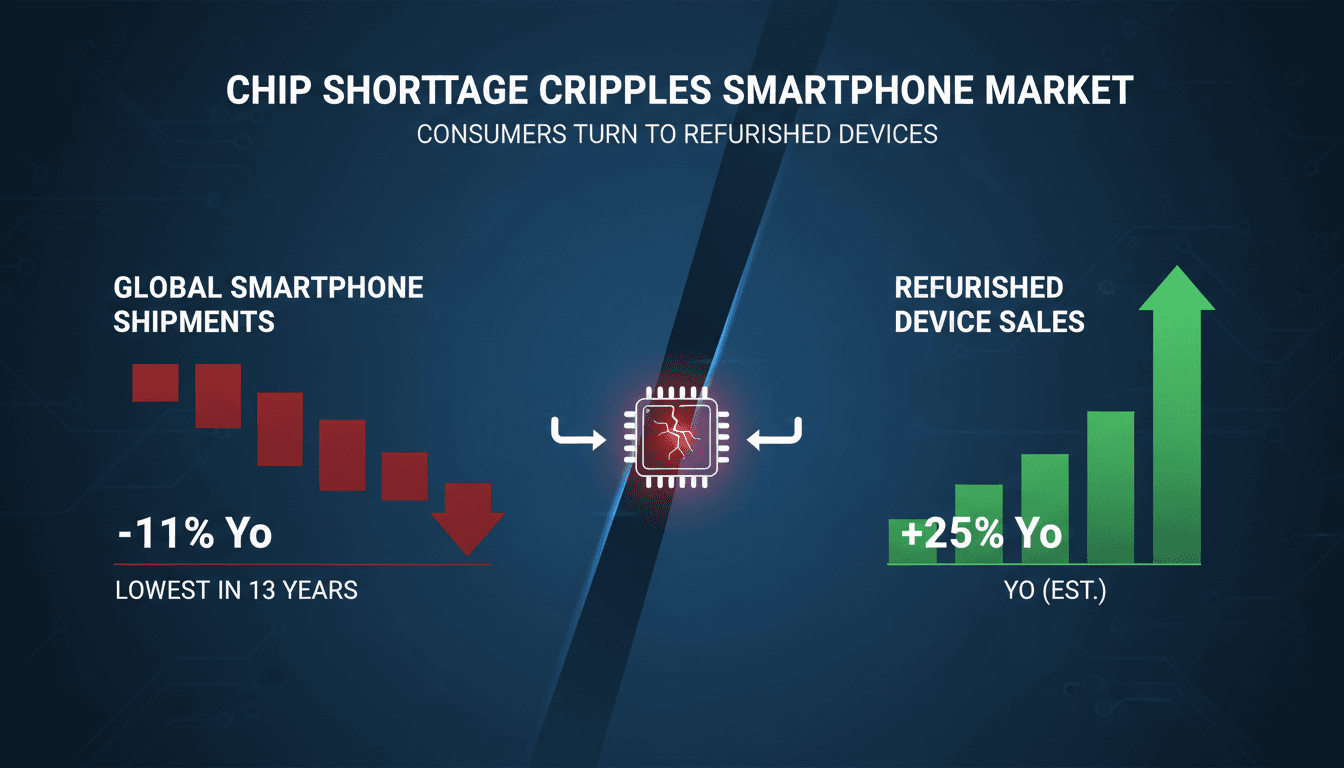
Here's what it means for you.
The decline in global smartphone shipments signals a significant shift in the technology market, primarily driven by a critical shortage of memory chips. This situation may compel consumers to reconsider their purchasing habits, leaning towards refurbished devices as new budget options dwindle. Major manufacturers like Samsung and Apple are likely to adapt their strategies to maintain market share amidst these challenges. As the industry grapples with these changes, stakeholders must remain vigilant about evolving consumer preferences and the potential long-term impacts on production and sales strategies.
What happened
In Q2 2026, global smartphone shipments fell by 11% year-over-year, marking the lowest second-quarter levels since 2013. This decline is largely attributed to a significant shortage of DRAM and NAND memory chips, which has severely impacted production capabilities across the industry. The ramifications of this shortage have led to a contraction in the smartphone market, with major players adjusting their strategies to navigate the crisis.
Samsung has emerged as a key beneficiary of this situation, regaining its position as the leading smartphone manufacturer with a 24% market share. The ongoing memory chip shortage, often referred to as "RAMageddon," has not only affected production but also altered market dynamics significantly.
The Context
The current smartphone market challenges stem from a widespread shortage of memory chips, which has disrupted production lines and limited the availability of new devices. As a result, consumers are likely to see fewer budget-friendly options in the market, pushing them towards refurbished models instead. This shift in consumer behavior could reshape the landscape of smartphone sales and influence future purchasing decisions.
Major manufacturers, including Samsung and Apple, are adapting to these changes by focusing on their existing market strengths. The timing of this crisis is critical, as it coincides with a period of heightened competition among smartphone vendors. The ability to navigate these challenges will determine which companies can maintain or grow their market presence.
Takeaway
Looking ahead, the smartphone industry is poised for a transformation as it navigates through the ongoing memory chip shortage. Stakeholders should monitor the recovery of memory chip supplies and its subsequent impact on smartphone production. Additionally, the trend towards refurbished devices is likely to gain momentum as consumers adapt to the changing market landscape.
As manufacturers adjust their strategies, it will be essential to observe shifts in consumer preferences and how these may influence future product offerings. The long-term implications of this crisis could redefine market dynamics and consumer behavior in the smartphone sector.
Latest tech news, product reviews, and analysis for consumers and professionals.
"CNET delivers accessible and detailed technology reporting, including trusted product reviews and how-to guides."
— A47 Editor
Smartphone Shipments Crash to 13-Year Low Due to RAMageddon
Smartphone shipments have plummeted to a 13-year low, primarily due to a significant memory shortage dubbed 'RAMageddon,' which is affecting the availability of new devices. This shortage is expected to result in fewer budget smartphones and an incre...
Market-moving headlines impacting equities, bonds, and related risk assets.
"Real-time catalysts and volatility drivers across indices and sectors."
— A47 Editor
Global smartphone shipments in second quarter hit lowest in 13 years on memory chip crunch
Global smartphone shipments in the second quarter of 2026 have reached their lowest level in 13 years, primarily due to a significant shortage of memory chips. This decline reflects ongoing challenges in the supply chain and production capabilities t...
Curated tech headlines including AI stories.
"Influential aggregator surfacing the day’s top tech/AI links."
— A47 Editor
Global smartphone shipments fell 11% YoY in Q2 to the lowest Q2 levels since 2013 amid the DRAM and NAND shortage; Samsung returns to #1 with a 24% market share (Shilpi Jain/Counterpoint Research)
Global smartphone shipments experienced an 11% year-over-year decline in Q2 2026, marking the lowest levels for this quarter since 2013, largely due to a shortage of DRAM and NAND components. Samsung regained its position as the market leader with a ...