
Germany proposes associate member status for Ukraine in the EU
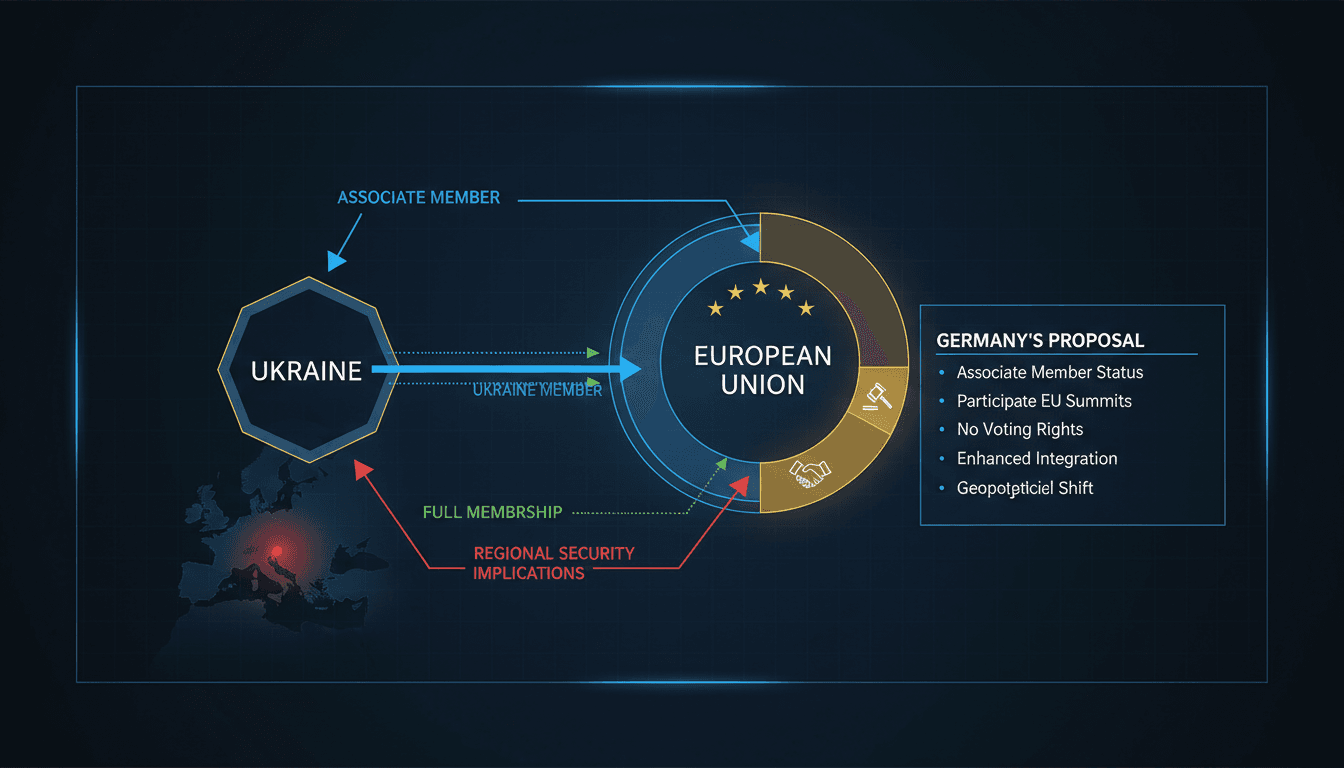
Here's what it means for you.
Germany's proposal to grant Ukraine 'associate member' status in the European Union signifies a pivotal shift in the geopolitical landscape of Europe. This status would allow Ukraine to engage in EU summits, enhancing its integration while still navigating the complexities of its ongoing conflict with Russia. For policymakers and analysts, this move could reshape discussions around EU expansion and security dynamics in Eastern Europe. The implications extend beyond Ukraine, potentially influencing EU member states' strategies regarding mutual assistance and collective security. As the situation evolves, stakeholders will need to monitor reactions from other EU nations and the broader international community.
What happened
German Chancellor Friedrich Merz has proposed granting Ukraine 'associate member' status in the European Union, which would enable Ukraine to participate in EU summits without voting rights. This initiative aims to facilitate Ukraine's integration into the EU amidst its ongoing conflict with Russia. If accepted, this proposal could pave the way for Ukraine's eventual full membership in the EU.
The proposal emphasizes the need for a new status that would enhance Ukraine's role in EU decision-making processes. It also includes a commitment from EU members to provide mutual assistance to Ukraine, reflecting a strategic move to support the nation during its current challenges.
The Context
Germany's proposal comes at a critical time as Ukraine continues to face significant challenges due to its conflict with Russia. By offering associate member status, Germany seeks to strengthen Ukraine's position within the EU framework, which could lead to a more unified approach among EU member states regarding support for Ukraine.
This initiative is seen as a step towards Ukraine's full EU membership, which has been a long-standing goal for the country. The proposal highlights the importance of Ukraine's integration into European structures, particularly in light of the ongoing geopolitical tensions in the region.
Takeaway
The acceptance of Germany's proposal could lead to a significant shift in Ukraine's relationship with the EU, altering its geopolitical standing. Observers should watch for reactions from other EU member states, as their support or opposition will be crucial in determining the proposal's fate.
Further developments in Ukraine's negotiations for EU membership will also be essential to monitor, as they may influence the broader dynamics of the ongoing conflict with Russia and the European political landscape.
Arabic-language political and world news coverage for UAE readers.
"Emarat Al Youm world coverage usually presents international developments through a UAE and Arab audience lens."
— A47 Editor
اقتراح ألماني لعضوية أوكرانيا بالاتحاد الأوروبي اقتراح ألماني لعضوية أوكرانيا بالاتحاد الأوروبي
German Chancellor Friedrich Merz has proposed granting Ukraine a new special status to become an 'associate member' of the European Union. This suggestion comes as a response to ongoing geopolitical developments and aims to strengthen Ukraine's ties ...
Arabic-language coverage of political affairs and current events.
"Okaz political coverage typically follows mainstream Saudi framing on national and regional affairs."
— A47 Editor
ألمانيا تقترح منح أوكرانيا دوراً مباشراً بالاتحاد الأوروبي
German Chancellor Friedrich Merz has called for Ukraine to be granted a direct role within the European Union structures as a transitional step towards its membership, emphasizing that this could expedite reaching an agreement to end the Russian war....
24/7 international news from a French perspective in multiple languages.
"France 24 is viewed as a globally focused outlet with balanced coverage and a European perspective."
— A47 Editor
Germany's Merz proposes Ukraine as EU ‘associate member’ without voting rights
German Chancellor Friedrich Merz has proposed that Ukraine be granted 'associate member' status in the European Union, allowing it representation at EU summits, the European Commission, and parliament, but without voting rights. This proposal was rev...