
Escalation of U.S.-Iran tensions leads to military strikes in Gulf region
Here's what it means for you.
The recent escalation in U.S.-Iran tensions poses significant risks to regional stability and global oil markets. As military exchanges intensify, stakeholders in the energy sector should prepare for potential disruptions, particularly in the vital Strait of Hormuz. Policymakers will need to closely monitor developments to assess the implications for international relations and economic stability. The ongoing conflict could lead to increased oil prices, impacting consumers and businesses alike. Investors should remain vigilant as the situation evolves, as further military actions may trigger broader geopolitical ramifications.
What happened
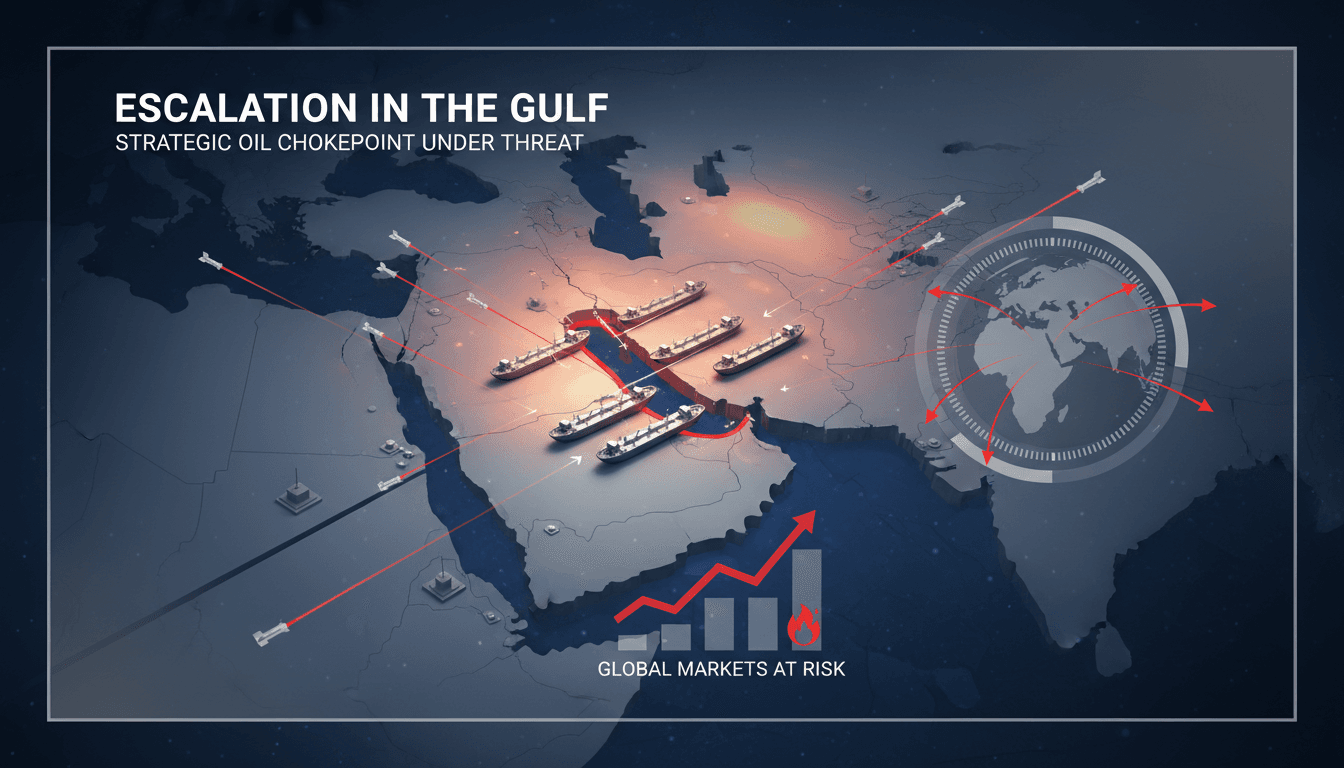
Iran has launched missile and drone attacks targeting U.S. military facilities in Gulf states, marking a significant escalation in hostilities. This surge in conflict follows U.S. airstrikes aimed at degrading Iran's military capabilities. The Iranian Revolutionary Guards have claimed responsibility for these strikes, which have reportedly affected U.S. installations in Bahrain and Kuwait.
In retaliation, the U.S. military has conducted airstrikes in response to the Iranian attacks. The situation remains volatile, particularly as Iran has reportedly closed the Strait of Hormuz, a critical shipping route for global oil transportation. This escalation raises concerns about the safety of commercial shipping in the region.
The Context
The backdrop of this conflict involves a long-standing rivalry between the U.S. and Iran, with both nations engaging in military posturing and strategic maneuvers. The U.S. aims to limit Iran's ability to threaten civilians and disrupt commercial shipping, which has led to increased military presence in the Gulf. The Revolutionary Guards' involvement highlights the internal dynamics within Iran and their commitment to retaliate against perceived threats.
The Strait of Hormuz is a vital artery for global oil supply, making any disruptions particularly concerning for international markets. The recent attacks on tankers in the region underscore the direct impact of the conflict on commercial shipping and the broader implications for energy security. As tensions rise, the potential for further escalation looms large.
Takeaway
The ongoing military exchanges between the U.S. and Iran suggest a potential for further escalation, which could have significant implications for regional stability and global oil markets. Stakeholders should closely monitor developments in the Strait of Hormuz, as any disruptions could lead to increased oil prices and economic uncertainty.
International responses to these military actions will also be crucial in shaping the future of U.S.-Iran relations. As both sides continue to engage in hostilities, the risk of a broader conflict remains a pressing concern for policymakers and market participants alike.
International coverage from The Guardian's global desks.
"The Guardian is known for its progressive editorial stance and in-depth analysis."
— A47 Editor
Trump says US reinstating blockade on Iranian ports – as it happened
President Donald Trump announced the reinstatement of a maritime blockade on Iranian ports in the Strait of Hormuz, imposing a 20% toll on ships for safe passage. This decision follows a series of escalating military actions, including U.S. airstrike...
Comprehensive coverage of Middle Eastern and global issues.
"Al Jazeera is a prominent voice from the Global South, especially the Middle East, with an emphasis on underreported stories."
— A47 Editor
New Iran strikes on Gulf as US attacks escalate: What we know
Iran has escalated its military actions in the Gulf, launching missile strikes against its neighboring Gulf states, including Bahrain, Qatar, and the UAE, in response to a series of intense U.S. airstrikes targeting Iranian positions. This marks the ...
Global news coverage with extensive reporting on Middle Eastern conflicts and geopolitics.
"Al Jazeera is a Qatar-based broadcaster known for wide regional coverage and alternative perspectives."
— A47 Editor
New Iran strikes on Gulf as US attacks escalate: What we know
Iran has escalated its military actions in the Gulf, launching missile strikes against its neighboring Gulf states, including Bahrain, Qatar, and the UAE, in response to a series of intense U.S. airstrikes targeting Iranian positions. This marks the ...
Regional coverage and analysis focused on politics, diplomacy, and business across the Middle East.
"Al-Monitor is known for analytical reporting on Middle East politics and policy developments."
— A47 Editor
Iran escalates attacks on US bases in Gulf states, warns of more 'incidents' in strait
Iran has intensified its military actions by launching missile and drone attacks on U.S. military bases in Bahrain, Kuwait, and Jordan, following a series of U.S. airstrikes on Iranian positions. The Iranian Revolutionary Guards have claimed responsi...
European coverage of Middle East politics and security issues.
"France 24 offers international reporting with a European editorial perspective."
— A47 Editor
Iran expands attacks on Gulf states after intense US strikes
Iran has intensified its military actions in the Gulf region, launching strikes on two southern islands and targeting U.S. facilities in Kuwait, which follows a series of U.S. airstrikes against Iranian positions. This escalation comes amid conflicti...
24/7 international news from a French perspective in multiple languages.
"France 24 is viewed as a globally focused outlet with balanced coverage and a European perspective."
— A47 Editor
Iran expands attacks on Gulf states after intense US strikes
Iran has intensified its military actions in the Gulf region, launching strikes on two southern islands and targeting U.S. facilities in Kuwait, which follows a series of U.S. airstrikes against Iranian positions. This escalation comes amid conflicti...
Conservative-leaning political and national coverage.
"The Washington Times is a conservative-leaning newspaper known for its political coverage and advocacy of right-of-center viewpoints."
— A47 Editor
Iranian state media reports explosions in coastal region
Iranian state-affiliated media reported explosions in coastal towns on Sunday, coinciding with Tehran's retaliatory strikes against U.S. military installations in the Persian Gulf. This escalation follows a series of military actions between the U.S....