
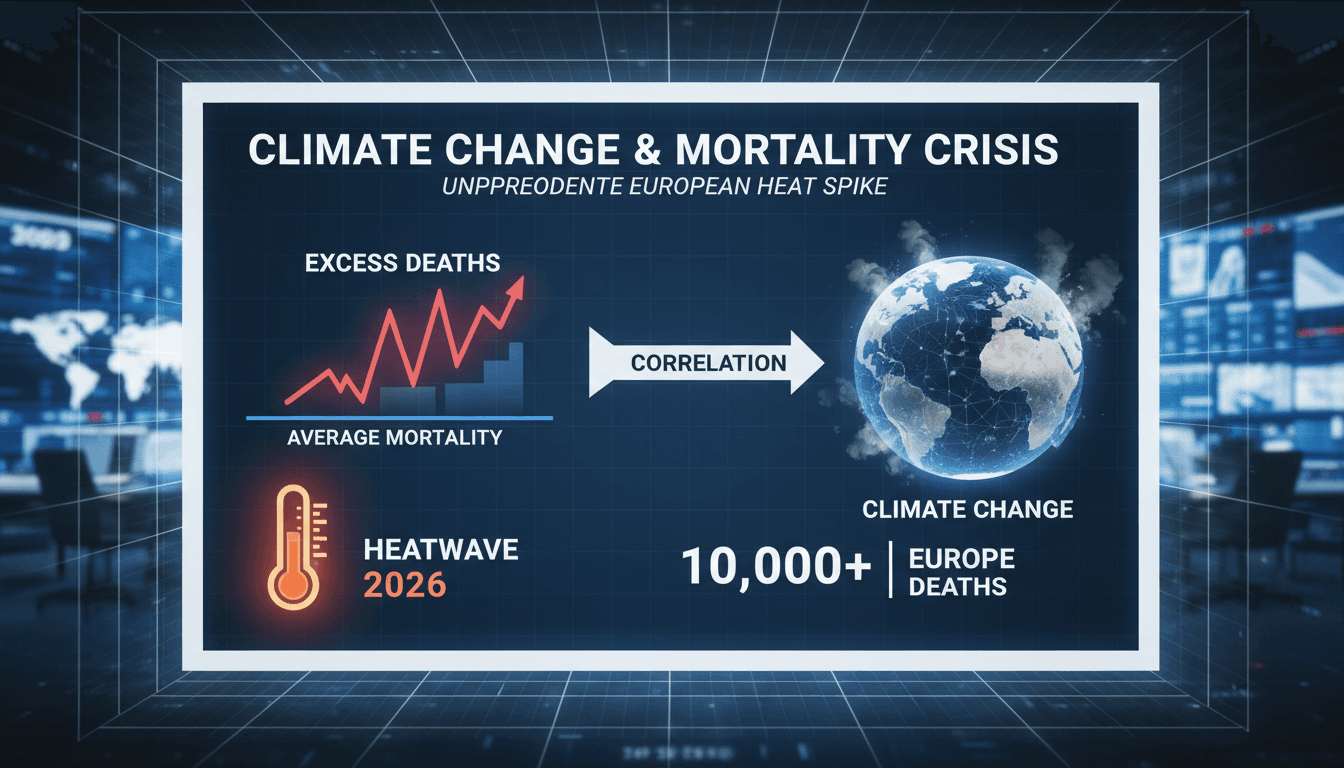
Europe records over 10,000 excess deaths due to unprecedented heatwave
Here's what it means for you.
The recent heatwave in Europe serves as a critical reminder of the escalating health risks posed by climate change, particularly for vulnerable populations such as the elderly. As extreme weather events become more frequent, public health systems must adapt to protect those most at risk. This incident highlights the urgent need for comprehensive strategies to mitigate the impacts of climate-related health crises. The staggering number of excess deaths underscores the importance of proactive measures in public health policy. Governments and health organizations must prioritize resources and planning to address the challenges posed by climate change.
What happened
In late June 2026, Europe experienced a severe heatwave that resulted in over 10,000 excess deaths, predominantly affecting older adults. This unprecedented event has drawn attention to the growing impact of climate change on public health. Reports confirmed the significant toll of extreme weather on human life, particularly among individuals aged 65 and older.
The heatwave's intensity and duration were described as unprecedented, marking a critical moment in understanding the health risks associated with climate change. The data collected from multiple sources highlights the urgent need for action to protect vulnerable populations during such extreme weather events.
The Context
The late-June heatwave serves as a stark reminder of the increasing health risks linked to climate change. As global temperatures rise, the frequency and severity of extreme weather events are expected to escalate, posing ongoing challenges for public health systems. This incident has raised awareness among stakeholders, including government agencies and health organizations, about the need for improved preparedness and response strategies.
The majority of excess deaths were among older adults, emphasizing the vulnerability of this demographic during extreme weather conditions. As climate change continues to impact public health, it is crucial for policymakers to address these risks and implement effective measures to safeguard at-risk populations.
Takeaway
Looking ahead, the increasing frequency of extreme weather events necessitates vigilant monitoring of future heatwaves and their health impacts. Evaluating government responses to climate-related health crises will be essential in developing effective public health strategies. This incident serves as a call to action for health authorities to enhance their preparedness for similar events in the future.
As climate change continues to escalate, similar extreme weather events may become more common, underscoring the need for urgent public health responses. The lessons learned from this heatwave will be vital in shaping future policies aimed at protecting vulnerable communities.
Oil, metals, and agriculture: supply/demand headlines, OPEC chatter, inventories, and price action.
"Solid tape for energy and metals traders tracking macro and micro catalysts."
— A47 Editor
Europe recorded 10,000 excess deaths during late-June heatwave, data show
Europe has recorded approximately 10,000 excess deaths during a severe heatwave in late June 2026, exacerbating health risks across the continent. This alarming statistic highlights the ongoing impact of extreme weather conditions on public health, p...
Arabic-language coverage of international news and geopolitics.
"RT Arabic is a Russian state-funded outlet often criticized for promoting Kremlin-aligned narratives."
— A47 Editor
بيانات: أكثر من 10 آلاف "وفاة إضافية" في أوروبا خلال موجة الحر القياسية في أواخر يونيو
Official data reveals that over 10,000 additional deaths were recorded in Europe during an unprecedented heatwave that struck the western part of the continent in late June. This extreme weather event has raised alarms about public health and safety ...
Global coverage of politics, crises, and international affairs.
"HuffPost provides progressive-oriented reporting on international developments, often focusing on humanitarian and social justice issues."
— A47 Editor
Europe Recorded 10,000 Excess Deaths During Severe Heatwave
Europe has recorded over 10,000 excess deaths during a severe heatwave, with the majority of fatalities occurring among individuals aged 65 and above. This extreme weather event has seen temperatures soar above 40 degrees Celsius (104 degrees Fahrenh...