
U.S. Vice President acknowledges tensions with Israel over Netanyahu's decisions
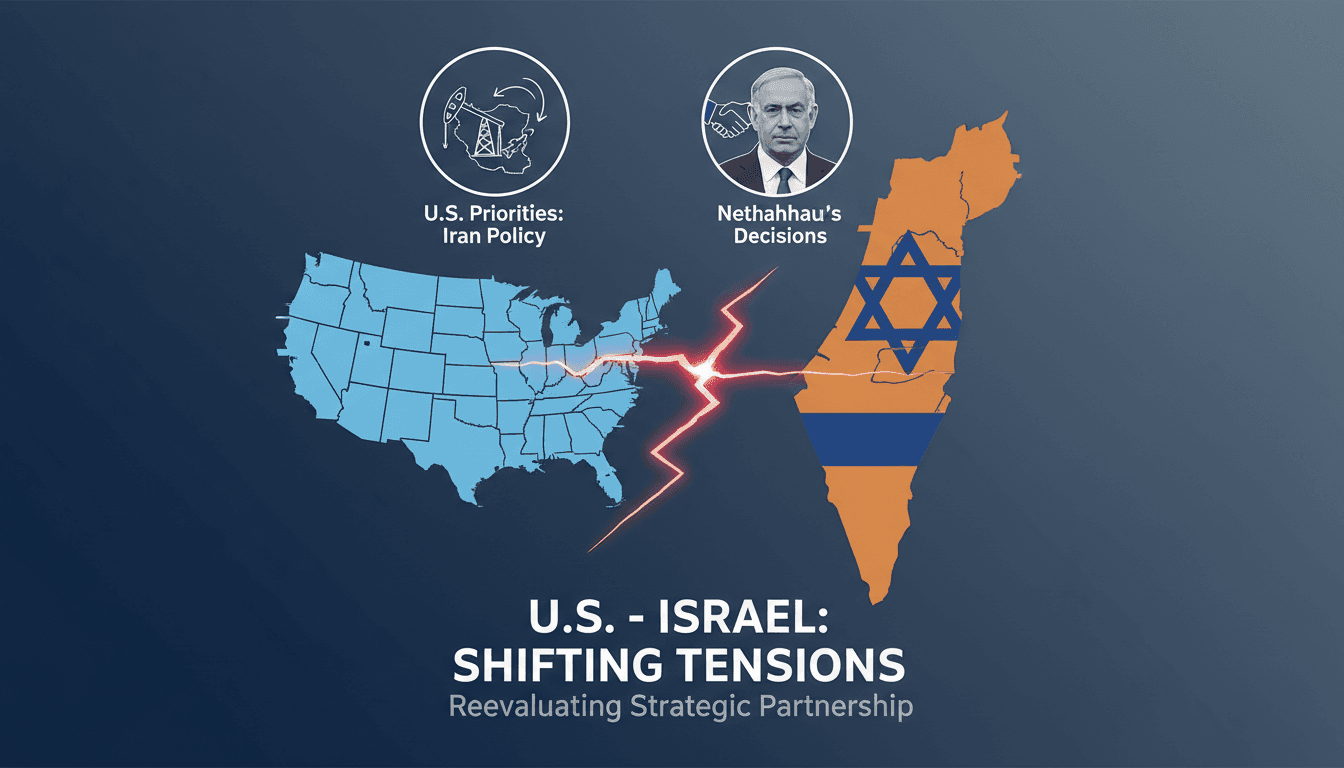
Here's what it means for you.
The acknowledgment of tensions between the U.S. and Israel by Vice President J.D. Vance signals a potential shift in U.S. foreign policy, particularly regarding Iran. As the Trump administration reassesses its priorities, the implications for the U.S.-Israel strategic partnership could be significant. Stakeholders in both nations will need to navigate these evolving dynamics carefully to maintain their longstanding alliance. This development may also influence market perceptions and diplomatic relations in the Middle East, as U.S. interests may not always align with those of Israel. Observers should remain vigilant as further statements from U.S. officials could clarify the direction of this relationship.
What happened
Vice President J.D. Vance publicly acknowledged rising tensions between the U.S. and Israel, specifically criticizing Prime Minister Benjamin Netanyahu's decisions. He stated that Netanyahu has made mistakes, particularly in handling the ongoing Middle Eastern conflict. This admission highlights the growing disagreements between the two nations, especially concerning U.S. interests in relation to Iran.
Vance emphasized that U.S. policy towards Iran will prioritize what President Trump deems best for American interests. The Vice President's remarks come amid reported tensions between the Trump administration and Netanyahu's government, suggesting a potential reevaluation of their strategic partnership.
The Context
Historically, the U.S. and Israel have maintained a close alliance, but recent events have strained this relationship. The ongoing Middle Eastern conflict has drawn criticism from U.S. officials regarding Netanyahu's actions, which have not aligned with American interests. Vance's acknowledgment of these tensions marks a significant moment in U.S.-Israel relations, as it reflects a broader reassessment of foreign policy priorities.
The timing of Vance's comments is crucial, as they coincide with a period of heightened scrutiny over U.S. foreign policy in the region. As the Trump administration navigates its approach to Iran, the implications for Israel's role in this strategy are becoming increasingly complex. Stakeholders on both sides must consider how these evolving dynamics will impact their future interactions.
Takeaway
The evolving dynamics between the U.S. and Israel may lead to a reevaluation of their strategic partnership if disagreements persist. Observers should watch for potential shifts in U.S. foreign policy towards Israel and Iran, as these changes could have far-reaching implications. Further statements from U.S. officials regarding their stance on Middle Eastern conflicts will be critical in understanding the future of this relationship.
As the U.S. continues to navigate its foreign policy in the region, the relationship with Israel may undergo significant changes. The outcome of these tensions will likely shape the geopolitical landscape in the Middle East for years to come.
Arabic-language coverage of international news and geopolitics.
"RT Arabic is a Russian state-funded outlet often criticized for promoting Kremlin-aligned narratives."
— A47 Editor
اعتراف جديد من فانس عن الأزمة بين إسرائيل وأمريكا والخلاف بين ترامب ونتنياهو
U.S. Vice President J.D. Vance stated that Israeli Prime Minister Benjamin Netanyahu has made mistakes, amid escalating tensions between the two nations in recent weeks. This acknowledgment highlights the growing strain in U.S.-Israel relations, whic...
Pan-Arab political news and analysis.
"Al-Quds Al-Arabi is a London-based Arabic newspaper known for political coverage."
— A47 Editor
فانس: نتنياهو “أخطأ في بعض الأمور”
J.D. Vance, a prominent U.S. politician, has publicly stated that Israeli Prime Minister Benjamin Netanyahu has made mistakes in certain areas, highlighting concerns regarding his leadership. This statement comes amid ongoing tensions in the region a...
Pan-Arab political news and analysis.
"Al-Quds Al-Arabi is a London-based Arabic newspaper known for political coverage."
— A47 Editor
فانس يقر بتباين المصالح مع إسرائيل بشأن إيران ويقول: ما يراه ترامب أفضل لأمريكا هو الأولوية
On June 9, 2026, U.S. Vice President J.D. Vance acknowledged the existence of differing interests between the United States and Israel regarding Iran, emphasizing that what President Trump views as beneficial for America takes precedence.